A whole bunch of books from my Unmissable list…turned out to be very missable, sigh. I’m genuinely sad about some of these!
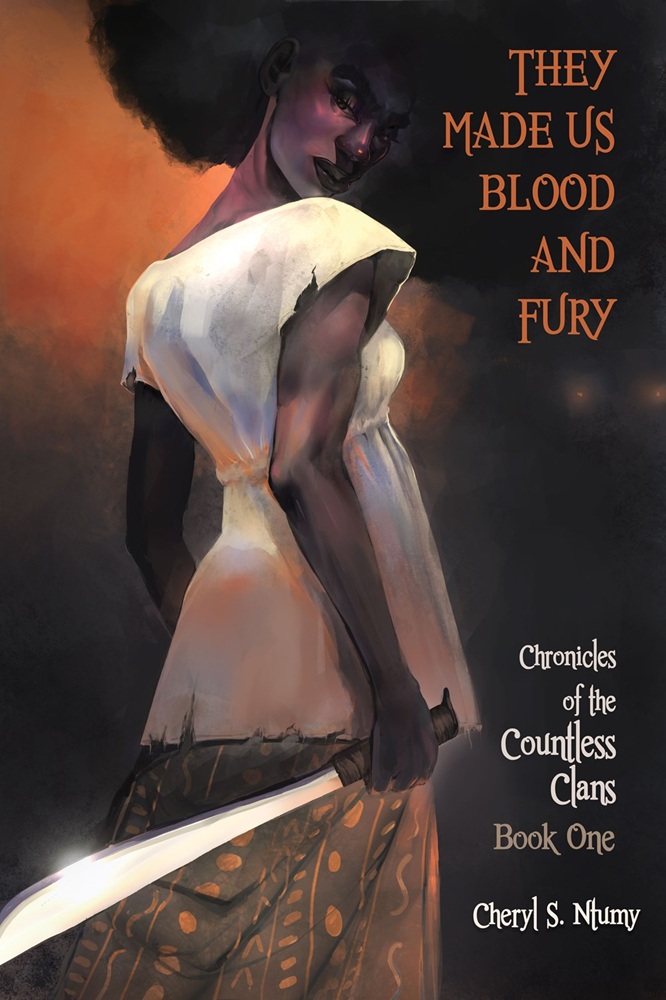
They Made Us Blood and Fury (Chronicles of the Countless Clans, #1) by Cheryl S. Ntumy
Genres: Adult, Fantasy, High Fantasy
Representation: African-inspired (Ghanian?) setting and cast
PoV: Third-person, past-tense; multiple PoVs
ISBN: B0FWBFFB2X
Goodreads
Anyi is the gem of the Countless Clans. Their Queens make lifeblood, a magical substance used for everything from medicine to weapons. Once, Anyi had so much lifeblood that they gave it away. Now their Queen is dying, none of her daughters, the Diviewe, can produce lifeblood and the gods that guide the clan have gone silent.
In the Empire of Ka, Anyi native Aseye dreams of leaving her work at the imperial armory to strike out on her own. Kwame, a spy with a hidden heritage, is a charming distraction. A man of conflicting loyalties, he’s not to be trusted with Aseye’s heart – or her secret, buried so deep that even she doesn’t remember it. A secret that could end her life.
As Anyi’s lifeblood dwindles, the Diviewe beg the Elders to unleash an ancient weapon to save the clan. The Elders refuse. The Diviewe take matters into their own hands. But the weapon is not what they thought it would be, and it’s not the only thing to wake…
I received this book for free from the publisher via a publicist in exchange for an honest review. This does not affect my opinion of the book or the content of my review.
There’s a REALLY fantastic story here, but unfortunately I don’t enjoy the way it’s written. The prose is very blunt and dry, with very little sensory description, and the first 20% of the book is just constant telling-telling-telling about every character and place and all the rest of it. We also have a weird bout of insta-lust between two characters that seemed especially awkward. When things started getting moving…the magical happenings still struck me as dry and awkward, or at least the way they were written did; I have no objection to the happenings themselves. (I actually really appreciated Nhumy going against my expectations re who/what the scary monster is, and why Aseye is important! I’d assumed things about both and was completely wrong, which always delights me.)
It’s a shame, because I love the set-up of this and I really would like to know how things end up. But between the grating (to me) prose and other reviews warning that They Made Us Blood and Fury functions more like a prologue than a series opener, I’m not going to push on with this one.
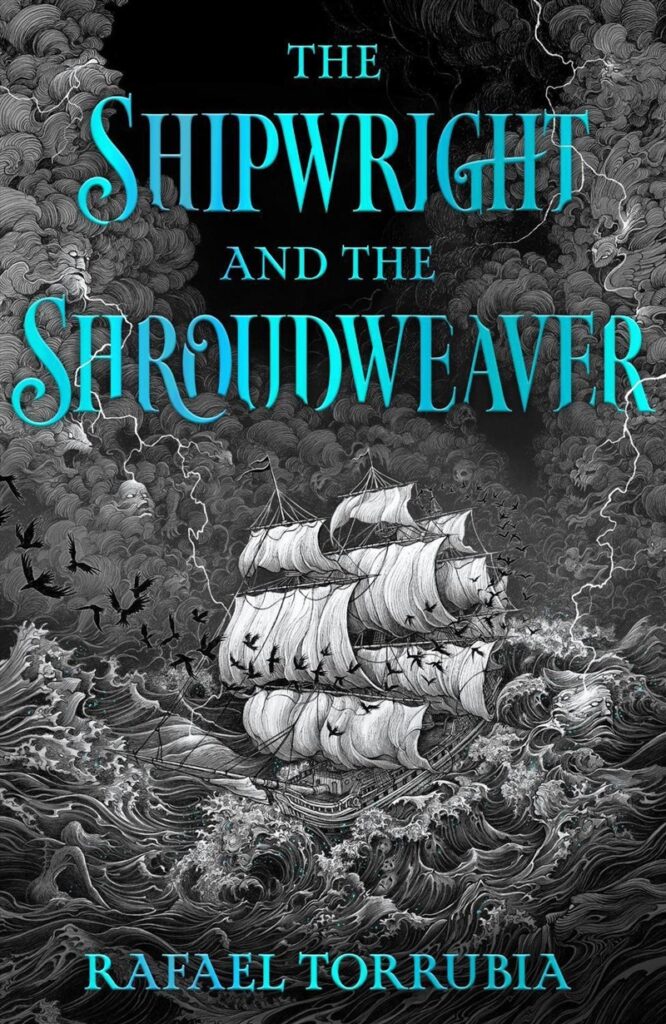
The Shipwright and the Shroudweaver by Rafael Torrubia
Genres: Adult, Fantasy, Epic Fantasy
Representation: Minor M/M, minor nonbinary character, queernorm world
PoV: Third-person, present-tense; multiple PoVs
ISBN: B0FMJSQBNL
Goodreads
MEET YOUR NEXT EPIC FANTASY OBSESSION
No one remembers the calamity that killed the gods and stole the names of their people. Now Shipwright and Shroudweaver are known only by their professions.
She's a master of magical shipbuilding. He's a maker of the gilded gods that fuel their sails, stitched from the souls of dead sailors.
When a chance to save their world calls the veterans back to shore, they decide they'll stop at nothing to vanquish the ultimate evil, embarking on a deadly race against time to beat the grief-wracked sorceress known as Crowkisser to the notorious mountain kingdom in the legend-infested north before she unleashes the ancient power entombed at its heart - the one waiting to finish what it started.
The Shipwright and the Shroudweaver introduces a trail-blazing new voice in Scottish fantasy with an epic adventure of ancient gods, apocalyptic magic, and love that can survive the end of the world - unmissable for fans of The Will of the Many by James Islington, The Priory of the Orange Tree by Samantha Shannon, and Mistborn by Brandon Sanderson.
I give up. I made it to 51% and the effort it took was painful. You know what happened, in 51% of an 800-page book? NOTHING. SOD ALL. 400-odd pages of WAFFLING is what I read; those 400-odd pages should have been more like 100, at most. Torrubia uses 10 words where one will do, padding out every scene with hours of introspection and slightly wonky metaphors and similes. I was constantly having to reread paragraphs because by the time I finished them I had lost track of what the paragraph was supposed to be about.
So many scenes – entire chapters! – where NOTHING happens, or where things happen but they are completely irrelevant to absolutely everything. Let’s stop in at a shop! Let’s get a drink! Let’s check out the docks! OR – hear me out – maybe we could have some actual STORY, please???
Also, let’s check out the book description I originally saw, shall we?
The Shipwright and the Shroudweaver introduces the most exciting new voice in Scottish fantasy with an epic adventure set in a post-apocalyptic landscape of god-fuelled ships, goth-as-hell villains, shadow-warping assassins, effortless queerness, and well-worn love – unmissable for fans of The Empire of the Vampire by Jay Kristoff, The Priory of the Orange Tree by Samantha Shannon, and Mistborn by Brandon Sanderson.
I’d like to draw your attention to ‘effortless queerness’, because LOL NO. There is one very minor nonbinary character, and one very minor gay character; we spend hardly any time with either of them and honestly in the first half of the book neither were important or relevant. The main characters, and all the secondary characters, are cishet, and yes, I was crushingly disappointed.
(And frustrated by how much of an afterthought the nonbinary characters are – we glimpse a few beside the one minor character, so supposedly being nonbinary is normalised, but there are still things like people defaulting to saying ‘ladies and gentlemen’ and whatever. Which…wouldn’t be a default in a society that had normalised enby folx.)
Small point, but if I have to hear/read anyone referring to a femme as a ‘slit’ ever again someone is getting stabbed. Only one character in this book used that kind of language but he used it ALL THE TIME and I hate it. (And again, this breaks the worldbuilding, because if this setting doesn’t value women less, why is ‘slit’ an insult? Hmmmmmmmm?)
Another small point: this book can’t decide if it’s written in past-tense or present-tense and I hate that as well. Mid-paragraph, sometimes mid-sentence switching tenses, in a way that doesn’t read as intentionally trying to create a specific effect. It’s just deeply wonky and I twitched every time it happened.
Being unable to stick to one tense is far from the only issue with the prose. While it’s mostly fine – not pretty, not great, but perfectly fine – every now and then there’s a jarringly weird and/or confusing image. Examples include;
The Yaw, the Hesper sailors called it- that sickening lurch that could sink a ship like a sucked thumb.
…Last time I checked, sucking your thumb doesn’t sink a ship of any kind, actually?
Finally: because this is published by Gollancz, it’s stuffed full of typos; few spelling errors, things like ‘of’ that should be ‘off’, but lots of things like commas or full stops coming after speech marks when they should come before. Because Gollancz can’t copy-edit to save their lives. S2g, these days I get so upset when I see they’re publishing a book I care about, because I know the copy-editing will be wretched. FOR THE LOVE OF FUCK, GOLLANCZ, HIRE SOMEONE WHO CAN COPY-EDIT ALREADY. And then pay them well and give them time to do their job properly. How are you not humiliated by the messes you keep putting out???
So yeah – I quit. I was looking forward to this for YEARS, but it’s a disaster. Colour me crushed.

A Viper Among Kings by Sydney Olivia
Genres: Adult, Fantasy, Queer Protagonists
Representation: Brown cast, queer MC/s
PoV: Third-person, past-tense
Published on: 25th August 2026
ISBN: 1837841047
Goodreads
Brace yourself for an exhilarating epic fantasy trilogy with a diverse cast, polyamory, and chaotic sentient magic, for fans of V.E. Schwab and Antonia Hodgson.
In the twisted city of Amaris, magic spawns from chaos. Prone to driving humans mad, it can only be wielded safely by the Wraiths—seven immortal beings magically bound to obey the king.
Esme is the most notorious Wraith. She has spent the last century forced to kill on behalf of the nation that stole her from her homeworld while building a secret life for herself and her wife away from violence.
That is, until the current king turns up murdered, and a magical will demands his successor be chosen through three trials. Esme cannot break the magical shackles that bind her, but she will suffer no more tyrants. She rigs the king's succession trials in favour of her chosen the righteous General Balthazar, who she can't help but fall for.
As Esme weaves together the threads of the court on Balthazar's behalf amid a strange tide of sentient magic in the city and a growing war on the horizon, she will come face to face with Balthazar's bloody past, troubled present, and countless betrayals.
He isn't the man Esme thought he was—but she was born to make and break kings.
I received this book for free from the publisher via NetGalley in exchange for an honest review. This does not affect my opinion of the book or the content of my review.
Thanks, I hate it.
This reads like bad YA: the language and sentence structure etc are really simple, it’s real big on tell-don’t-show, and the main character (who is centuries old) talks like an annoying modern teenager, complete with her rolling her eyes every other paragraph.
Quotes taken from my review copy, so they may or may not be the same in the published edition come release day.
“Was that so hard?”
Nathan shook his head.
“Exactly. Truth is easier than deceit, Nathan. You’ll be good to remember that.”
He nodded.
“Now, truthfully, I’m going to kill you.”
I absolutely despise this kind of humor, and even moreso I hate the kind of people/ characters who think it’s funny. This was the moment I knew I was going to DNF, because I have no interest in following a protagonist like this.
The writing is full of modernisms – ‘sex dungeon’, ‘you wish’, ‘tits’, etc – which I always hate in not-modern settings. There are wonky lines like
pulling a playing card from the pocket of his colorfully patched jacket that depicted a monarch with the head of a raven.
where the subject of the sentence isn’t clear (is the raven-headed monarch on the card or the jacket?) and idiocies like
two people having a lovely night on top of a display table. And on that display table, groaning under their combined weight, was the shop’s only mirror.
‘caus sure, people would have sex on a mirror, no one would worry about it breaking under them and stabbing them with shards – never mind how expensive mirrors were in pre-modern settings, and that no one would risk breaking something that expensive.
And don’t get me started about how boring the sentient magic is – there’s nothing strange or eldritch about it, it’s just a vicious little goblin, completely uninteresting.
Thanks but no thanks, hard pass.

The Quarter Queen: A Novel by Kayla Hardy
Genres: Adult, Fantasy, Historical Fantasy, Secondary World Fantasy, Queer Protagonists
Representation: Black cast, Black bisexual MC
PoV: Third-person, past-tense; dual PoVs
ISBN: 9780593976777
Goodreads
A Voodoo witch must navigate a magically and racially divided nineteenth-century New Orleans to save her mother—and the soul of the city itself—in this lush debut novel inspired by the life of Marie Laveau.
“An edgy, intoxicating novel pulsing with the dark heartbeat of 1840s New Orleans and a fiery mother-daughter dynamic I won’t soon forget . . . Readers will devour this!”—Sarah Penner, New York Times bestselling author of The Lost Apothecary
In 1843 New Orleans, the reigning Voodoo queen is Marie Laveau, feared by her enemies and followers alike. Her daughter, Marie "Ree" Laveau the Second, is everything her cutthroat and principled mother is not—spoiled and entitled, with a wickedly rebellious streak—and defies her mother at every turn. But Ree’s world is turned upside down when she finds Marie comatose in the bayou, cursed by exiled Voodoo king Jon the Conjurer—Marie’s former teacher, lover, and greatest enemy.
As Marie hovers on the brink of death, Ree races to uncover the secrets of her mother’s life in search of a cure and gradually uncovers a web of alliances, dangers, and deception. What’s worse, Henryk Broussard, Ree’s long-missing childhood best friend, returns as a witch hunter of the Church, tasked with investigating her. With so many enemies circling, including a puritanical-minded Brotherhood of alchemists and the slave-holding mayor of the city, Ree must confront the past and face her mother’s demons that have now become her own—or die trying.
Told in alternating timelines between Ree in the present and Marie’s rise to power twenty-five years earlier, The Quarter Queen is an intimate yet epic portrait of a mother and daughter who have struggled all their lives to understand one another, and a captivating exploration of racism, family, and womanhood.
Lots of telling-not-showing, but a bigger issue was the surprise that this isn’t set in our world, more a fantastical version of it. The worldbuilding is very simple, and revolves around magical power being genetic;
High-Blooded folks held connections to older, stronger bloodlines, powerful magic. The Low-Blooded had seen their magic too mixed up, too muddled to keep its strength.
…This seems a really weird, pretty gross writerly decision given the way slavery broke so many people’s connections to their ancestral traditions and cultures. It would be one thing if this were presented as another tragic evil caused by slavery – if we were mourning the creation of Low-Bloods which came about because of slavery. But it’s not presented that way? And maybe it’s meant to be subversive, or something: instead of white blood giving people some…’advantages’ doesn’t seem like the right word…power comes from pure Blackness?
But it feels deeply ick. Just calling them High and Low rubs me the wrong way, and we see High-Bloods using Low-Bloods as magical conduits, using them as tools – which to me echoes the way white people used Black people as slaves.
Maybe I’m being too sensitive or something; I’m white, the author’s Black, it feels bonkers to call this racist. But I do hate it and I’m not interested in reading more.
(It’s extra weird because as far as I can tell from searching in my ebook, after the introduction of this concept, High/Low Bloods, it never comes up again? WHY USE IT THEN?)

Besieger by Kalina Mitova
Genres: Adult, Fantasy, Historical Fantasy, Queer Protagonists
Representation: Queer MC/s
PoV: Third-person, past-tense; multiple PoVs
ISBN: 6190407595
Goodreads
Greed needs little to fester. When you have starved for so long, all you can see is hunger.
Besieger is a vampire Gothic fantasy with a dash of historical fiction. A tale of a love so corrupt it eats you from the inside. Perfect for fans of Anne Rice's The Vampire Chronicles, Angela Carter's The Bloody Chamber, S.T. Gibson's A Dowry of Blood, and Kat Dunn's Hungerstone.
A Vampire Coven is thrown into chaos after its maker and master is found dead under mysterious circumstances. With the assassin hiding among them, the Vampire Council must choose a new Coven Master, and who better than the man who wants the throne the least. A deserter from the First Crusade, Silvio is saved by Dulior, a vampire determined to turn and bind him at the altar. In the midst of a cycle of arranged marriages to mortals, Dulior uses Silvio as her escape from her domineering maker, and a promise, finally, of a true love match. Although granted immortality, Silvio sees no value in eternity if he cannot share it with Emerick, the man he has sworn to protect.
Husband to a woman he despises, bound to a man he wants to drown in pleasure, Silvio will have to become a pawn in the Coven’s schemes if it helps him break free from his wife and mistress.
This may thematically echo Dowry of Blood or Interview With the Vampire, but the prose is nowhere near that level. (And I say that as someone who isn’t an Anne Rice fan. I may not love her books, but her prose is better than this.) Heavy-handed, info-dumpy in the extreme, phrasing constantly just slightly awkward, slightly ‘off’, in the way that makes it impossible for my prose-picky self to actually sink into the story. Gave up trying very quickly.
(I continue to fall for any cover waarickart illustrates, so commissioning them is clearly a great investment.)

Hail the Rising Tides by Kat Kraehen
Genres: Adult, Fantasy, Romantic Fantasy, Queer Protagonists
Representation: Bisexual MCs, F/F, M/M
PoV: Third-person, past-tense; multiple PoVs
ISBN: 9781068209017
Goodreads
Prim and prideful Ione possesses the Moon Goddess’s spirit and a harrowing fate: overpower the wrathful Sun God and sweep His murderous pyromancers into the sea. But attaining divine ascension is easier said than done, and the longer Ione takes to save her people, the more impatient her conniving archpriest becomes.
Quiet, distrusting Lina has had more than enough of bloodshed. After escaping immolation by Sun-worshipers, she gains a new lease on life as a nameless acolyte of the Moon Goddess. That is until she catches the eye of Lady Ione, whose captivation with Lina has caused the Goddess to stir within her for the first time.
As temples burn and Ione’s archpriest launches treacherous gambits of his own, Ione and Lina’s alliance deepens into something neither of them anticipated. If Ione’s enemies reach her before she can awaken the Moon Goddess, everyone she loves will go up in flames.
But if she succeeds, the Sun cult will be annihilated - including Lina, whose past as a Sun priestess cannot remain hidden forever.
I received this book for free from the publisher via NetGalley in exchange for an honest review. This does not affect my opinion of the book or the content of my review.
And another falls victim to the straight-up-stupid rule! Ione is supposed to have a goddess inside her, but despite a lifetime of trying she hasn’t been able to wake this goddess UP. So when she finds someone whose presence obviously and dramatically gets a reaction from said goddess, she naturally wants to be near her and know everything about her.
…But her bodyguard et al are all ‘no way, security risk’! AS IF THEY, AND THEIR ENTIRE CULTURE, ISN’T DESPERATE FOR THE GODDESS TO WAKE UP. They should be incredibly excited, ready to bend over backwards to make this work! 500 of their people were literally murdered earlier in the same day, which wouldn’t have happened if the goddess were active! BUT NOPE, LET’S JUST COMPLETELY BRUSH OFF THIS MONUMENTAL THING THAT HAPPENED, THE FIRST SIGN OF THE COMING OF THE DEITY WHO’LL SAVE YOU AND YOUR PEOPLE.
‘KAY.
Nope, I’m out. ‘Forbidden love’ shouldn’t be this freaking CONTRIVED.

God's Scar (The Divine Sins Chronicles, #1) by Ivy Margriette
Genres: Adult, Fantasy, Queer Protagonists
Representation: M/M
PoV: First-person, past-tense; multiple PoVs
ISBN: 1919521917
Goodreads
There has never been an M/M fantasy like this.
Angels who fall not from grace, but into love.
Demons who are more than their brimstone.
A cosmos where Heaven is not merciful, and love is both salvation and ruin.In a world of divine rejection, one angel-demon hybrid will defy Heaven, survive Hell, and cross the void between realms, to save the one soul he was forbidden to love.
God’s Scar is a mythic, literary dark fantasy where theological worlds, forbidden love, and moral complexity collide in lyrical, aching fantasy.
The half-breed is a living heresy. Born of an angel and a demon, he is shaped by captivity and by a single forbidden tenderness from a healer angel who defied Heaven to hold him for a single night. In a cosmos where Heaven's cruel perfection demands absolute obedience and Hell's hunger devours the weak, he seeks what should be impossible: to belong. To love. To simply be.
When the healer is dragged into the Demon Realm as a sacrificial offering, the half-breed tears through demons, survives an arena that has consumed angels for millennia, and claims a crown he never wanted—all to reach the one soul that made his cursed existence bearable.
“Let them see it. Let them feel the weight of everything I was never allowed to be. I will not cower.”
This is a journey that asks whether a soul born as heresy can claim the right to love, and be loved in return.
From Heaven’s merciless courts to Hell’s blood-red arenas, through the void where souls face eternal erasure, he encounters angels of all ranks, demon lords and fallen beings, all for this:
•To love without shame.
•To have what he was never allowed to want.
•To exist as he is.A slow-burn, emotionally intense, non-explicit M/M saga, God’s Scar examines the cruelty of sacred systems, the power of gentleness in a violent world, and the quiet heresy of choosing to love selflessly.
“I just want you.Painfully. Desperately. Endlessly.You are the only reason worth living for.The only thing that makes this world bearable.”
With rich worldbuilding and a protagonist torn between who he was, who he is, and who he desires, this gritty, lyrical tale explores trauma, forbidden devotion, and what makes a cursed existence worth living.
For readers who seek:
•Vivid, immersive, theological worldbuilding
•Gritty, lyrical storytelling
•The ache, yearning, and grief that love demands
•Relentless devotion and forbidden love
•Morally complex, intellectually rigorous fantasy
•Epic fantasy grounded in philosophy and emotional depth
I received this book for free from the publisher via NetGalley in exchange for an honest review. This does not affect my opinion of the book or the content of my review.
I am unfortunately unable to get past the fact that the protagonist somehow functions normally, has what we’d consider normal knowledge of his world, despite spending his whole life in a cell.
How can he even speak? How does he know what the sky is? Why isn’t he struck by shock/wonder/fear ANYTHING when he flies out of his prison and sees the world spread out under and around him??? I did a search in my ebook and there’s never a mention of him being taught anything, of learning anything at all until he escapes. ???
This is extra annoying because this character can read the minds of people he touches – it would have been a simple thing to say he absorbed all the general knowledge from the first person he touched. But nope! We’re just going to ignore this colossal plothole.
If you can get past that, the book is mostly fine – the prose is flowery in a way I think is pretty; we have a fragile delicate love interest to contrast with our feral half-demon protagonist, a dynamic some readers will adore. Personally I found it really boring that Heaven is conventionally rule-obsessed and merciless, and that angels are an all-male species – I thought I was promised impressive worldbuilding, not something I’ve seen hundreds of times before? But obvious worldbuilding doesn’t make a book bad.
On the other hand, I cannot get past this scene from chapter one. Quote taken from my arc, so it might be edited/removed from the final copy.
The spear spun in my hands as I reversed it, and I slammed the butt of the weapon into the marble floor. The impact bent the shaft, forcing the blade to angle downwards.
With all the strength in my arms, I shoved.
The blade plunged into his shoulder.
Armor shrieked as it split. His scream choked off. I pushed harder, pushing him back–then down–using his braid like reins as I forced the weapon through his shoulder and into the marble beneath.
Hi, can YOU figure out where everything is in this moment? Because I tried acting it out, and I cannot make sense of where the hell the spear is – the base is on the floor, but the blade is pointing down? How does it go into the other guy’s shoulder? If the other guy is being pushed down (onto the blade???) how does the blade go into the floor? (There was no mention of the other guy being on the floor to begin with; afaik he’s standing.)
WHAT IS HAPPENING?
This is in the FIRST CHAPTER. It doesn’t give me ANY confidence that the rest of the book is going to make sense, particularly in combat scenes – which is going to be a huge problem since there will evidently be a lot of fighting in this story.
NOPE. Everything else about this is three-stars, but I’m deducting another half-star for the incomprehensibility of this scene. (Only a half-star because I didn’t encounter any other scenes I couldn’t make sense of in the other four chapters I read.)

The Lost Book of Lancelot by John Glynn
Genres: Adult, Fantasy, Historical Fantasy, Queer Protagonists
Representation: Queer MC
PoV: First-person, past-tense
Published on: 12th May 2026
ISBN: B0FPG2RSJ7
Goodreads
A “richly detailed and evocative” queer retelling of the legend of Sir Lancelot, following the famous knight as he grows up orphaned, falls in love, and attempts to fulfill his destiny at the Round Table – a stunning debut novel from the author of Out East (Mary Beth Keane, New York Times bestselling author).
Hidden away on the Isle of Women, a nameless orphan grows up among a powerful sisterhood, but always at a distance. He hears whispers of a prophecy that may shed light on his destiny—and his true Lancelot. Determined to master the skills of knighthood, he begins training in tandem with the handsome Galehaut. As the two become inseparable, they guide one another toward their truest selves. But no matter how tightly they cling to one another, each has a role to play in the wizard Merlin's grand prophecies.
When Lancelot is forced to follow Merlin to Camelot, he fights to protect his heart while seeking the fabled grail alongside King Arthur and his knights of the Round Table. But when Roman legionaries encroach on their kingdom, their quest takes on new urgency, as does Lancelot's explosive secret—the truth of what he left behind on the Isle of Women.
Steeped in rich medieval lore, THE LOST BOOK OF LANCELOT is at once an immersive, a poignant love story and an epic, unforgettable tale of a vulnerable boy who is forced to rise to the occasion amid a battle between the old world and the new.
I received this book for free from the publisher via NetGalley in exchange for an honest review. This does not affect my opinion of the book or the content of my review.
It’s all tell-don’t-show, in a way that makes it feel – emotionally distant? The prose itself is fairly pretty, but at random becomes disjointed, with sentences that seem to have nothing to do with the sentence before them. The writing rhythm is short and flat, all plodding sentences (even while the word choice, the prose, can be lovely). Like an exhausted horse walking along, step. step. step. step. I think that’s a big part of what’s stripping the emotion and tension out of every scene.
And I found Lancelot an incredibly dull protagonist to be following around, a very generic Everyman sort of character, bar his bouts of scary destructive rage, which interested me not at all. And why does Lancelot need prophecies about him? Isn’t it enough that Arthur is surrounded by prophecies, and Merlin? Did Lancelot specifically need one too? (Speaking as someone who is really not a prophecy fan.)
Quotes to illustrate what I mean about it reading as ’emotionally distant’. Taken from by advanced reader copy, so could be edited or even removed from the final published edition.
Was he beckoning me to follow? I looked around, unsure what to do. I was not permitted to explore the island alone after sunset. But something about this fox–the tilt of his snout? The blue-black depth of his pupils?–compelled me in a way no creature had before.
It feels distant and hand-wavey and tell-tell-tell. Why is this how we learn he’s not allowed go out after dark? Wouldn’t it have more impact if it were established earlier? And can we have a bit more oomph to this fox feeling special?
How was it, I wondered, that all these people had converged on this one island? On this one dock? On the same day that we too should get to visit? Suddenly the great expanse of the world unfurled before me. Its promise glimmered like magic.
‘Suddenly the great expanse of the world unfurled before me’ don’t TELL me that! SHOW me! Make me feel it!
This whole thing feels like a story I’m observing from a distance, not something I’m immersed in, that I’m experiencing alongside Lancelot. I’m meant to be in his head, but he feels so far away, like a sketch of a character rather than a full person.
I’m not saying it’s an objectively terrible book: readers who don’t notice/care about writing rhythm are more likely to enjoy it, as are anyone here primarily for the aesthetic and Authuriana. But if you want more than that, I’d skip this one.

The Last Contract of Isako by Fonda Lee
Genres: Adult, Sci Fi, Dystopia
Representation: Japanese (?) MC
PoV: Third-person, present-tense
Published on: 5th May 2026
ISBN: B0DM4G973L
Goodreads
Get ready to be blown away by this searing standalone space opera where corporate samurai fight beneath merciless stars, and death is always a mere breath away.
Isako is a legendary swordswoman, but every legend has to come to an end. When her long-time client unexpectedly retires, she plans to follow--to walk out into the frozen wasteland of their planet with her head held high and her family enriched by her legacy. But when a competitor offers her a final mission, it's one she can't refuse. Soon, she's thrust deep into a world of corporate espionage, duty-bound duels, and shadowy secrets. What she uncovers will change humanity's existence in the stars forever.
The Last Contract of Isako is the space opera you didn't know you needed: corporate samurai... in space. This is the first adult science fiction novel from the award-winning author of Jade City.
I received this book for free from the publisher via NetGalley in exchange for an honest review. This does not affect my opinion of the book or the content of my review.
This one is purely a case of ‘it’s not you, it’s me’. This is grim, bleak sci fi in a grim, bleak setting; I’m a lover of descriptive prose, but there’s nothing TO describe in Isako’s world, not really. The 1%ers rule everything, and everyone else can be expected to ‘resign’ (commit suicide by walking out of the habitat out into the still-terraforming planet) at a moment’s notice. This isn’t the kind of world I want to read about, and Isako does not come across as a rich, passionate character I’d enjoy following, either.
None of which makes it a bad book, just very much not for me!

The Black Parade (After the Dust Book 1) by Ilana Lindsey
Genres: Adult, Queer Protagonists, Sci Fi, Post-Apocalyptic
Representation: Queer Jewish MC, M/M
Published on: 28th April 2026
ISBN: B0GKXKYLXF
Goodreads
As billions die from an apocalyptic cloud of polluted dust, David—a climate activist in a previous life—is holed up in an abandoned hospital in London offering a cure to anyone who needs it. Months earlier he escaped from a rogue government scientist whose illegal experimentation gave David two unasked for gifts: the ability to cure people with his blood and a locked collar around his neck. When Lysander, the sheltered son of an aristocrat, arrives and begs David to save his mother’s life, David has to try. Together, the two young men begin a journey across the UK toward an island community they hope will provide food and shelter.
Lysander struggles, longing for the security he took for granted before society crashed. He despairs over David’s hero complex and tendency to lead them both into danger. David is torn between protecting Lysander and the guilt that drives him to use his power to save the dying. Their clashing personalities, values, and ideas of what safety looks like, are woven together with an irresistible attraction that grows into something deeper. As they face the elements, other survivors, and a government desperately trying to reassert control, David and Lysander’s greatest challenge becomes staying together while fate conspires to rip them apart.
I received this book for free from the publisher via NetGalley in exchange for an honest review. This does not affect my opinion of the book or the content of my review.
It’s fine? It’s not bad, but nothing in the first 20% wowed me, either. The prose is fairly basic, kind of blunt; there’s a lot of not-well-transitioned-to flashbacks for David’s backstory especially, which felt…dry? Really it all does; the characters feel pretty distant to me, very two-dimensional and hollow, and I can’t put my fingers on why.
It’s just…fine. And I have too many books to read to waste my time with fine, even IF I could convince my ADHD brain to focus on a book that was boring me!

The Language of Liars by S.L. Huang
Genres: Adult, Sci Fi
ISBN: 1250405343
Goodreads
A story of secrets, body jumping, and the power of language, The Language of Liars is a poignant, thought-provoking new masterpiece from award-winning author of The Water Outlaws S. L. Huang."Pitch-perfect science fiction about linguistics and consequences. This book destroyed me."—Yoon Ha Lee, New York Times bestselling author of Ninefox Gambit
A New Scientist Best of 2026 Pick and a Most Anticipated Pick for Literary Hub | Book Riot | Shelf Reflection
Speak another people's language. Know them. Become them.
And discover you've destroyed them.
In his training as a spy, Ro was warned: you will always be living a lie.
Jumping into a Star Eater's mind in the first place requires a moment of perfect psychic connection, and he has studied all his life to comprehend their species. Admires them, respects them, is reverent at the idea of being one of them—the only species physiologically capable of mining the element needed for lightyear-spanning space travel. The species all others crave to know more of, but who have notoriously shared so very little. The species Ro's own small civilization, with its dwindling resources and withering reach, needs to know more about.It will feel real, his elders impressed upon him. It will never be real.
But Ro's certainty runs deep: he will be different. Ro will not be an imposter hiding the truth of his past, because his heart will be one of them. He will be one of them.
To understand is to become. It never occurs to him that the mere act of understanding can destroy.
I received this book for free from the publisher via NetGalley in exchange for an honest review. This does not affect my opinion of the book or the content of my review.
I made it to 51% and just do not want to read any more.
The blurb is hugely misleading: the Star Eaters are enslaved, though no one calls it slavery and Ro doesn’t realise that’s what it is until he gets there. (And even then, does not realise that immediately.) The whole purpose of his species’ linguists program is not, in fact, to understand the Star Eaters better; it’s so that they can secretly steal/divert the precious material only Star Eaters can harvest. Ro is very much a starry-eyed linguist/anthropologist, but the set-up is not what the back of the book makes it sound like.
It is indeed big on the linguistic angle, which I appreciated even when it went over my head; it feels genuine, and I am a total geek for worldbuilding, which alien linguistics obviously is. And none of the rest of the book feels badly written to me; the prose is good, the characters are convincing, and I am incredibly impressed by how wonderfully alien the Star Eaters are! (So few authors can pull off really alien-feeling aliens.) The growing sense of Something Wrong is building very convincingly; Ro’s growing unease about the situation is marvellous, and marvellously conveyed.
On the other hand…I have no idea what any of the species in this book look like, which was maddening. The linguistics went over my head a lot, and nothing else about the plot was all that interesting to me. I’m a hugely sensory (is that the term?) reader, and without a lot of description I get lost and bored. I loved the moments when we got to experience the alien senses, senses humans don’t have, but other than that there wasn’t a lot here for me. The slavery set-up is naturally very bleak, but it’s also very dull, with a lot of repetition and nothing interesting to picture. Even the conversations Ro has with the Star Eaters tend to repeat a lot, the same mottos/mantras just echoing back and forth.
This isn’t the story I thought I was getting; I thought we’d be seeing the Star Eaters in their natural environment/culture, and what we got instead just isn’t holding my attention. I think a lot of it’s objectively well-written, but I wish it had been a full novel instead, with more room to describe and explain things. As-is this just isn’t for me.
Edited later: I have been told that everything I didn’t enjoy about this is explained/justified by the big reveal near the end…which isn’t enough to convince me to keep reading, but will hopefully entice anyone likely to enjoy it!
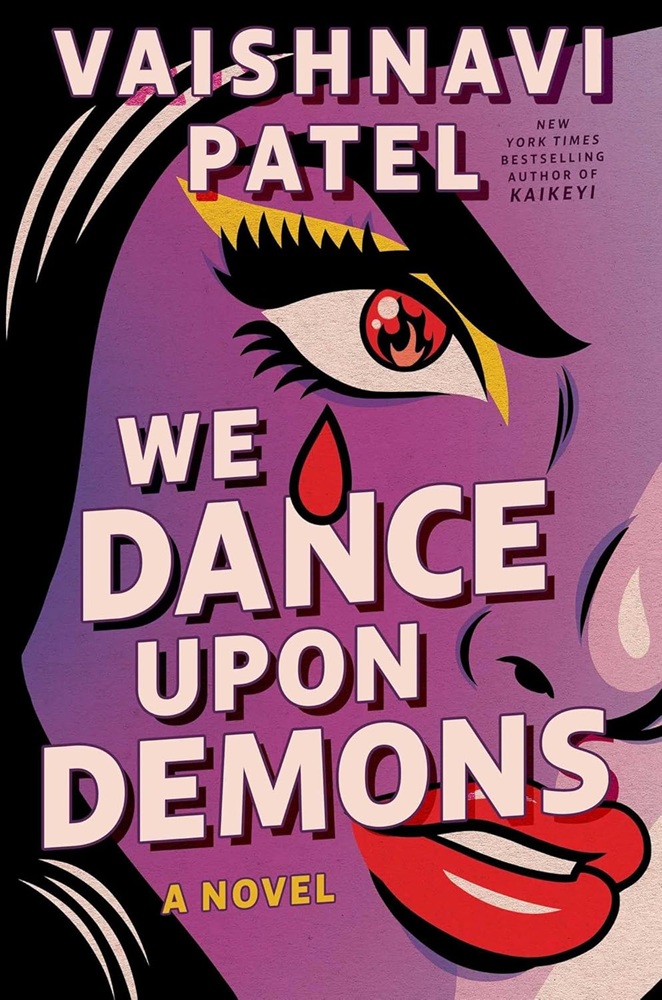
We Dance Upon Demons by Vaishnavi Patel
Genres: Adult, Fantasy, Contemporary Fantasy
Representation: Desi MC
PoV: First-person, present-tense
Published on: 12th May 2026
ISBN: 1668068613
Goodreads
From the New York Times bestselling author of Kaikeyi, a galvanizing stand-alone contemporary fantasy following a burnt-out reproductive health care worker as she fights back against escalating attacks on her clinic and the malevolent forces in hot pursuit of her newly acquired power.
As a reproductive health care worker in Chicago, Nisha is barely staying afloat in the ocean of abortion bans, screaming protestors, and her own all-consuming depression.
When she escapes to the Indian art exhibit at her favorite museum for a brief respite, Nisha suddenly finds herself bleeding, disoriented, and collapsed on the ground. The last thing she remembers is the statue that beckoned her to touch it. In the days that follow, Nisha feels a strange power coursing within her, one that attracts a host of dangerous and enigmatic characters who covet it for themselves.
Facing threats both otherworldly and distinctly human, Nisha must navigate uncertain alliances to piece together the centuries-old mystery of her odd and terrifying abilities. And as danger closes in on her loved ones, community, and the clinic she’s determined to protect, Nisha must make a choice about the life she wants—and fight all the demons standing in her way to get it.
I received this book for free from the publisher via NetGalley in exchange for an honest review. This does not affect my opinion of the book or the content of my review.
By any objective measure, this is a great four-star book! But I am forced to conclude that I just don’t enjoy Patel’s writing, because this is the third of her books I’ve DNFed. I was so sure that this premise would break through whatever block I have – because that is an INCREDIBLE premise, I was so excited for it!
Alas, no: my block remains. There’s nothing I can point to and say is bad or wrong, I just don’t love the prose. It’s too blunt and plain for me, even though it suits the protagonist’s voice perfectly. IT’S NOT YOU IT’S DEFINITELY ME. I think anyone who enjoys typical urban fantasy will enjoy the prose just fine, while the subject matter/story is a good few steps above your typical urban fantasy. The depiction of Nisha’s depression and culture – and her intersectional-feminist perspective – all help We Dance Upon Demons stand out from the crowd, and that’s before we get into the centering of her work at an abortion clinic! Something I’ve literally never seen before in SFF.
Really glad this book exists, even if I can’t enjoy it like it deserves.

The Eye of Leviathan (The Sea Beyond, #1) by M.A. Carrick
Genres: Adult, Fantasy, Historical Fantasy
PoV: Third-person, past-tense; dual PoVs
Published on: 14th July 2026
ISBN: 0316584851
Goodreads
From the author of The Mask of Mirrors comes a sweeping adventure set in a world where fae secretly walk amongst those who seek to persecute them.
In an alternate Spanish Golden Age, the Council of the Sea Beyond has risen to unrivaled power, exploiting the Otherworld’s most precious resources for their own gain. Estevan seeks to uncover their secrets, but he risks the exposure of his that he is a faerie, masquerading as a mortal.
The Hungry Girl is the human whose place he took. Lost among the fae and desperate to find some purpose for her existence, she leaps at the chance to help a group of Spanish explorers in the Sea Beyond…only to be horrified at the atrocities they commit.
A faerie pact has separated them– but only together can they bring down Spain’s worlds-spanning empire and save the homes they have both come to love.
I received this book for free from the publisher via NetGalley in exchange for an honest review. This does not affect my opinion of the book or the content of my review.
Fun story: I did make it through the whole Rook & Rose trilogy…but only because I was reading them to my partner as bedtime books and they were GREAT for knocking us both unconscious.
I was really hoping that this time would be different, but nope: something about Carrick’s prose still puts me directly to sleep. It just feels heavy. There’s nothing objectively wrong with it – although Estevan’s plotline is incredibly dull, it’s not badly written, and the Hungry Girl’s chapters should be very interesting indeed. But I just can’t keep my eyes open. I’m not holding it against Carrick, it’s very clearly a me-not-you problem (otherwise I’d be able to point to SOMETHING about the writing/story as Not To My Taste, and I cannot); from what I can tell, it’s objectively good, with the potential to be great (by which I mean, the bit I read was fine, but I think if I kept reading it would be great – IF I could keep my eyes open while reading).
If you do NOT experience this weirdness with Carrick’s prose, and the premise sounds interesting to you, then go for it; the worldbuilding is fascinating, and I love the exploration of Christian theology as it applies to all things Faerie. (The humans think the fae are descended from the Nephilim! THAT’S SO COOL. The Faerie world being created by the Biblical leviathan – ALSO EXTREMELY EPIC. The horror of fae being subjected to baptism – if it’s souls instead of bodies can we call it soul-horror rather than body-horror???)
Truly wish I could have read this, because I’m very sure I would have enjoyed it!

Ignore All Previous Instructions by Ada Hoffmann
Genres: Adult, Sci Fi
Representation: Queer autistic MC, trans MC with ADHD
PoV: Third-person, past-tense; dual PoVs
Published on: 12th May 2026
ISBN: 161696457X
Goodreads
A script supervisor for an AI media conglomerate is caught between her intense need for an orderly life and her deeper, darker queer desires. From the creator of the Outside trilogy, a heartfelt interplanetary epic of identity, longing, and a space pirate who smuggles inappropriate stories.
Kelli Reynolds loves creating stories more than anything in the world. But on Callisto, a generative AI company called Inspiration owns everything, including all the media, and only Inspiration determines which stories can be told.
Kelli has a rare and coveted job in which her autism is to her advantage: She precisely edits AI output into “appropriate” stories for Inspiration’s massive TV audience. Her proudest creation is the pirate Orlando—a dashing do-gooder based on stories she used to tell friends.
Reenter Kelli’s ex-boyfriend Rowan, the person Kelli based Orlando on. Back when they were teenagers, their relationship was a secret. Kelli had thought that Rowan, a trans man, was her schoolmate Em, a girl.
Rowan is tangled up in the black market after he needed to get money for gender reassignment surgery. He needs Kelli’s help with something . . . illegal. So, now Kelli has to decide: Will she risk the safe, tidy story of her life now for the world she once wished for? What would Orlando do?
Passionate, dangerous, and tender, Ignore All Previous Instructions is a sweeping, poignant novel about censorship, forbidden love, and growing up.
I received this book for free from the author, in exchange for an honest review. This does not affect my opinion of the book or the content of my review.
I just…don’t want to read any more. I made it to 50%, and the thought of picking it up again is exhausting.
I loved Hoffman’s Outside trilogy, but this couldn’t be more different. The Outside books were very serious and complicated, and pretty dark! Ignore All Previous Instructions is light and fairly fluffy; even the language, the sentence structure, is much simpler than the Outside books. And it’s a (to me at least) odd mixture of upbeat and deeply depressing – the book is set in a future where all books and movies and tv are created by one corporation with generative AI, and of course their stories are never queer and are mostly deeply, deeply bland. No one else is allowed to create stories at all, because this corporation long ago bought the copyright to all stories and all tropes/motifs/etc. It’s terrible! But at the same time, we’re getting many chapters of Rowan and Kelli’s childhood, which, although there are terrible bits (the day their class learned how to ‘write’ stories with genAI made me want to cry) are often pretty funny too. Even quite a lot of the bleak stuff is spun in a way that’s making mock of it, like the way baby!Rowan manipulates the robot that’s supposed to teach baby!Kelsi how to be neurotypical.
The characters are fabulous, but I found myself really disinterested in the story. Rowan wants Kelli to come away for the weekend to meet a fan of the show Kelli helps write. On the journey there, he introduces Kelli to art not created by genAI, which sets off a galaxy-brain moment for Kelli. Upon arrival, Kelli learns that the fan is the daughter of a very big player in the criminal underworld, and they want Kelli to do a lot more than talk about the show. Every other chapter shows us Rowan and Kelli’s childhood, the two of them initially drawn together by Kelli’s incredible storytelling, and eventually exploring their own and historical queerness together.
None of it’s bad: it’s just that I…don’t care, for some reason. I think a bit part of it is that I already believe everything Ignore All Previous Instructions is saying, about creativity and queerness and neurodiversity, about how genAI should be shot directly into the sun, about the dangers and evils of anyone being allowed to control storytelling. The book’s preaching to the choir with me, and I find that pretty boring! Don’t get me wrong, I don’t want to read novels that think queerness and neurodiversity are bad, or that are praising genAI to the skies – ew. But I don’t feel like there’s a lot more to this book than its messaging; the plot seems very thin. I wouldn’t call Ignore All Previous Instructions preachy exactly – there IS a plot, and like I said the characters are wonderful. This is not a lecture thinly wrapped in prose; the points aren’t shoved down your throat, they’re just left out in the open for the reader to absorb.
But there’s nothing new for me to think about here, and the plot itself just isn’t holding my attention.
Being as objective as possible, I think Ignore All Previous Instructions is pretty great. There’s nothing wrong with the writing. I think readers who don’t know yet what they think about genAI – or gods forbid are all for it – could get a lot out of this, just as plenty of others could get a lot out of the neurodiverse rep, re Kelli being autistic and Rowan very clearly having ADHD. If you’re looking for a read that is a light, easy read, but isn’t trying to pretend everything is always sunshine and rainbows, then I think this could be fun for you.
Maybe I’ll try it again in a few months and love it. I hope so! But right now I don’t have the spoons it would take to keep going with it.

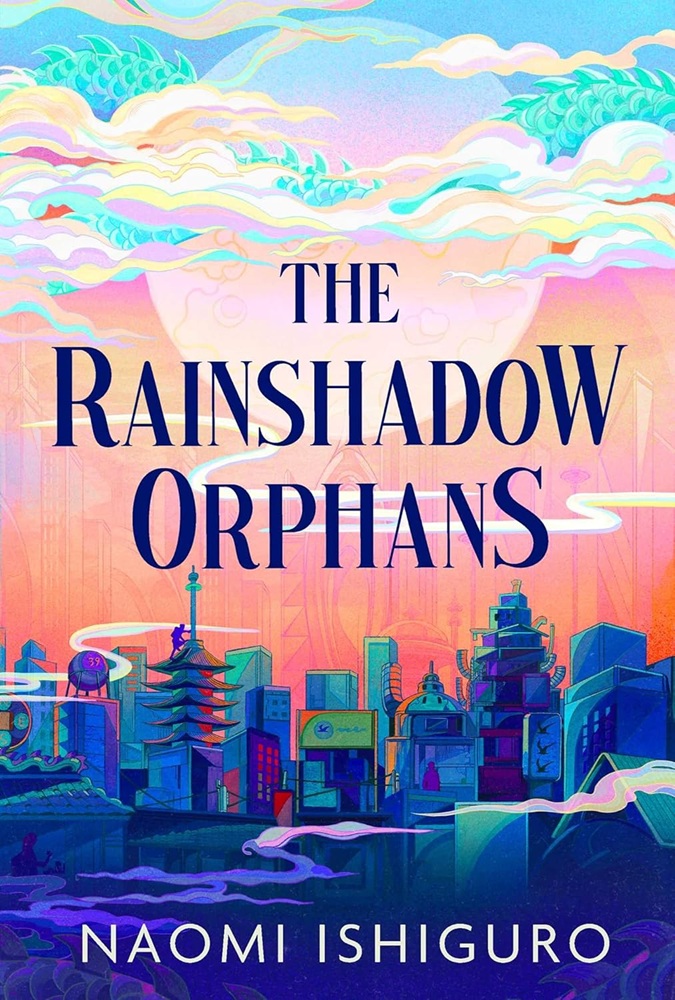
The Rainshadow Orphans (Rainshadow, #1) by Naomi Ishiguro
Genres: Adult, Fantasy, Science Fantasy
Representation: Japanese-inspired cast and setting
PoV: Third-person, past-tense; multiple PoVs
Published on: 26th May 2026
ISBN: 1668206897
Goodreads
The first novel in a dazzling fantasy trilogy inspired by Japanese folklore and Studio Ghibli films like Spirited Away, set within a mythical archipelago brimming with dragons and Sun Spirits, high-tech hackers and bubble tea.
Life is hard for the inhabitants of Rainshadow City, a place where poverty and corruption are rife and where they are terrorized by an underground criminal organization known as the Lucky Crows.
Toshiko, Jun and Mei Kawakami are a family, bonded through loyalty if not blood, who live outside the increasingly corrupt law and who are seeking revenge for the murder of their beloved “aunt” Reiko by the Lucky Crows. Haru is the son of the Emperor, destined to one day rule over the Archipelago and uphold his mother’s ignoble legacy, but he is more interested in making friends with the magical Sun Spirits it seems only he can see. Theo, forced to leave his homeland, is a reluctant foot-soldier for the Lucky Crows. He doesn’t want to be a gangster, but as an illegal immigrant to the city, his choices are severely limited.
When Toshiko steals a dragon pearl from the leader of the Crows, it sets them all on a thrilling path which will determine the future of Rainshadow City. Tightly set across two days and peopled with unforgettable characters, The Rainshadow Orphans blends the anime fantasy of works like Pokémon and Studio Ghibli and the anime science fiction of revolutionary cyberpunk like Akira to explore what it means to stand up to corruption and take charge of destiny.
I received this book for free from the publisher via NetGalley in exchange for an honest review. This does not affect my opinion of the book or the content of my review.
Nope.
This reads like mediocre YA, where everything (including the writing) is overly simple, full of info-dumping and a lack of realistic thought from the characters. The aesthetic is nice enough, but it wasn’t really leaned into in the first 20% or so (what I read before DNFing), and in and of itself it just wasn’t enough to hold my attention. The characters are all incredibly one-note, and the adults all behave like teenagers. The dialogue is – it’s clunky and forced, it doesn’t sound natural, lots of it is just an excuse to tell the reader things about the situation or the setting.
The writing rhythm is awful – there’s an over-use of commas, breaking every sentence into too many jagged pieces, so that the rhythm stops and starts constantly. If writing rhythm is something you can hear/care about, it’s like nails on a chalkboard. The phrasing is often awkward; the meaning isn’t always clear, especially when there’s multiple people who could possibly be being referred to. Quotes below, though these are all taken from my advanced reading copy and so there’s no telling if they’ll be edited or even removed from the final published edition.
Alongside them was a hint of the night’s hard labour they’d just passed.
What this is trying to say is that there’s evidence of how hard they’ve been working all night scattered around them, but that phrasing is terrible to me.
Disguise now sorted as best as possible, she made her way back over to the warehouse.
Again, this is really clunky phrasing.
These people, it sounded like, were walking down the aisle to her left. They didn’t seem like footsoldier Crows, somehow.
This is what I mean about too many commas, chopping up the sentences.
While Mei had done a good job of mocking them up false ID cards, which were fine for duping shopkeepers, along with the odd over-curious Imperial Guard, these still only partially connected to the all-important Citizenry Database, which remained, even with Mei’s continued efforts, largely unhackable.
Again, it’s the commas, the way it breaks up the sentences and creates a really jerky rhythm. I can’t stand it.
There’s a lot of moments like – Toshiko is trying to investigate this criminal gang, the Crows. So she’s hanging out around one of their warehouses. And for no reason whatsoever is convinced that if she can find out what are in the boxes she can see being moved into the warehouse, she can use it against the Crows. Why would you assume that? There’s no evidence that this isn’t their normal operations, you could open one of the boxes and it’ll most likely be the usual stuff they smuggle. Why are you expecting this to randomly be the time they’re smuggling something super-extra-illegal?
And there’s so much info-dumping – the way we found out about one character’s magical power made me cringe, it was one long vomit of telling-telling-telling. We don’t learn anything organically, everything from worldbuilding to character backstories are shoved down our throats instead. Everything needs to be over-explained and then emphasised by being repeated; it takes us five pages to cover what could have been a single paragraph. Somehow it feels like there are so many things happening, the book feels cluttered, and yet none of it is interesting or moving the plot forward.
So disappointed, because I was so looking forward to this one! But it’s a huge letdown for me.





I only had one DNF this month, The Garden of Delights. The summary intrigued me, and I was interested in the first few chapters, but, wow, the dialogue was so cliched and awkward and made me physically cringe. Not great, but I’m sure there’s plenty of people who would like it. The descriptions of the flowers were lovely.
I was excited about The Language of Liars, but I’d be stuck waiting for a sale anyway [$18 for a novella! The injustice of it all!] Maybe I’ll read a sample so I can see what the aliens are like.
I thought I’d get so much reading done this month, but I didn’t, for multiple reasons, so all of the mythology-based and religion critique books I thought I’d have read by now are pushed into May instead. Then yesterday I added 8 more books to my TBR! ……..Yay?
I just bought The Language of Liars, lol! I wanted more non-human books, is that so much to ask?
And sad the Ada Hoffman book didn’t work for you. I’m a fan of her and used to read her blog when it updated regularly. But I also find that didactic books, especially ones that as you say preach to the choir, are a chore to read.
In fairness, everyone else I’ve seen adores Language of Liars! If you’ve read it by now, what did you think? (And I KNOW, we need so much more of non-human protagonists, please!!!)
Same, I adore Hoffman’s other books, and I loved her blog. I think this is just a one-off, and I’ll probably love whatever she writes next. I do think it’s a very TIMELY book, it’s just that, as I said, I already agree with its take!
You’re correct, I did finish it, and I was totally unaware it was a novella – don’t think I would’ve spent the money otherwise XD It was fine! It’s hard for me to connect with short fiction as I just go through it so quickly. I think part of the reason I like Murderbot is because I read the first four novellas in a row.
My horse for non-human protagonists who aren’t just elves/orcs/aliens/humanoids who are sexy and hung. SIGH!!!!