
soupçon/ˈsuːpsɒn,ˈsuːpsɒ̃/ noun
1. a very small quantity of something; a slight trace, as of a particular taste or flavorSunday Soupçons is where I scribble mini-reviews for books I don’t have the brainspace/eloquence/smarts to write about in depth – or if I just don’t have anything interesting to say beyond I LIKED IT AND YOU SHOULD READ IT TOO!
Both of these ended up being kind of…eh. Not meh, I specify: eh. Hopefully that makes sense to you because I don’t know how else to explain it!
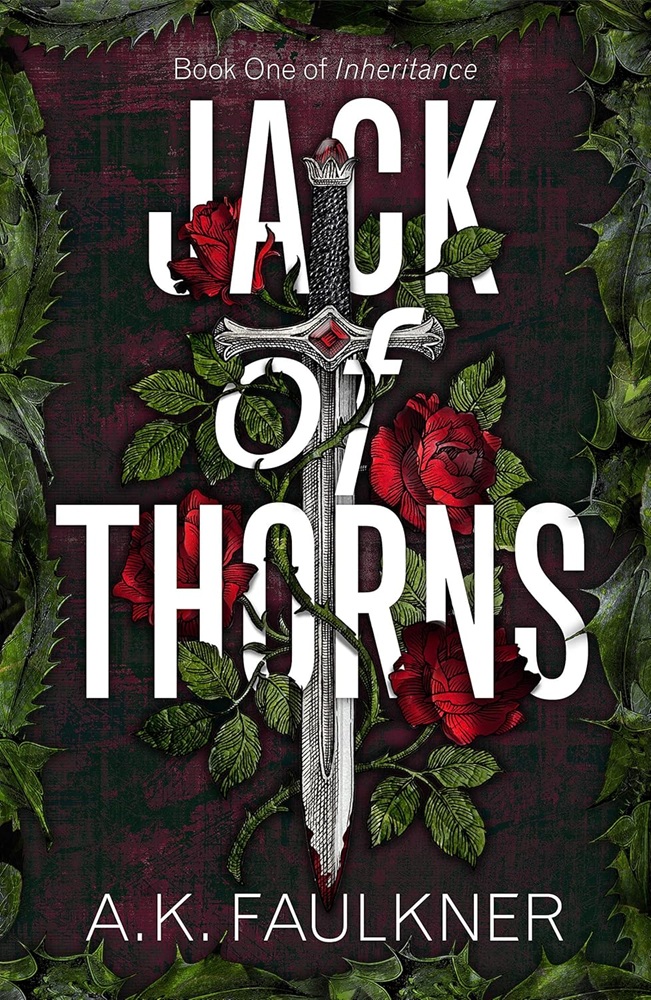
Jack of Thorns (Inheritance, #1) by Amelia Faulkner, A.K. Faulkner
Genres: Adult, Fantasy, Urban Fantasy, Queer Protagonists
Representation: Gay recovering addict MC, queer autistic MC
PoV: Third-person, past-tense; dual PoVs
ISBN: B07SS7RBW9
Goodreads
Laurence Riley might be able to see the future, but he can't see a way to fix his messed-up life. He can't control anything—not his supernatural talents, not his drug addiction, and not his violent ex-boyfriend. Laurence needs help and he knows it. A lifelong pagan, he turns to his god... and he gets Jack. Jack can help Laurence tame his powers and take control of his life. But it comes at a price: Laurence will need to keep him fed with regular offerings of sex. For the old Laurence, that would've been a pleasure. Problem is, Laurence has met Quentin.
Quentin is devastatingly handsome, way out of Laurence's league (like British nobility levels of out-of-his-league), and unbearably chaste. If that weren’t enough to keep Laurence away, Quentin's wild telekinesis is even more uncontrollable than Laurence's precognition. But Laurence doesn't want anyone else, and Jack is getting hungry.
Then Laurence foresees a glimpse of Jack's true plan. It will leave a trail of death across San Diego--and Laurence has been helping him do it. The past has taught him that the future can't be changed. But if Laurence and Quentin can't stop Jack, there won't be any future at all.
Jack of Thorns is the first book in a dark urban fantasy series where X-Men meets The Magicians.
Faulkner’s Inheritance series is one of the Urban Fantasy series recommended for fans of the Tarot Sequence – which I very much am! And FINALLY – on my third or fourth attempt – I managed to get the whole way through Jack of Thorns, the first book.
And it was…fine? The biggest critique I’ve seen for this book is that Quentin – one of the two PoV characters – speaks like a caricature of a posh British person, which is undeniably true. But if you keep reading instead of DNFing, it’s pretty clear that he does that out of a combination of a ton of trauma and being autistic; it’s a way to keep distance between himself and other people. The closer Laurence gets to Quentin, the less Quentin speaks that way with him. So it was weird, sure, but I didn’t mind that.
Jack of Thorns is…crude in a way we often see in UF and that I never enjoy. It’s believable and realistic, I guess, but I hate it. Laurence seems to be constantly thinking about sex; Jack, the villain, is gross in a very sexual way; Dan, Laurence’s deeply awful ex, is more manipulative and ‘I’m the victim’ about it but is basically the same. Much ew. I didn’t like Laurence manipulating Quentin into drinking less, either, or kissing Quentin when Quentin is so clearly not comfortable with it (the first time, it’s to deliberately trigger Quentin’s powers, but there’s at least one other occasion when Laurence kisses him without asking, and it’s not in aid of magic lessons then). I hate stories about people who can see the future; it strikes me as really lazy, and it did here, too, like it was story shorthand so Faulkner didn’t have to write out the full plot, just show us what would/could happen if Laurence and Quentin fucked up. The prose is very typical of UF: pretty plain, direct, barely any description, no playing with language. Not my favourite.
On the other hand, I really liked the flower shop, that Laurence genuinely loves working there with his mom and loves working with flowers, that he doesn’t see it as any kind of blow to his masculinity. I thought the depiction of his struggle to not go back to heroin was well-done. Quentin is ridiculous and I love him. I genuinely want to know more about Laurence’s magical inheritance, and where Quentin gets his powers from. And the book is a very easy, quick read; I got through the whole thing despite some pretty intense brain-fog, and there’s not many books where I can do that.
I probably wouldn’t continue with this series if I wasn’t aware of some lore that has me seriously interested in Faulkner’s worldbuilding (though it won’t show up on-page for ages, by all accounts). Enough readers have said the series gets better from book two that I’d like to try it, but if I don’t love it then I doubt I’ll bother with book three. For sure, Jack of Thorns is nowhere near the level of The Last Sun by any metric, but…it has potential. I’m hopeful I’ll like the next one more.
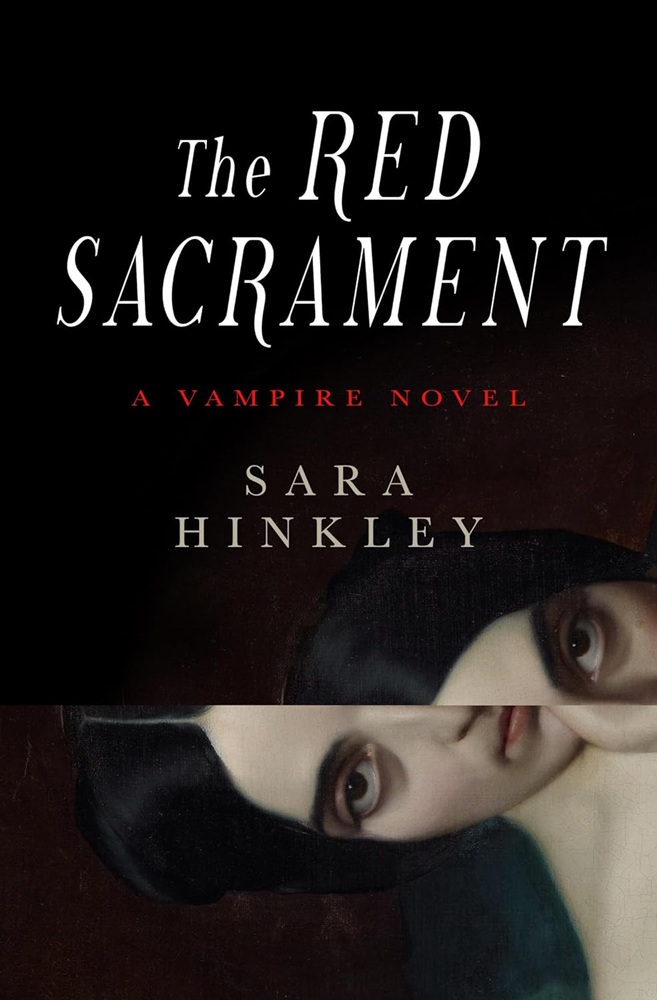
The Red Sacrament by Sara Hinkley
Genres: Adult, Historical Fantasy, Horror, Queer Protagonists
Representation: Bisexual/romantic MC, M/M
PoV: Third-person, present-tense
Published on: 7th July 2026
ISBN: B0FLKKHYMK
Goodreads
A savage, hypnotic dive into the lives and deaths of a coven of vampires living in 19th Century Paris, perfect for fans of Silvia Moreno-Garcia, Laura Purcell and Elizabeth Kostova
Paris, 1869. The Théâtre Saint-Siméon is the place to be, if you can get in. The black slips of paper that guarantee entry are rare and highly desired, and given only to certain persons. The actors on stage are magnetic and ageless, performing only at midnight and never seen during the day…
Arnault and his clan of vampires have survived for as long as they have by observing a rigid set of rules. At night, they perform on stage at the Théâtre Saint-Siméon, picking off just enough people in the audience to survive. But they understand the city, and how to live in it without being noticed.
Their peace is shattered first with a visit from Béatrice, a witch who forms a strange connection to Arnault; then with the arrival of Victor de Rouvray and his sister Françoise, vampires from a very different world. And, as Arnault grows closer and closer to the beautiful, enigmatic Victor, he risks becoming distracted from the constant bickering of his immortal friends, from the daily running of the theatre, and worse, from the premonitions of blood, death and starvation that he receives at night.For a terrible change is on the horizon, revolt and revolution are brewing in the streets and soon, the city, and Arnault will never be the same again.
I received this book for free from the publisher via NetGalley in exchange for an honest review. This does not affect my opinion of the book or the content of my review.
Don’t let BookTok anywhere near this one!
By which I mean, this is dark and messy and absolutely none of it is Unproblematic. The relationships, especially, are…so complicated. Hinkley writes about horrors in lush, silky prose, mercilessly contrasting the crude and brutal with beautiful language – which is one of my favourite Horror techniques and is done so well here. And it means that for most of the book, reading it was a pleasure, solely for that lovely writing.
The problem is that…there isn’t really a plot. For the most part, Red Sacrament is almost a slice-of-life story following a vampire theatre troupe (clearly inspired by the vampiric theatre troupe in Interview With the Vampire, but Red Sacrament never felt derivative or anything to me) in 1800s Paris. A brother-and-sister vampire couple comes to Paris, and Arnault, the troupe’s leader, is pretty dazzled by the brother; the two of them have an almost romantic relationship. Then Paris comes under siege, and the vampires suffer alongside the city’s humans. It’s not a story, it’s just a bunch of things happening, the way real life just happens without a plot. There’s no forward momentum; every time I set the book down, it took ages for me to remember it existed and pick it up again, because it’s just…not very compelling?
There are a whole bunch of incidents that feel like a climax, but aren’t; it makes the last 20% very waffly, full of random and disjointed bubbles of could-have-been-plot, all of which immediately pop and go nowhere. Up till that point, Red Sacrament was a strong four stars, but that last chunk of book…ruined it for me, honestly. The actual ending is incredibly abrupt, in the manner of deus ex machina – something I always hate, and hated here.
The lack of plot makes Red Sacrament feel…lazy, not as a pejorative but in the way that a sated predator is lazy: lingering, savouring. It’s a book about relationships: Arnault’s with his troupe, Arnault with his (going senile) sire, Arnault and Victor, his kinda-sorta boyfriend. And (most interesting, and most fucked-up), Arnault and the witch who sexually assaults him via magic right at the start of the book. Over the course of the book, Arnault has…dream-visions of the witch that are actually real, in which they can talk to and interact with each other, and their shifting dynamic is fascinating and horrible and believably…realistic? In the sense that in real life, people and the relationships between them can be so incredibly weird and messy and complicated?
The relationship between Arnault and Victor is the next-most interesting. Hinkley’s vampires can’t have sex, and don’t seem to feel sexual desire – but they can still fall in love. And yet, this isn’t romance in the way asexual people do it, because vampires seem to…feel the desire to feel desire? Arnault thinks on how romantic love for vampires is an exercise in frustration because of this, and his and Victor’s romance is a good example: Hinkley does an excellent job at making the relationship feel like it’s building up to something, to what would be sex for an allosexual couple – to make it feel like it needs a consummation that is impossible for these characters. I’m not smart enough to tease out all the ways this contrasts and mimics and is in conversation with the queerness in Rice’s Vampire Chronicles, but I do think some kind of conversation is happening.
Romance aside, it felt to me like Hinkley was trying to do or say something about – capitalism? There are multiple instances of some of the vampires railing against the ways in which the rich make use of an oppress everyone else, and it seemed like Hinkley was working hard to – humanise the poor to the reader? That vampires are a good metaphor for rich capitalists isn’t a new idea, but if Hinkley was trying to use it then it didn’t really come through for me.
More than anything else, this is a Horror story, and it’s Horror because of the way Hinkley zooms in on and lingers over the crude, the brutal, the visceral viscera. Almost every aspect of the book is twisted into ruin by the final pages; every relationship, every part of Arnault’s life, even his own mental health and self-image. It’s awful and bleak and depressing, grimdark in quite a few senses, and when you combine that with the lack of plot…I was left wondering what on earth the point was.
And I cannot overstate enough how much I despised that ending.
So it’s not really a book I’d recommend to anyone, honestly. The prose is lovely, and that’s it. I’ve seen other early reviews that praised the depiction of the theatre-stuff, and maybe if you’re interested in France in this historical period you might get something out of Red Sacrament. Otherwise…it’s a plotless exploration of vampiric relationships that collapses in the last 20%. I don’t know who this book is supposed to be for.





Leave a Reply