July went so well – just six DNFs! – that I was NOT expecting such a surge this month. (Why??? I don’t even know. I’m an incurable optimistic, what can I say?) Instead: SIXTEEN DNFs! That’s far too many! AND several of them were on my Unmissables list, which makes it extra disappointing! Sigh.
In fairness, as usual a few of these were objectively fine or even great, I just wasn’t the right reader for them. BUT STILL.
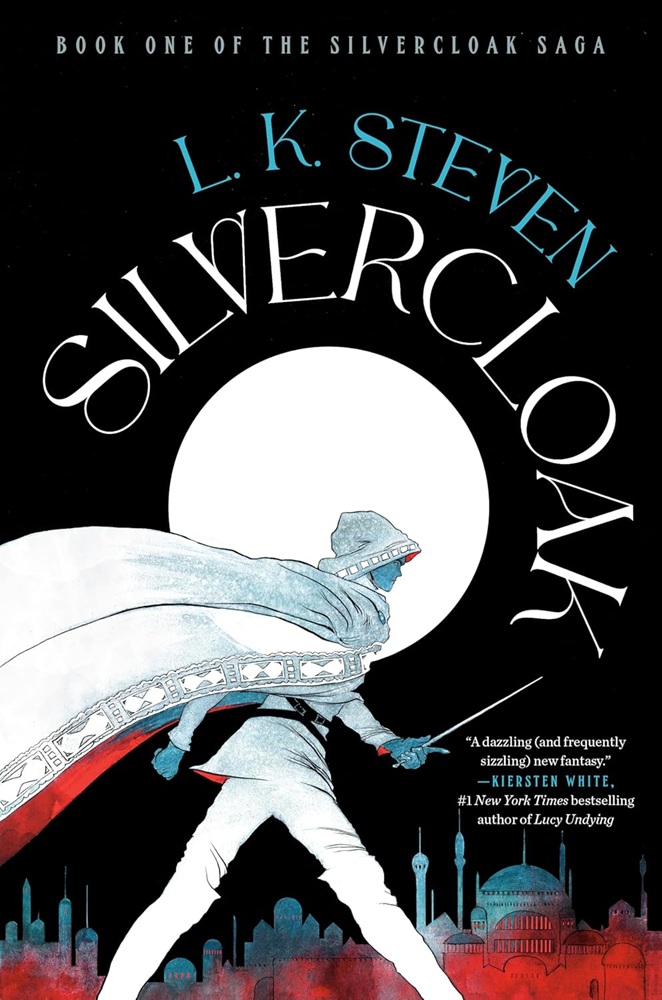
Silvercloak (Silvercloak Saga, #1) by L.K. Steven
Genres: Adult, Fantasy, Queer Protagonists
Representation: Bisexual MC
PoV: Third-person, past-tense
ISBN: 059397400X
Goodreads
SHE WILL BRING THEM TO THEIR KNEES.
Dive into this addictive new fantasy series set in a world where magic is fuelled by pleasure and pain, in which an obsessive detective infiltrates a brutal gang of dark mages – knowing that one wrong move will get her killed . . .
‘An absolute masterpiece’ Imani Erriu, author of Heavenly Bodies
'Dazzling (and frequently sizzling)' Kiersten White, bestselling author of Lucy Undying
'Had me feverishly turning pages' Hannah Whitten, bestselling author of The Foxglove King
‘This will be your next fantasy obsession.’ Rachel Greenlaw, author of Compass & Blade
'Lush, intricate, and thoughtful.' Sarah Rees Brennan, bestselling author of Long Live Evil
__________________________________________
Two decades ago, the Bloodmoons ruthlessly murdered Saffron's parents, destroying her idyllic childhood. Hellbent on revenge, she lied her way into the elite Silvercloak Academy of detectives with a single find a way to bring the Bloodmoons to justice.But on the eve of her graduation, her deception is exposed, and she's given only one go undercover and tear the Bloodmoons down from the inside.
Descending into a world where pleasure and pain are the most powerful currencies, Saff must commit some truly heinous deeds to keep her cover - and her life. Not only are there rival gangs and sinister smuggling rings to contend with, there's also her growing feelings for the kingpin's tortured son, and curious prophecy foretelling his death at Saff's hand.
With each day testing her loyalties further, Saff's web of lies becomes harder to spin. And when one false step could destroy everything and everyone she's ever loved...the mage who dedicated her life to vengeance might just have to die for it.
This one’s just depressing.
Because I actually liked it. The prose is great, in the style of Ilona Andrews et al; the magic system is genuinely fabulous; the worldbuilding is not appalling (at least in the little I read, maybe it gets worse later, I don’t know).
But. Like.
…You know what, thinking about the missed (lost? sabotaged?) potential is making me actually sad, and also my hands hurt, so I’m just going to link to a Goodread friend’s review that nails the issues. (Even if they were MUCH kinder with their rating than I’ve been!)
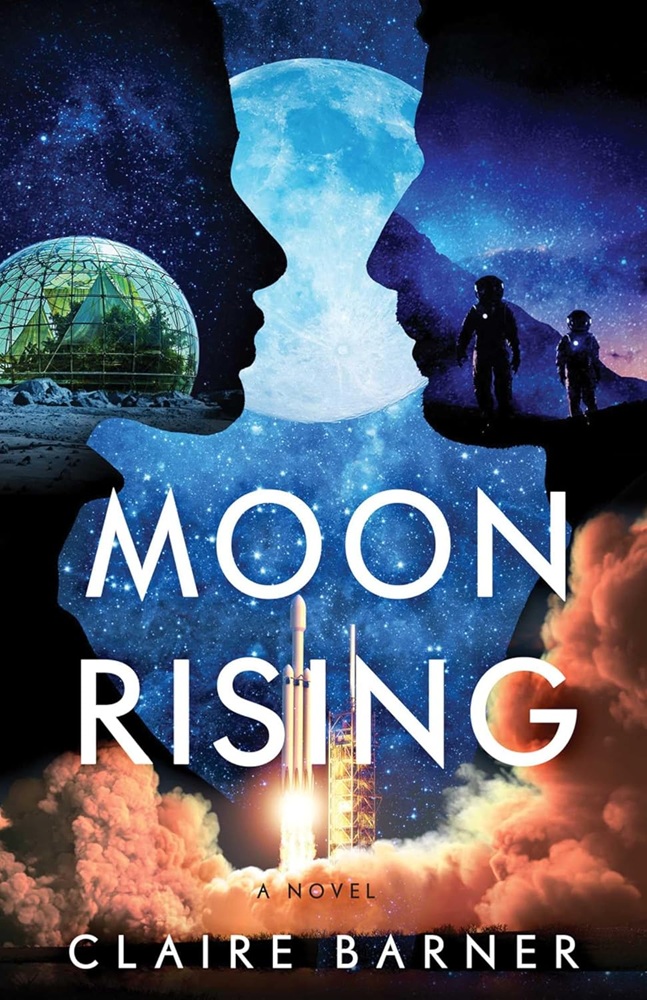
Moonrising by Claire Barner
Genres: Adult, Queer Protagonists, Sci Fi
Representation: MLM Middle Eastern MC, M/M, Middle Eastern love interest (separate romance)
PoV: Third-person, past-tense; multiple PoVs
Goodreads
A debut near-future romance, where Sea of Tranquility meets Winter's Orbit, told against the backdrop of the Moon's first lunar colony, with a multicultural and LGBTQ+ cast, about a cynical agronomist and charming Emirati businessman who fall in love, and battle eco-terrorists.
In 2073, controversial agronomist Dr. Alex Cole has dedicated her life to mutagenetic food, the only solution to feeding a world torn apart by climate change. When fierce opposition from radical environmentalists wipes out her lab funding, a surprising lifeline appears in the form of Mansoor Al Kaabi, a charismatic Emirati businessman who needs a sustainable food supply for his guests on the Moon’s first hotel.
Alex moves to the Moon colony with Mansoor, and they immediately dive into the challenging work. As she smuggles in illegal chickens, fights a vexing tomato fungus, and dreams of olive groves on the Moon, Alex is surprised to find herself falling in love not just with the lunar colony, but with Mansoor, whose vision for the future of the Moon extends far beyond luxury hotels.
Back on Earth, eccentric genius Victor Beard and Mansoor’s younger brother Rashid fight to push the Homestead Act through Congress. Without the support of the US government, they’ll never be able to achieve their goal to relocate humanity to the Moon and secure a second chance for life on Earth.
When eco-terrorists threaten the lunar colony, Alex, Mansoor, Victor, and Rashid must choose what they’re willing to die for–and what they’re really living for. Is it their grandiose visions of saving the planet–or is it each other?
Moonrising was one of my Unmissables, but I found the prose of this one really off-putting – blunt and plain, workmanlike. I was really startled by that – I thought the premise would necessitate a lot more description, things like the GM foods and the space hotel, and I expected…maybe not a cosy vibe, exactly, because the global situation in the book is pretty dire, but I definitely thought there’d be some kind of optimism or hope woven into the proceedings. And there didn’t seem to be.
Blunt prose, and a LOT of telling-not-showing, which rapidly became maddening. It was like Barner didn’t trust the reader at all and had to spell out every little thing – and in the plainest language possible.
It just wasn’t fun to read!
Millennium Bug by Yvonne Knop
Genres: Adult, Fantasy, Queer Protagonists
Representation: M/M
PoV: Third-person, past-tense (more or less)
ISBN: 3000768769
Goodreads
David Smith’s life is thrown into chaos when a mysterious book crashes through his window, telling the story of a life he doesn’t remember. A stranger, claiming to be a hidden scribe who weaves reality, demands the book back, warning that keeping it will unravel the world, but returning it will erase David from existence.
As the ancient order of storytellers is threatened to be overthrown by AI, David must reclaim his past and rewrite destiny itself to prevent the erasure of all reality. But if he succeeds, the cost may be too great—unlocking the truth of his fate gives him the power to destroy everything, including the only man he's ever loved.
If the world was never meant to be real, does it deserve to exist?
I received this book for free from the publisher via NetGalley in exchange for an honest review. This does not affect my opinion of the book or the content of my review.
Incredibly overwritten – too many details squeezed into sentences that were trying to be action-y, so that the scene was slowed down when things were supposed to be tense, and we were distracted from what was going on.
‘David, wake up!’ Her black skin blushed and her voice trembled with fear as she shook him gently, her necklaces sounding like tiny bells clinking against each other.
Trying hard to be funny, but it lands very awkwardly; the tone grated from the first page onwards. Characters crossing and uncrossing their arms every few paragraphs. Written in third-person, except for the sudden ‘You see,’ type of thing abruptly addressing the reader. David can’t read – at all – and this is apparently not really a problem? And has never really been investigated? There’s a bit of a joke that he’s always being told to look up dyslexia, but can’t because he can’t read–
so he simply carried on with his life.
Possibly I’m being oversensitive, but a) I don’t think being unable to read is funny in the least, and b) it’s treated so cavalierly here that it took me aback. Do you have any idea how much illiteracy fucks up someone’s life? It’s not a ‘keep calm and carry on’ type of problem! It affects EVERYTHING. How is he running a business if he can’t read?! (Yes, he has a business partner, but unless she’s doing everything and he’s just there to be decorative, I don’t understand how this works at all.)
And then there IS a book he can magically read – and he just. Goes and puts it on a shelf. Isn’t freaking out or in awe or anything that he can SUDDENLY READ SOMETHING – even if only this book, not other text. Again, I just don’t buy that someone would just shrug and not really care about this.

A Master of Djinn (Dead Djinn Universe, #1) by P. Djèlí Clark
Genres: Adult, Fantasy, Historical Fantasy, Queer Protagonists
Representation: Lesbian Egyptian MC, F/F
PoV: Third-person, past-tense
ISBN: 1250267676
Goodreads
Nebula, Locus, and Alex Award-winner P. Djèlí Clark returns to his popular alternate Cairo universe for his fantasy novel debut, A Master of Djinn
Cairo, 1912: Though Fatma el-Sha’arawi is the youngest woman working for the Ministry of Alchemy, Enchantments and Supernatural Entities, she’s certainly not a rookie, especially after preventing the destruction of the universe last summer.
So when someone murders a secret brotherhood dedicated to one of the most famous men in history, al-Jahiz, Agent Fatma is called onto the case. Al-Jahiz transformed the world 50 years ago when he opened up the veil between the magical and mundane realms, before vanishing into the unknown. This murderer claims to be al-Jahiz, returned to condemn the modern age for its social oppressions. His dangerous magical abilities instigate unrest in the streets of Cairo that threaten to spill over onto the global stage.
Alongside her Ministry colleagues and her clever girlfriend Siti, Agent Fatma must unravel the mystery behind this imposter to restore peace to the city -or face the possibility he could be exactly who he seems…
Great premise, great characters, can’t stand the prose. What is this atrociously clunky phrasing???
Coppery and almost metallic.
…You get that copper IS a metal, right?
Magic was everywhere. Not on the clothing. But it clung to the corpse in a faint luminous residue.
It was everywhere, except where it wasn’t!
The room was the clash of architecture that defined the rest of the house.
I think I understand what you’re trying to say, but no.
the bureau’s two only women agents
What you mean: the only two women agents/the only two female agents.
What you’ve said: the only two agents who are ONLY women – as opposed to the agents who are women AND something else, I guess. Genderfluid shapeshifters, maybe? (That would be excellent, actually.)
Her face flushed, and for the second time she heard her mother’s chiding of the embarrassed girl whose face fell to the floor.
The second time this memory has EVER come back to her? And what do you mean, the girl whose face fell to the floor???
Siti was another matter–a woman to shower compliments and who could poke jabs just as quick.
I can’t figure out if this is supposed to be something like ‘a woman to shower compliments ON and who was quick with jabs’ or ‘a woman who gave a lot of compliments and was just as quick to give insults’. Or something else entirely?
that shiny pocket watch you’re fond about.
Fond ABOUT?
“Did I mention that police aren’t well liked in the slums?” Fatma didn’t doubt it. From reports she’d heard, and with good reasons too.
‘From reports she’d heard, the slums had good reasons for their dislike.’
a knot of young men who listened respectful even while disagreeing.
RespectfulLY?
If it were possible, they burned even fiercer
Even more fiercely.
I made it to 35%, and then couldn’t take it anymore. NOPE.
:added later: I completely forgot to mention this, but this is the only time I’ve struggled with this author’s prose! I’ve read several of his novellas and a bunch of short stories, and some I liked and some I didn’t, but the writing was never like this. So it’s very possible that the prose in Master of Djinn is like this on purpose – maybe Clark’s writing in some dialect I don’t know. I couldn’t find anything about that when I searched online, but it’s not like I spent hours looking. If you know anything about that, I’d love to know about it!

A Resistance of Witches by Morgan Ryan
Genres: Adult, Fantasy, Historical Fantasy
PoV: Third-person, past-tense
ISBN: 0593831977
Goodreads
A historical fantasy debut set against the backdrop of World War II, where a witch journeys to find a book of unspeakable power before it lands in Nazi hands
Stubborn, plain-spoken and from an unimpressive family, Lydia Polk never expected to be accepted into the Royal Academy of Witches. Eight years later, with Hitler’s army rampaging across Europe, the witches of Britain have joined the war effort, and Lydia is key to the she must use her magic to track down magical relics before Hitler—known to be obsessively seeking the artifacts himself—and his sycophants can. Then a Nazi witch infiltrates the Academy with heart-breaking consequences, leaving the coven shaken, exposed and the elder British witches have no interest in further loss of coven life in service of a government that has forced them into hiding for decades, no matter the consequences to the world. But with the discovery of the Grimorium Bellum, an ancient book that leaves a trail of death and destruction wherever it goes—one the Nazi coven is desperate to get their hands on—Lydia’s mission has never been more urgent.
Alone and woefully outnumbered, Lydia makes her way to the heart of occupied France, where she finds allies in Rebecca Gagne—a fierce French resistance fighter chockful of secrets—and Henry Boudreaux—a handsome Haitian-American art historian with a little magic of his own. Together, they traverse the country, stalked by the natural and supernatural alike, in search of the grimoire. But, as Lydia soon discovers, finding the Grimorium Bellum is only half the the book has a dark agenda of its own. Lydia must subdue it before the witches of the Third Reich can use it—but she’ll have to survive the book herself, first.
Listen: I am always going to demand explanations when you tell me only women have magic, and if it’s not a cultural thing – ie men COULD do magic but choose not to for Reasons – then we’re going to have a problem.
We have a problem.
And like, that’s enough to DNF this book, for me. I’m not interested in your baby-steps TERFism. But immediately, a lot of the rest of the worldbuilding makes no sense either. For one thing, if women have ALWAYS been able to do magic in your universe, then why the hell is your historical novel indistinguishable from real world history? Your world should have developed wildly differently from our own! From the Stone Age onwards!
And then there’s things like witches calling those who can teleport Travellers, and, just. What. At no point would any witches in the British Isles refer to themselves as Travellers, ESPECIALLY not during this time period. Because multiple ethnic groups exist in Europe who already call themselves that. Particularly Irish Travellers, who are very much known in England too. And given the stigma and prejudice against those groups, nice white middle class British witches would Literally Never. (This is the point that made me consider that the author is perhaps not from the UK. I just don’t know how a Brit would miss this.)
There are other straight-up-stupid details of worldbuilding that had me tearing my hair out, such as: witches keep grimoires, books that contain all of the spellcraft they’ve done over their entire lives. But despite telling us that witchy culture is Very Invested in gathering knowledge and sharing it and making sure it’s not lost, to prevent the kind of witchy Dark Age that happened after the witch trials…grimoires are spelled to destroy themselves when their witch dies. WHAT? Are you kidding me? WHY?! Don’t give me that ‘it’s too private’ – there’s no reason your spell-record book needs to also be your journal or something! Don’t write down your innermost thoughts in the place you keep A LIFETIME’S WORTH OF MAGICAL KNOWLEDGE, and then you have nothing to worry about! You cannot tell me witch-culture is hugely driven to preserve knowledge and then simultaneously set it up that every witch’s personal history of spellcraft is destroyed when she dies. NO. That is NONSENSICAL. WHY WOULD YOU DO THAT?!
Lastly: possibly the largest source of conflict in the book is that British witches don’t want to be involved in WW2, and resent those among the witch community who insist they should be helping. Uh, what the fuck? Do you know ANYTHING about British culture during this time period?! And even WITHOUT all the propoganda and patriotism that was sky-high at this time – if Hitler invades, he’s not going to steer clear of every house that belongs to a witch! How could British witches not realise that? Even if they don’t like ‘normal’ humans because of the Witch Trials (…okay), they live in England too. They’re involved because an invasion or war affects them! There is no opting out of that.
Am I really supposed to believe things like rationing and, oh you know, THE BLITZ doesn’t bother witches at ALL?
This is just not even vaguely believable. I know people can be stupid. But NO ONE is that stupid. If that’s the take you wanted your witches to have, you should have set the academy in the US or something, some country that wasn’t being directly affected by the war, that wasn’t in direct danger from the Germans. As-is, this is nonsensical.
:added later: the synopsis has been changed from what it was when I first saw this, and I’ve heard from someone who finished the book, so apparently there are men in this verse who can do magic, but are not witches. I am thus considering giving this book another try, since there was nothing wrong with the prose…but gods damn, so much of the worldbuilding is so very stupid…hmm…

The Night-Bird's Feather by Jenna Katerin Moran
Genres: Adult, Fantasy
PoV: Third-person, past-tense
Goodreads
Death’s daughter steals a girl’s self-hate to decorate her garden. An accidental bond of fate forms between them—across the vast uncharted wildlands between their worlds and a great gulf of time—and begins a friendship redefining both. A book for all who long to cast aside their weighty cloaks of human skin, unfurl the feathered wings beneath, and fall into the sky.
In Perdition, where Death’s daughter’s garden grows, your dreams are dead. Your heart is dead. Your wishes, too. That is simply in the nature of the place. Thus, when she encounters there a thing she actively desires not to look upon, it is precious; alluring. A matter of the highest interest—to desire anything at all. She resolves to catch it; to tame it; to make it a portion of herself and of her garden. Only, it is something spoken the anger, self-loathing, and despair of Valentina Grigorievna Sosunova, of the lands of life.
Valentina dreams the future and the past. One day, she will duel the lord of death. She will leave his lands in ruin, and a portion of her heart behind. Another day, she will return, to study at Death’s Bleak Academy. Today ... she is alone, her family bound in enchanted sleep, her home ringed round by a witch’s guard of a crows. In her dreams she’s found the first hope of fighting back; has set her hand upon the true thing that is behind all things, that undergirds all things, the treasure that is the worth of all the world—but it is a treasure that belongs to Death, and Death is a jealous god.
One day, her great-great-granddaughter Aprosinya will grow up on stories of her deeds—stories of witches and curses, clockwork come to life, duels in the dark beyond the world, and the risen dead. They’ll come to her as if they were finished things ... but they are not. The Bleak Academy has business with her family yet, and the things of fairy-tale too; and Valentina and the witch yet haunt her dreams.
Vita Nostra meets Spirited Away in this bold, heartening Slavic-inspired fantasy saga by Jenna Moran, where attention and care hold the world in place; where beauty, wonder, and terror may yet be found beyond the lands of life. Pick up a copy of the Night-Bird’s Feather and let its story set you free.
You know when a book is trying to be Mysterious, but for some inexplicable reason it feels needlessly mysterious? Convoluted just for the sake of it? Kind of pretentious? And using 10 words when one would do? The kind of book that is very proud of itself for being Oh So Clever, and needs you to acknowledge its cleverness every other paragraph?
Yeah.
The opening was great – quickly introducing us to this mysterious village/small town in a world maybe next door to ours, that can be reached from ours if you know what you’re doing – and then the pacing dropped to the glacial. Overly mysterious footnotes scattered here and there just to raise more questions (and not even interesting ones!) First we establish that witches don’t exist, then immediately poor Valentina is left to take care of her entire comatose family because a witch has put them all to sleep. Then there’s shenanigans where time travel-type stuffs are happening within the dreaming realm – Valentina not putting together that she’s seeing and interacting with her own descendants/future spouse(?), but it’s fairly clear to the reader. (I didn’t understand why she didn’t put it together AND none of the people she saw tried to explain.) The witch – who is a heron, let’s not get into it – shows up to boss Valentina around and ‘help’ her take care of her sleeping family, because otherwise they’ll die and then the witch won’t be able to make use of their dreams.
And it just…feels needlessly complicated, and like it’s trying to keep secrets from the reader just for the sake of it. I don’t know how to put it better than that. There’s a flavour of Weird that feels vaguely Ukrainian (PLEASE don’t ask me to explain what I mean, I barely know) but I wasn’t seeing Slavic influences in the story and worldbuilding. (Then again, I didn’t get far – about 15% through the ebook.)
This is one of those books that is all vibes. I’ve seen other readers say the same thing, and I think that puts it perfectly. If you like all-vibes, then go for it! But if you don’t, then definitely skip this one.
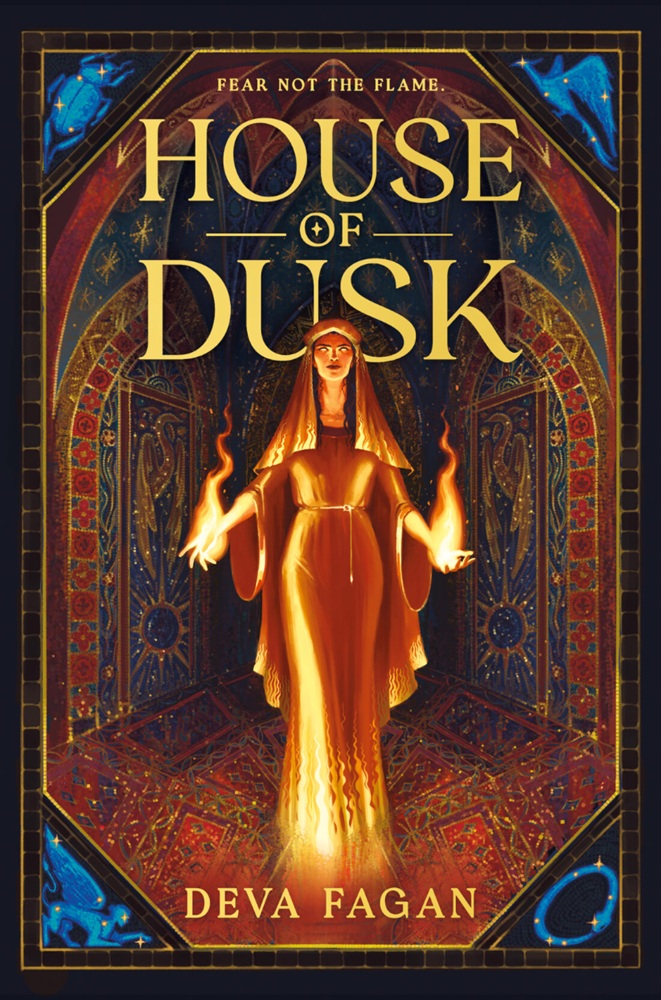
House of Dusk by Deva Fagan
Genres: Adult, Fantasy, High Fantasy, Queer Protagonists
Representation: F/F
PoV: Third-person, past-tense; dual PoVs
Published on: 26th August 2025
ISBN: 0756420113
Goodreads
A romantic epic fantasy featuring a fire-wielding nun grappling with her dark past and a young spy caught between her mission and a growing attraction to an enemy princess
With complex relationships, a rich and mythic world, and brisk pacing, this standalone novel is perfect for fans of Tasha Suri, Samantha Shannon, and Shannon Chakraborty
Ten years ago, Sephre left behind her life as a war hero and took holy vows to seek redemption for her crimes, wielding the flames of the Phoenix to purify the dead. But as corpses rise, a long-dead god stirs, and shadowy serpents creep from the underworld, she has no choice but to draw on the very past she's been trying so hard to forget.
Orphaned by the same war Sephre helped win, Yeneris has trained half her life to be the perfect spy, a blade slipped deep into the palace of her enemies. Undercover as bodyguard to Sinoe, a princess whose tears unleash prophecy, Yeneris is searching for the stolen bones of a saint. Her growing attraction to the princess, however, is proving dangerous, and Yeneris struggles to balance her feelings for Sinoe with her duty to her people.
As gods are reborn and spirits destroyed, the world trembles on the edge of a second cataclysm. Sephre must decide whether to be bound by her past or to forge a better future, even if it means renouncing her vows and accepting a new and terrible power. Meanwhile, when the real enemy makes their bid for power, Yeneris must find a way to remain true to her full self and save both her mission and her heart.
As dead gods rise and corruption creeps across the world, this sweeping standalone fantasy tale of forbidden sapphic love and dark betrayal will set your heart ablaze.
I received this book for free from the publisher via NetGalley in exchange for an honest review. This does not affect my opinion of the book or the content of my review.
I think this is objectively lovely, and I massively approve of several things Fagan is doing here – myths/religion not telling the whole story of ancient events; the subversion of the One Evil God trope; conflicting faiths; fire-wielding priestesses; a world where non-binary people are nothing noteworthy, just accepted as completely normal. The prose is a good few levels above adequate, albeit nothing really special; our two POV characters are GREAT, I really liked them both, especially Sephre, our fire-wielding priestess who really wants to be wiped clean of all her memories, to get away from her guilt over what she did in the past war. The setting FEELS rich, even though the actual amount of worldbuilding and description we get is less than I usually like.
Maybe you had to be a bit terrible, to make your mark on the world.
What I’m saying is that I think the problem is me, not the book. For some reason, I was bored senseless. Yeneris’ chapters – half the book, and the F/F storyline – didn’t interest me at all, especially because the princess she’s guarding is naive beyond belief. I think it’s very hard to write prophecies/seeing the future well, and I didn’t love it here; the prophecies are cryptic as heck (think the pronouncements of the Oracle at Delphi and you’re on the right track), and even though Sinoe acknowledges this very wryly, I still found them annoying to read. I made it to 47%, and just…didn’t feel any interest in pushing on to the ending. Maybe because it all feels very straightforward (possibly as a result of making this story fit into a standalone)?
Tell her that glory was a sword with no hilt. That it sliced you open if you tried to wield it.
I think tons of people will LOVE this, and they should. I don’t think House of Dusk has any objective flaws – a few things I don’t really enjoy, but that’s a taste thing, not a An Actual Flaw thing. I really can’t put my finger on why it’s not working for me. I would happily pounce on future books from this author! I may even be willing to try House of Dusk again in a year or two. So like – four stars, objectively! Just not for me, at least right now.
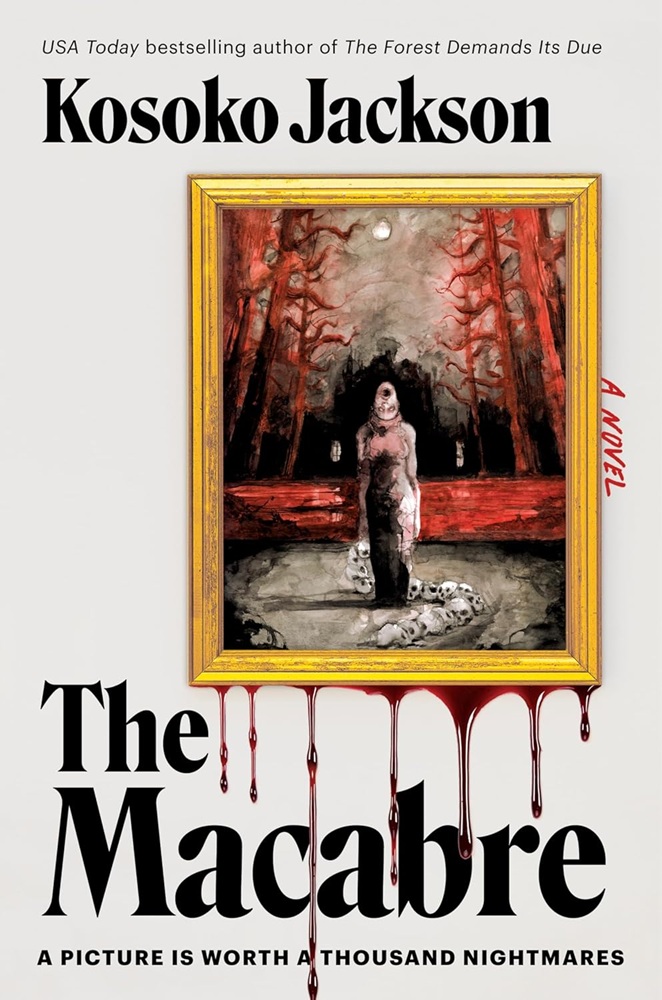
The Macabre by Kosoko Jackson
Genres: Adult, Fantasy, Queer Protagonists
Representation: Black gay MC
PoV: Third-person, past-tense
Published on: 9th September 2025
ISBN: 0063394499
Goodreads
From award-winning and USA Today bestselling author Kosoko Jackson comes his adult fantasy debut, a stand-alone novel blending of art history, time- and globe-hopping adventure, and dark horror and fantasy about ten cursed paintings and the lengths people will go to collect them, destroy them…or be destroyed.
A picture is worth a thousand nightmares.
A struggling painter, Lewis Dixon is shocked when the British Museum shows an unusual interest in his art. While he’s always felt there’s something powerful about what he puts on canvas, he also felt there was something disturbing just under the surface—especially as he was compelled to make a painting of a painting—one that he has a connection the object of his art is one of the ten paintings his great-grandfather created over a hundred years ago. Only Lewis’s version is surreal…and maybe just a touch horrific.
Still, he accepts the invitation, only to find not a curated show, but a to see if he not only has the magic necessary to enter the paintings, but also the strength to escape them. Because unbeknownst to Lewis, there is power in his art, just as the ten paintings carry with them both immense eldritch abilities and a terrible curse—making them, perhaps, the most valuable works of art in the world.
And Lewis has been asked to destroy them all.
With orders from a mysterious museum official, Evangeline, and partnered with an alluring agent in her employ, Noah Rao, Lewis must plunge into a world of black markets, gothic magic, ancient history, and unspeakable terror to save those unlucky enough to call any of the paintings their own, and to hopefully locate the tenth painting in the series, long missing, the powers of which are suspected to be most devastating of all…
I received this book for free from the publisher via NetGalley in exchange for an honest review. This does not affect my opinion of the book or the content of my review.
Clunky prose in the overwritten sense – too many unnecessary descriptive details forced into too many sentences, wrecking the writing rhythm and making the prose feel clumsy and heavy-handed. A lot of telling-not-showing, and a main character who didn’t feel very developed/complicated enough to be a real person.
A lot of YA authors switching to Adult don’t seem to realise that the complexity (if that’s the right term?) of their language, sentence structures, etc also needs to increase for an Adult audience – in my opinion, anyway. I think that’s what some of the other reviewers mean when they say this feels like YA; it’s too simple on a technical level for Adult.
On the other hand, if you LIKE prose that’s simpler, you might enjoy this all right?

Sunward by William Alexander
Genres: Adult, Queer Protagonists, Sci Fi
Representation: Queer MC
PoV: First-person, past-tense
Published on: 16th September 2025
ISBN: 1668058065
Goodreads
A cozy debut science fiction novel by National Book Award–winning writer William Alexander, this story of found family follows a planetary courier training adolescent androids in a solar system grappling with interplanetary conflict after a devastating explosion on Earth’s moon.
Captain Tova Lir chose a life as a courier rather than get involved in her family’s illustrious business in politics. Set in humanity’s far future, hiring a planetary courier is essential for delivering private messages across the stars.
Encouraged by friends, Tova begins mentoring baby bots, juvenile AI who are developmentally in their teens, and trains them how to interact within society essentially becoming their foster mom. Her latest charge, Agatha Panza von Sparkles, named herself on their first run from Luna to Phoebe station. But on their return, they encounter a derelict spaceship and a lurking assassin, igniting a thrilling chase across the solar system.
Tova and Agatha’s daring actions leave Agatha’s mind vulnerable, relying on Tova’s former AI pupils for help. As Tova starts gathering her scattered family around her, she is chased through the solar system by forces who want her captured and her family erased.
This debut science fiction novel by National Book Award–winning author William Alexander is a must-read for fans of Becky Chambers and Ursula K. Le Guin. Lovers of poignant science fiction, where the bonds of found family, the evolution of AI, and the building distrust of centuries of bias, come together in this visionary look at humanity’s future.
I received this book for free from the publisher via NetGalley in exchange for an honest review. This does not affect my opinion of the book or the content of my review.
It’s fine? I guess? But I read the first third and was just bored.
The protagonist isn’t very unique and her first-person narration isn’t at all interesting; the worldbuilding is minimal and pretty simple; the baby bots were cute but as far as I can tell the mc is going to spend most of the book without her baby bot; and nothing about it was cosy. (Earth is a wasteland! Thousands of people just died in some kind of accident/attack/natural disaster! Bots are people but they can’t own themselves! There’s a whole guild of people who exist to murder couriers! Etc.) The prose is very plain, which does not help, and the description is minimal – I had no clue how to picture anything.
Not sure what the appeal is supposed to be!

A Fae in Finance (How to Do Business in Fairie Book 1) by Juliet Brooks
Genres: Adult, Fantasy
PoV: First-person, past-tense
Published on: 21st October 2025
ISBN: 0316587664
Goodreads
She’s working for a fae in finance, business plan, 6’ 5”, big wings…
When investment banker Miri is purposely trapped in Faerie by her client, the Princeling of the Faerie realm, she does what any normal 20-something would cries, makes jokes in denial, and worries loudly about her cat, Doctor Kitten. Instead of rescuing her, her boss simply confirms she has solid internet access, leaving Miri stranded in a strange land with only a warning that the quality of her work should not decrease because of a change of address.
But Miri grew up reading fantasy, and she knows there are always ways to work around magic—she just needs to find them. In order to make her daring escape, Miri must navigate Faerie political drama, lies by omission, faerie seduction tactics, deteriorating mental health, and a mother who never hangs up the phone.
I received this book for free from the publisher via NetGalley in exchange for an honest review. This does not affect my opinion of the book or the content of my review.
I think everyone’s mileage is going to vary, with this one. It’s going to mostly come down to, does the humour work for you?
For me, it didn’t. The tone is going for light, and quirky, but Brooks goes hard on making the situation Miri is in really, truly terrible. I wanted to stab her boss every time he spoke or emailed; he’s horrific, and I just don’t find that funny. The scene where Miri is throwing up in her bathroom, miserable from poisoning, and is still emailing back and forth with this asshole – what part of this am I supposed to be laughing at? (I grant that some of the faeries were adorable.)
I knew going in – from the premise, the style of the cover, etc – that this wasn’t going to be a worldbuilding-heavy book, so I’m not too bothered that we didn’t really get any. That being said, I didn’t love the Fae here; Brooks seems to be going for something between Maas’-style and Actually Otherworldly, and it just doesn’t work for me at all – the way the Fae talk and think, for example, came across as deeply annoying instead of deeply alien. It doesn’t help that Mira is inexplicably blase about all the strangeness – she meets a faerie made out of fire and has no reaction whatsoever! All the impossible things, all the magic – she just shrugs and carries on; there’s no freaking out, but also no wonder or excitement, which is extra disappointing from a character who supposedly really loves fantasy and the idea of the Fae in particular. (To the point that she kind of fetishizes them at first, but even by the time I DNFed she had learned better and stopped doing that, so I give her a pass.) Given that the book is in first-person, her non-reactions kind of flattened any fantastical elements, so I couldn’t enjoy them either.
The synopsis is pretty misleading: Miri is not using her fantasy-nerd powers to navigate Faerie. That would have been so extremely cool, but it just wasn’t happening. She spent all of three seconds negotiating a deal with the Princeling, very badly – but it’s her mother, after the fact, who tells her she should turn the deal into a well-defined contract. Miri isn’t the one who thinks of that. She’s just generally a very passive character – which is in some ways pretty understandable, in the situation she’s in; I suspect a lot of real people would be too. But this is a novel! I’m here for a pro-active heroine utilising her extensive fantasy-genre knowledge! Getting the best of her captors because she knows how faeries work! I mean, she gets stuck in Faerie because she eats faerie food – ma’am, WHAT? And she KNOWS faerie food gets you trapped, but she eats it anyway because her boss glares at her. MA’AM?! Given the opening chapter, I expected the boss – who also eats the food – to be the one who got stuck, and then Miri would trade herself for him or something like that because she’s a Good Person. But nope!!!
I read the first third, then skipped to the end to see if there was anything worth reading through the rest of the book for, and nope. Some cute friendships with some adorable Fae, and a five-second ‘fuck you’ speech to the boss. (She also has a knight now, but I read up to where that happened so that wasn’t news to me.) The best friends we meet at the start of the book not only don’t play any significant part in the story, they don’t even know where Miri has been all this time! And were fine with that?!
Which is all to say: Fae in Finance is trying to be light and cute, but I found it pretty heavy and grim (even without the mental health episode I know Miri has later in the book). If you’re not light and cute, then I demand better prose and worldbuilding, and since we didn’t get that, this pretty much fails on all fronts for me. I don’t recommend it to anyone.
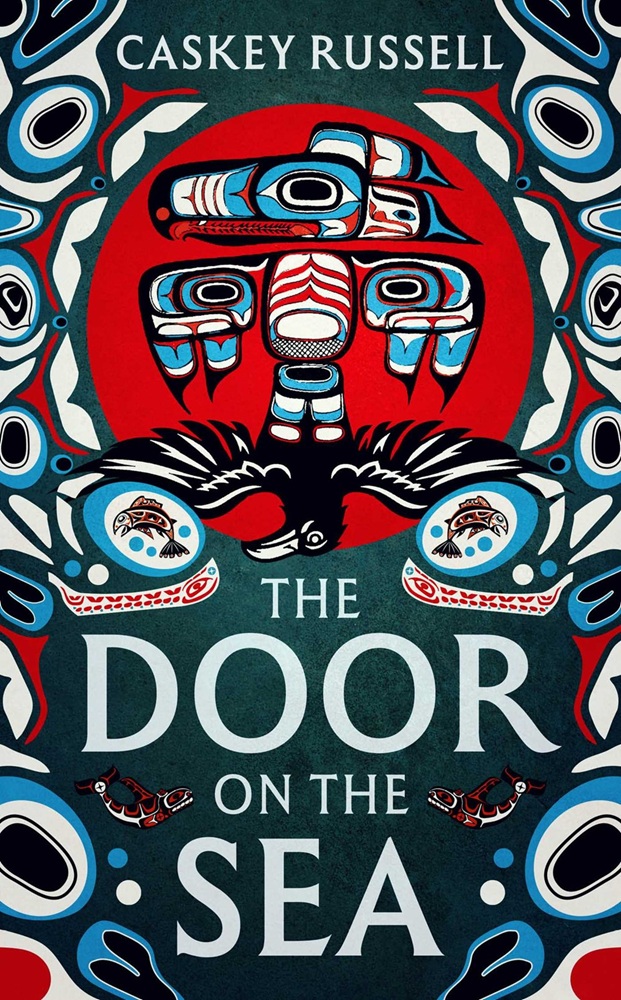
The Door on the Sea by Caskey Russell
Genres: Adult, Fantasy
Representation: Tlingit cast
PoV: Third-person, past-tense
Published on: 9th September 2025
ISBN: 1837863830
Goodreads
An epic quest fantasy debut that is the Tlingit indigenous response to The Lord of the Rings
When Elān trapped a salmon-stealing raven in his cupboard, he never expected it would hold the key to saving his people from the shapeshifting Koosh invaders plaguing their shores. In exchange for its freedom, the raven offers a secret that can save Elān’s home: the Koosh have lost one of their most powerful weapons, and only the raven knows where it is.
Elān is tasked with captaining a canoe crewed by an unlikely team including a human bear-cousin, a massive wolf, and the endlessly vulgar raven. To retrieve the weapon, they will face stormy seas, cannibal giants and a changing world. But Elān is a storyteller, not a warrior.
As their world continues to fall to the Koosh, and alliances are challenged and broken, Elān must choose his role in his own epic story.
I received this book for free from the publisher via NetGalley in exchange for an honest review. This does not affect my opinion of the book or the content of my review.
I cannot emphasise enough that THIS IS NOT AN OBJECTIVELY BAD BOOK.
Like, I don’t think it’s amazing, either. But take that with a pinch of salt, because this isn’t my genre.
The main issue here is with ME: I misunderstood what this book was going to be, is all. And unfortunately, what it actually is…doesn’t interest me at all.
See, I assumed that a ‘Tlingit response to Lord of the Rings’ was going to be…different? I mean, fundamentally different to typical adventure story I’m familiar with. I was curious about Tlingit storytelling traditions and wondered if they might include a story structure I didn’t know – the ‘three act’ story you’ve probably heard about is very much a white Western thing, and other parts of the world have very different ones, like the Japanese kishōtenketsu (‘storytelling without conflict’) or the frame story model of the Middle East (think about how Thousand and One Nights is a story about telling other stories). What does a Tlingit hero look like? Etc!
But – at least as of 36% in, which is as far as I got – there wasn’t really anything new for me. The Door On the Sea is a pretty conventional adventure story, with a coming-of-age arc for the main character Elān. Off he goes on a quest with several companions; there is a growing threat of shapeshifting monsters; there’s even a quest object. Nothing wrong with any of that! It’s just not the kind of story I enjoy. And it is entirely on me for misunderstanding what this book was going to be.
I found the writing pretty blunt and plain, but it’s not actively bad. That being said, there’s not a lot of interiority to the characters – we don’t get much of their thoughts and feelings, which was a shame. I admit I raised an eyebrow when it became clear that the only woman on the quest is deeply unpleasant, but I’m probably supposed to be glad there’s any women at all, so? And I did find it inexplicable that, when Elān is put in charge of the quest, none of the more experienced adults help or guide him or give advice, even though he’s never been in this position before. The Hierarchy of Command is more important than everybody surviving, I guess. (He nearly gets everyone killed, and the warriors just tell him apologising for it is weak. Which he disagrees with, at least.) They somehow expect him to know and remember everything he needs to know and remember, and if his ignorance gets them killed, well! At least they died following orders!
It really didn’t help that the raven is an immature, gross brat. Crude and rude and mean, all the time. This isn’t bad storytelling or writing by any means, it’s just a kind of humour that I really don’t enjoy and rapidly found repetitive.
So this is not a me-book, but I think it’s a perfectly okay example of what it’s trying to be. If you enjoy this genre more than I do, I don’t think you’ll hate this one.

Moonflow by Bitter Karella
Genres: Adult, Horror, Queer Protagonists
Representation: Fat trans MC, sapphic MCs
PoV: Third-person, past-tense; multiple PoVs
Published on: 2nd September 2025
ISBN: 0356528316
Goodreads
Moonflow is three-time Hugo Award nominee Bitter Karella's debut horror novel - a gloriously queer and irreverent psychedelic trip into the heart of an eldritch wood and the horrors of (cis)terhood. Answer the call of the forest, if you dare.
I see something out there, in the woods. It does not have a face.
They call it the King's Breakfast. One bite and you can understand the full scope of the universe; one bite and you can commune with forgotten gods beyond human comprehension. And it only grows deep in the Pamogo forest, where the trees crowd so tight that the forest floor is pitch black day and night, where rumors of strange cults and disappearing hikers abound.
Sarah makes her living growing mushrooms. When a bad harvest leaves her in a desperate fix, the lure of the King's Breakfast has her journeying into those vast uncharted woods. Her only guide is the most annoying man in the world, and he's convinced there's no danger. But as they descend deeper, they realize they're not alone. Something is luring them into the heart of the forest, and they must answer its call.
'Weird, wild, and oh-so-wretched, Moonflow is the trans botanical horror we need in the world right now. Moonflow will sink its tendrils into you and infest you with its spores . . . and you'll enjoy it' Drew Huff, author of The Divine Flesh and Free Burn
'A triumph of queer, horny, hippy horror that'll make you cackle, gasp, and scream! With its cast of iconic characters, imaginative enchanted setting, gripping story, and mind-bending horrific imagery, Bitter Karella's Moonflow is a trip to die for' Eve Harms, author of Transmuted
'Is it legal to have this much fun reading a book? I'm in awe of Bitter Karella's incredible gift for creating biting satire without a shred of cruelty. Moonflow made me laugh out loud while genuinely caring about its wild cast of characters . . . I had a f*cking blast' Joe Koch, author of The Wingspan of Severed Hands and Invaginies
I received this book for free from the publisher via NetGalley in exchange for an honest review. This does not affect my opinion of the book or the content of my review.
I read this one to 53%, because I feel like I SHOULD love it. This sounds so much like my thing! DEEPLY haunted fucked-up forest; lots of nerdy detail about mushrooms; a trans mc who loves her cat and is So Very Done with other humans – what’s not to love???
And I do think it’s an objectively great book! (Seriously, I ADORED Sarah as a character!) There’s a lot of implicit commentary on poverty and classism and privilege, which Karella trusts you to either know about already or put together from the story: there’s no telling-not-showing, and you’re not beaten around the head with Issue Stuff. The story moves quickly; the characters are almost always in motion. I kind of want to cackle at seeing the Wiccan-esque Lord and Lady (aka, the Green Lady and Lord of the Forest, as they’re known in Moonflow) cast as figures of horror, and I am probably unreasonably obsessed with the detail of the Lord having fungus-antlers. That is such a cool visual!
But damn it, I need more sensory description in my Horror!
(Of course, this is a catch-22 situation, because when there IS enough sensory detail, as in Library at Hellebore, I’m too squicked out to read it. Probably I should just stop trying to read Horror, I’m clearly not built for it!)
The prose isn’t bad at all – it’s very readable, and Karella gives us plenty to be disturbed and grossed out by (raccoon graveyards! the need for amnesia-pills! teeth in a tree!!!) This is what I think of as ‘bestseller’-style writing – it’s going to work incredibly well for most readers, with just the right balance of constant action and character interiority, and enough description that you can picture everything without getting bogged down in details. But the writing is not lush, and I very much need lovingly, disgustingly lush when it comes to Horror. Either Poppy Z Brite levels of decadent, or Gretchen Felker-Martin levels of gross. Without that, the Horror elements just don’t become real for me. I don’t feel them properly if you don’t drown me in sensory detail.
The other factor that decided me was the…grossness of bodies? I’ve seen this before, it’s a definite and deliberate Horror thing, but I am a prude and I don’t enjoy it. I can become horribly fascinated by it, as happened with Manhunt, but that’s a case of prose holding me hypnotised through the horror/ick, and Karella’s prose isn’t doing that. So it’s…the wrong flavour of gross for me? I’m not sure how to put it. It doesn’t go well with the TERF shit of the cult in the story, which is honestly where 99% of the body-grossness was coming from, and that is ON PURPOSE, we are SUPPOSED to be disgusted, Karella is a great writer! I just…don’t like it, and don’t want to keep reading it.
Both these things are me problems, not objective flaws of the book. If the premise intrigues you, I encourage you to go try this one out for yourself! That it does not meet my ridiculous requirements should not be taken as a strike against it. (Unless you, too, share my ridiculous requirements, in which case, drop a comment and say hi!) I still recommend it EXTREMELY enthusiastically; I’m certain that a whole lot of ‘proper’ Horror readers (as opposed to whatever the fuck I am) are going to freaking LOVE Moonflow.
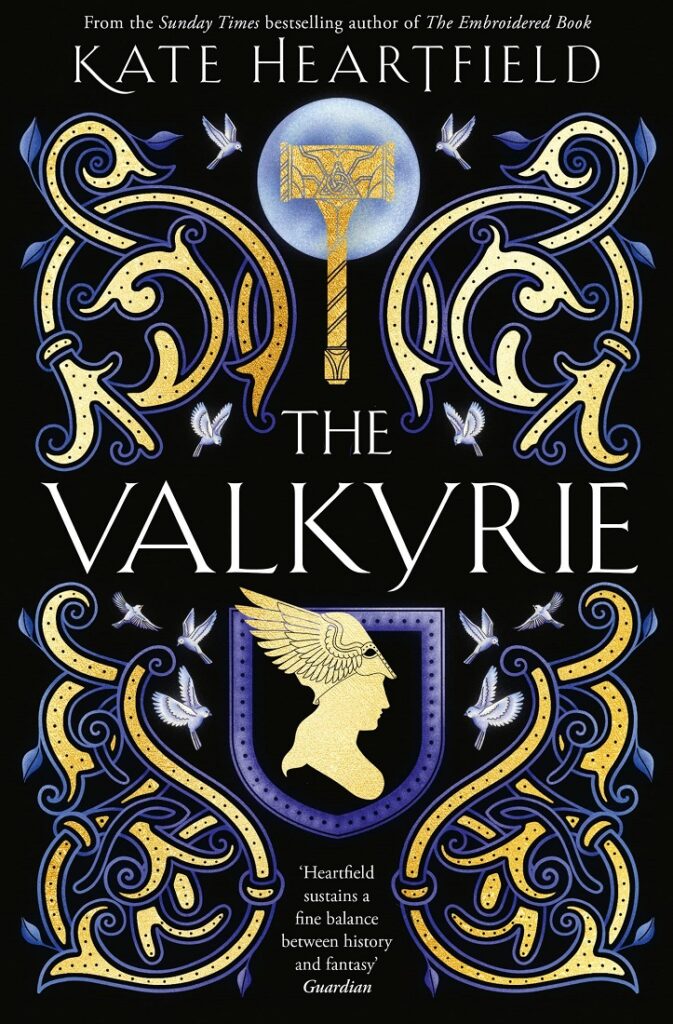
The Valkyrie by Kate Heartfield
Genres: Adult, Fantasy, Historical Fantasy, Queer Protagonists
Representation: F/F
PoV: First-person, past-tense, dual PoVs
ISBN: 0008567751
Goodreads
From SUNDAY TIMES bestselling author Kate Heartfield comes a glorious, lyrical retelling of one of Norse mythology’s greatest epics
Brynhild is a Valkyrie: shieldmaiden of the All-Father, chooser of the slain. But now she too has fallen, flightless in her exile.
Gudrun is a princess of Burgundy, a daughter of the Rhine, a prize for an invading king – a king whose brother Attila has other plans, and a dragon to call upon.
And in the songs to be sung, there is another hero: Sigurd, a warrior with a sword sharper than the new moon.
As the legends tell, these names are destined to be rivals, fated as enemies. But here on Midgard, legends can be lies…
For not all heroes are heroic, nor all monsters monstrous. And a shieldmaiden may yet find that love is the greatest weapon of all.
From Sunday Times bestselling author Kate Heartfield comes a glorious, lyrical retelling of one of Norse mythology’s greatest epics.
I’ve had this one ‘paused’ for ages, and I read a chapter today and came to the conclusion that yeah, I just don’t care about this.
Some of the ‘blame’ lies with Serinity Young, who in her nonfic book Women Who Fly had a very detailed play-by-play of this myth with a heavy breakdown of how misogynistic it is. Prior to picking up Women Who Fly, I didn’t know the myth Valkyrie is a retelling of; afterwards, it was clear that what I read of Valkyrie – the first third – barely deserves to be called a retelling, because it’s basically just a recounting of the original myth. Which…okay, now I know EXACTLY what’s happening beat for beat, because you’re sticking so closely to the original. So what’s the point in reading on?
There was also – which I haven’t encountered in any of Heartfield’s other books – a really heavy-handed All Men Are Terrible take. It’s the weird, lame fake-feminism you get in a lot of women-centred myth retellings, that thing where to show women are awesome, authors seem to think it’s necessary to just…make all their man characters actively terrible or useless, with the occasional exception for a love interest. I’m hoping I’m reading it wrong, and that after the first third the depiction of men is more normal, but I’m not hopeful.
I’m willing to give this another try in the future, because I’ve enjoyed some of Heartfield’s other books, and there’s nothing wrong with the prose here. If I didn’t know the myth, or had reason to think Heartfield’s version is going to go wildly off-script pretty soon, I’d probably want to finish it. But right this second, I have zero interest in pushing on. Very very bored.

Katabasis by R.F. Kuang
Genres: Adult, Fantasy, Portal Fantasy
PoV: Third-person, past-tense
Goodreads
Two graduate students must set aside their rivalry and journey to Hell to save their professor’s soul, perhaps at the cost of their own.
Alice Law has only ever had one goal: to become one of the brightest minds in the field of Magick. She has sacrificed everything to make that a reality—her pride, her health, her love life, and most definitely her sanity. All to work with Professor Jacob Grimes at Cambridge, the greatest magician in the world—that is, until he dies in a magical accident that could possibly be her fault.
Grimes is now in Hell, and she’s going in after him. Because his recommendation could hold her very future in his now incorporeal hands, and even death is not going to stop the pursuit of her dreams. Nor will the fact that her rival, Peter Murdoch, has come to the same conclusion.
Welp, I hate it.
It’s just boring! Really, really boring! They do get to Hell at the end of the first chapter, which, thanks for getting the plot moving immediately I guess. But this Hell is BORING. There are eight courts/levels that are basically the Dante’s Inferno set-up, only ‘Hell is a mirror’ so you know what form the first court takes? CAMBRIDGE. They arrive in Hell and after trudging through endless blank space and climbing a wall, they’re in Cambridge again.
Are you kidding me??? This book is almost entirely set in Hell, and instead of some original fever-dream nightmare realm, you give me CAMBRIDGE???
Maybe the other seven courts will not also be Cambridge (though since the first is specifically a Cambridge library I would not be shocked if the others all manifested as non-library bits of Cambridge) but that you did this with the first one doesn’t bode well for the others being any kind of interesting, does it???
Microscopic points for mixing mythologies enough to say the Lord of the Dead can be called Hades or Anubis because all names are correct and all are wrong, I GUESS. But those are the only points I’m willing to give you.
The characters are flat as fuck, the ‘academia is bad!!!’ messaging is embarrassingly heavy-handed (like, I don’t disagree with the messaging, but I’m also not so thick you need to spell it out this baldly), everything is told-not-shown, I don’t care that the mc is American you should pick university-related Briticisms OR Americanisms not mix-and-match both indiscriminately, the constant references to ancient philosophers or whatever don’t feel organic they just feel pretentious – all the complaints/critiques I’ve seen of this book were right on the money.
I want to specifically bring attention to the lack of passion in these characters. Telling me Alice feels wonder at the thought of magic is useless to me, I want to SEE it, I want to FEEL it! If she’s willing to give up half her remaining life-span (the cost of going to Hell) to guarantee herself a great job in the discipline she’s chosen, then the love and obsession she feels for magic needs to be emanating from her like heat from the sun. And especially coming at this fresh from reading Lessons of Magic and Disaster, where the mc’s passion for 18th century women’s literature was so intense and convincing that I became obsessed as well – the lack of all that vibrant passion in Katabasis is incredibly obvious, and disappointing, and unimpressive. At which point, how am I supposed to buy into the foundational premise at all? How can I believe that Alice – and Peter, who, why was he even here – would go so far, give so much, for something they don’t feel like they care about?
I made it 20% and honestly, that was a chore. Even the ‘dun dun DUN!’ dramatic end-of-chapter cliffhanger/reveal thing at the point where I stopped couldn’t make me even CONSIDER continuing. (Especially when it was, frankly, a really pathetic reveal. IF YOU BREAK THE RULES BEFORE YOU GIVE ME TIME TO ABSORB THEM, I’M NOT GOING TO BE SHOCKED WHEN IT TURNS OUT A RULE IS FALSE. You literally only told me about this rule in the same paragraph that you told me it was false!!! Wtf!!!)
And can I reiterate how insultingly heavy-handed the messaging is? Instead of convincing me of Alice (and Peter’s) worth-half-their-lifespans love for magic, Kuang spends every other page working to prove to me that academia is SO VERY BAD – and listen. LISTEN. Even if I DIDN’T already agree with that – which I do! – you have already convinced the reader. The very first chapter is all we actually need to convince us that academia is terrible – Alice is so overworked and stressed and exhausted and miserable that she makes a mistake that gets her professor killed! It is bonkers and terrible that this was allowed! Any system which takes this for granted/depends on this/ENCOURAGES this kind of suffering is obviously abusive as fuck! No reader is going to try arguing otherwise after that first chapter! So why do you keep banging on about it? There’s repetition and then there’s THIS. Shut UP!
On a line level, there’s nothing to object to. But the dull take on Hell, the heavy-handedness, the flat characters, telling me everything and showing me nothing – I think this is a bad book, actually.

A Legend in the Sky (The Gemini Stones, #1) by Faye Oliander
Genres: Adult, Fantasy
Representation: Middle Eastern-inspired cast & setting
ISBN: 9083498654
Goodreads
Odd things shadow Naila Groenhart’s life.
Her touch can bring a flower to bloom and sometimes her eyes flash with gilded flames.
For as long as she can remember, she believed this power to be a figment of her imagination.
Until they find her.
Ruthless hunters.
Their prey? Her flames.
When they lure her from Earth to an archaic world, everything she thought a lie turns out to be a dangerous truth.
Until a prince—an heir to the very people who see her power as their heritage—offers to help her find a way home. But this quest is a dangerous one, that may demand an unspeakable price.
With her hunters tailing her every move, Naila must decide what sacrifice she’s willing to make to find a way back. Especially since her presence put something long feared into motion… and ancient secrets, dormant for ages, are starting to stir.
Perfect for fans of plot-heavy, character-driven tales with a touch of romance, A Legend in the Sky launches a spellbinding New Adult epic fantasy series inspired by the ancient Middle East.
Okay, I didn’t get far with this at ALL (which is why I’m not rating it) because in the very first chapter we learn that the mc has two scars – a diamond above a crescent – on her face, which look like mother of pearl, AND her eyes flash gold every now and then.
And not only does she accept these things – I don’t mean that she’s okay with it, she hates her scars, but she doesn’t believe they’re supernatural or anything – but she…just wanders around with her scars on display. Despite being bullied for them her entire childhood.
…Ma’am, just use concealer??? Or a hat??? Grow a fringe??? Hells, stick a band-aid on them!
I’m sorry, this is a level of straight-up-stupid that I can’t handle, and does NOT bode well for the rest of the book. Tapping out!

Bury Our Bones in the Midnight Soil by V.E. Schwab
Genres: Adult, Fantasy, Historical Fantasy, Queer Protagonists
Representation: Sapphic MCs
PoV: Third-person, present-tense; multiple PoVs
ISBN: 1250320534
Goodreads
Santo Domingo de la Calzada, 1532.
London, 1837.
Boston, 2019.Three young women, their bodies planted in the same soil, their stories tangling like roots.
One grows high, and one grows deep, and one grows wild.
And all of them grow teeth.
Still can’t believe the publisher gave a book this hyped this lame of a cover.
Anyway – I’ve never been much of a Schwab fan, though I thought Addie LaRue was okay. Alas, Midnight Soil was not the book to change that. I found it immediately mind-numbing; two of the main characters are extremely boring, and the other (or maybe just her narration?) is slightly more interesting but…there’s the good kind of mysterious, and the kind that feels weirdly pretentious/needless, like the mystery itself isn’t much of a secret and is being kept from you Just Because. I don’t know how to articulate what the difference is, but this struck me as the boring kind. I was doing a lot of eye-rolling.
Schwab’s prose reminds me of Olivie Blake’s (albeit better, imo) in that there are occasional lines that feel like they’re intended to be quotable. It rubs me the wrong way, because the rest of the prose, all the writing around those lines, is so damn forgettable. The contrast is jarring; it makes those quotable lines stand out, sure, but it also highlights how meh the majority of the writing is. (I’m sure this is not the intention!)
And like. I am curious about this story – who does not love seeing girls grow the sharpest of teeth??? But the writing is putting me to sleep – it feels heavy (I don’t mean emotionally dark, I mean physically heavy, and yes that should be impossible for text THAT’S MY POINT), makes my brain feel slow and tired. These characters are so boring, there’s nothing of interest in any of their PoVs, there’s barely a sense of personality to any of the three. The other Schwab books I’ve tried, even the many I’ve dnfed, at least every protagonist felt unique, had a perspective or insight or history that was different enough from mine that it was…not a waste of time to be in their heads? In Midnight Soil, on the other hand, one mc is a character type I’ve encountered countless times (‘strong girl in patriarchy does not like the patriarchy’), one is deeply forgettable, and the third is ‘oh look I’m dIFfeREnT but I won’t tell you how, just trust that I’m Not Like Other Girls’.
I’m willing to bet that the first two are going to develop and change a lot, presumably in becoming vampires, but I don’t want to trudge through all THIS to get to the vampires.
Probably if you’ve enjoyed Schwab before, you’ll enjoy this. For myself, I think this is the last time I try one of her books – clearly it’s just not meant to be.
Welp. Did you DNF anything this month?




Something about all the Katabasis advertising I’ve seen has struck me as kind of off so I haven’t been rushing to pick it up even though I loved Babel. I can’t remember if I read an excerpt somewhere and it seemed… not great. I just had a feeling it was going to be stiff.
You know, I read some of P Djeli Clark’s stories on Tor back in the day and never noticed anything weird about his prose style but that was so long ago. I have A Master of Djinn, A Dead Djinn in Cairo and The Haunting of Tram Car 015 (which I think might be what I read on Tor) in audio read by Suehyla El-Attar and I think she makes the style sound very conversational. She reads his work in a very heavy accent and it makes it all fit. I’ll need to re-listen to Ring Shout; it’s set in the US and I’ll need to see if he changed his style at all. I wonder if it’s like Midnight Robber by Nalo Hopkinson where it’s written to reflect a dialect. I read parts of Midnight Robber and liked it but struggled to follow what was happening until I got the audiobook read by Robin Miles and then hearing it, it all made sense. A good audio narrator can save a book just as much as a bad narrator can ruin one.
I loved Babel too! And appreciated Poppy War, back in the day, even if I didn’t like it as such. So I wasn’t expecting THIS, even if I wasn’t hearing great things from the reviewers in my sphere…
See, I need to edit that review, because I forgot to mention that: I’ve never noticed prose issues in Clark’s other books either! I’ve read a bunch of his short stories and several novellas, and I didn’t love them all but there was nothing like this. So maybe you’re right and it’s a dialect thing? I did try to look it up, but I couldn’t find any mentions of it… It would explain why I haven’t seen any other reviews mention the prose, too – if it’s deliberate, and I’m the only twit who didn’t realise that.
You’re so very correct about narrators/readers! (What IS the official term for them??? If it’s narrator, won’t that get confusing, since the main character is often a narrator too?) Some of my favourite books in the world, I can’t STAND the audiobooks – and some books I wasn’t able to read as ebooks ROCKED in audio. Strange but fascinating phenomenon :D
Another month of DNF’s, and a nice long list to boot. Thanks for sharing! This month I DNF’d No More Tears, an expose of the crimes of Johnson & Johnson. Those crimes were just too wicked for me to stomach.
You’re welcome, I hope the recounting of my suffering helps you in some way XD I’ve never heard of that book or those names, and I think I should steer clear of it, if it was that horrific…
You are so much better at DNFing books than I am. Something to aspire to, and I’ll get there someday!
Practice makes perfect! XD