Lots of objectively good or even great books this month that I just wasn’t the right reader for.

A Wall Is Also a Road by Annalee Newitz
Genres: Adult, Queer Protagonists, Sci Fi
Representation: Nonbinary MC
PoV: Third-person, past-tense
Published on: 6th October 2026
ISBN: 1250228050
Goodreads
From bestselling author Annalee Newitz, A Wall Is Also a Road is a thought-provoking science fiction adventure about the meaning of life and love, seen through the many eyes of an alien grad student studying a familiar backwater planet. Perfect for fans of Becky Chambers, Ryka Aoki, and Martha Wells.
Gardenpath is a graduate student in biology who desperately wants to pass their exams with the highest honor possible: a prize given to scholars who discover something truly novel in the universe. Gardenpath also happens to be an amoeba–a slime mold, to be exact–from an ancient civilization that dwells in a vast network of towers between the stars. Seeking their prize, Gardenpath heads to a remote, dangerous planet that other researchers have dismissed as dead and uninteresting. There, they are surprised to discover a complicated ecosystem unlike anything they've ever encountered–including some peculiar, multicellular animals who seem to have language and culture.
To learn more about these animals, Gardenpath changes their shape to resemble one of them. And that's how they meet a creature named Murtis, who lives in a city she calls Pompeii and works in a brothel known to locals as "the lupanar." Unfazed by a visitor who says she's from the stars, Murtis takes Gardenpath into her care, introducing her to the seaside tourist town full of immigrants and shopkeepers who are just trying to get by.
A Wall Is Also a Road is a story about what happens when the alien becomes familiar–and beloved. Gardenpath expected to finish their research, present their discovery, and take their place among the decorated scholars of the floating cities. But when they look at their wild new friend Murtis’s sensor bulb, attached to a bizarre electro-chemical control system, they begin to realize there’s more to life than academic achievement. They're not sure what it is, but they're going to use science to find out.
I received this book for free from the publisher via NetGalley in exchange for an honest review. This does not affect my opinion of the book or the content of my review.
It’s not that this is bad, but it is powerfully not what I wanted. The aliens here have delightfully unique biology and body-language, but if you used a magic wand to turn them all human you could have had the exact same story with very little effort. Gardenpath feels like a human in a complicated costume; their academia is just like human academia, complete with resistance to status-quo-upending discoveries. I want my aliens to feel alien, to think and feel and behave in ways that are unfamiliar to me. Humans in costumes just bore me, as this was boring me. I also really wasn’t into the whole Pompeii-before-Vesuvius element – it was clever to not set the story in our time period, but Pompeii and all is a time period/region I actively dislike hearing about.
I think it’s objectively well-written, and I can completely understand all the other glowing early reviews. In so many ways it’s cute and sweet and poignant. Gardenpath as a character is adorable and I love them. But I was still disappointed and bored, and by sheer bad luck this book featured a few elements I really don’t want to read about. A miss for me, alas.
Rating based on my objective view of the writing/story-craft, not my personal enjoyment!

Green Rider (Green Rider, #1) by Kristen Britain
Genres: Adult, Fantasy
PoV: Third-person, past-tense
ISBN: 9781440632099
Goodreads
Karigan G'ladheon always seemed to be getting into a fight, and today was no exception.
But as she trudged through the forest, using her long walk home to contemplate her depressing future - and the expulsion it was bound to hold - a horse burst through the woodland and charged straight for her. The rider was slumped over his mount's neck with two arrows embedded in his back. Wherever his horse was taking him, he would be dead before they got there.
There's nothing Karigan can do, as the young man lies dying on the road. He had sworn to carry out his mission as a Green Rider - one of the legendary messengers of the king - and he has a life or death message that must reach King Zachary. Karigan may be unable to save him, but she can deliver his message. He makes her swear to it, to keep it secret and, with his last breath, he warns her to 'beware the shadow man ...'
Pursued by an unknown assassin, following a path only her horse seems to know, and accompanied by the silent specter of the original messenger, Karigan is going to become a legendary Green Rider herself. Caught up in a world of deadly danger and complex magic, compelled by forces she cannot understand, her simple promise to deliver a letter is about to become a race against time ... and a race for her life ...
Goodreads claims I read this in 2012 – or possibly in my pre-Goodreads days, which would make sense. Either way I had no memory of it, and wanted to see if I could enjoy it more on a reread.
Nope! I hate it. The dialogue is ridiculous, the plot is choppy, the magic is irritatingly convenient, and Karigan is extremely believable as a product of her context – the things she knows and doesn’t know, her opinions on magic and other people, the things she’s brave about vs what she’s scared of, etc – but unfortunately I find her incredibly annoying as a person, and bland as fuck as a character. It’s absolutely bonkers that she doesn’t ask very obvious questions when she stumbles upon people she can talk to, and that she takes what she IS told as Word of God and doesn’t consider any implications or anything. I can’t stand protagonists like this, and I think authors who write them are lazy.
I would much rather this had been written from the PoV of the clearly-magical horse who is basically the one running things ANYWAY (and who Karigan literally names Horse. Ma’am. Ma’am are you serious.) I think a novel about a magical horse trying to keep their newbie rider alive AND get the all-important message where it needs to go could have been GREAT fun. Alas, this is not that book.
I want to love this series SO MUCH, but it seems I am doomed to find it very boring. Gah.
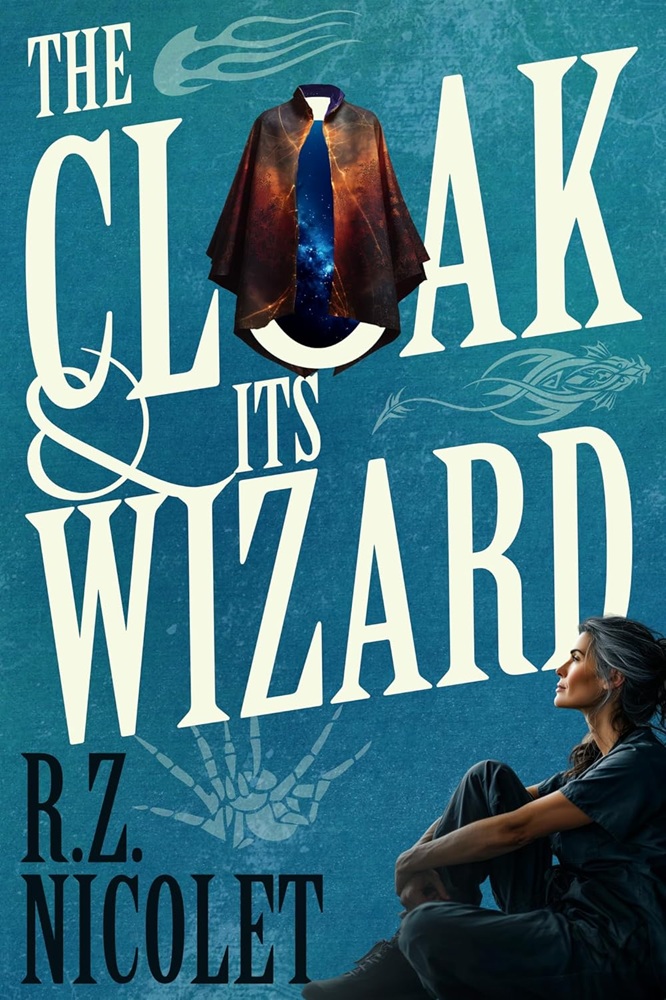
The Cloak and Its Wizard by R.Z. Nicolet
Genres: Adult, Fantasy, Contemporary Fantasy
PoV: First-person, past-tense
ISBN: 191784915X
Goodreads
I don’t choose my wizards lightly. It’s a lifetime commitment. Their lifetime, that is. I’ll outlast them all. Unless the world ends. Which is looking increasingly likely…
After a century of boredom in the library of the secret Order of the Open Eye, the Cloak of Sunset and Starlight finally chooses a wizard. Unfortunately for the cloak, Veronica Noble isn’t thrilled. A brilliant doctor, Veronica has been dragged into the Order against her will, and doesn’t want to be saddled with a glittering, starlight-covered cloak that sneaks through vents, sets off car alarms, and refuses to leave her shoulders.
When Veronica accidentally reveals her powers to all of Minneapolis, superheroes take notice. The Order threatens to reclaim the cloak. And sea serpents from other dimensions keep crashing into reality.
Now the cloak must do everything in its power to keep its wizard safe—even if that wizard isn’t sure she wants it.
The Cloak and Its Wizard is a whimsical fantasy adventure about a mischievous, sentient cloak and the reluctant wizard it refuses to let go. Perfect for fans of I’m Afraid You’ve Got Dragons, Emily Wilde’s Encyclopaedia of Faeries, and The Very Secret Society of Irregular Witches, this novel blends lighthearted humor with high stakes and emotional depth.
This is a soft DNF – I’m going to keep it in my ‘before bedtime’ collection on my Kobo, one of those books I pick away at when I can’t sleep. Because I’d LIKE to finish it; I don’t think it’s terrible. It’s just…not holding my attention at all. The premise is great fun, I like the cloak’s current wizard, the magic is a little simplistic for my taste but very suited to this particular book…it’s a good popcorn-read. I guess that’s just not what I want at the moment?
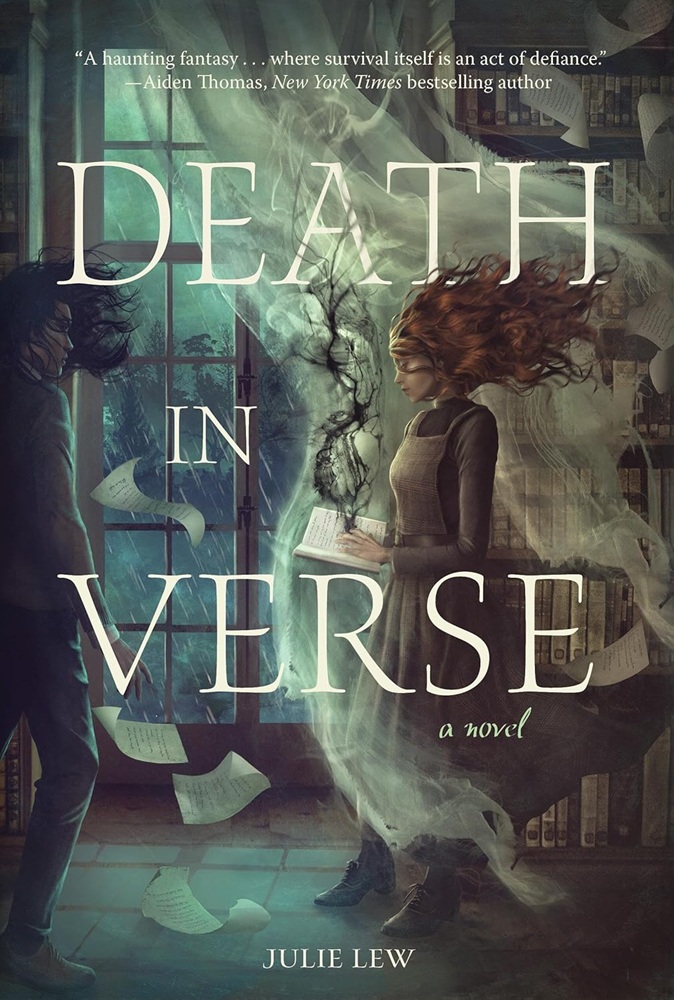
Death in Verse by Julie Lew
Genres: Fantasy, Historical Fantasy, Queer Protagonists, YA
Representation: Bi/pansexual MC, nonbinary Chinese American MC
PoV: Third-person, past-tense; dual PoVs
ISBN: B0GL3BMZSF
Goodreads
The first ferry of the new term arrives in six days. Let us hope it finds you alive and well.
When Bronte Cade’s mother vanishes, the only clue she leaves behind is an invitation to a retreat for magical poets. Determined to find answers, Bronte attends in her mother’s place by masquerading as the esteemed Dr. Sappho Cade.
But when Bronte arrives at the Radley School of Poetry, she finds the island abandoned—save for six other confused poets, one line of an unfinished poem, and an anonymous host who issues a chillingultimatum through an enchanted gramophone: complete the spell, and they may return home on the next ferry. Fail, and they die.
There’s another problem: Bronte isn’t magical.
With escape impossible, the body count rising, and her mother still missing, Bronte forms a wary alliance with the infuriating yet brilliant Marlowe Fang. Together, they race to unmask their host before Bronte is exposed—or worse, the next victim.
But beneath the host’s sinister scheme lies an even more insidious plot, one decades in the making. It bleeds beyond the shores of Radley like an ink stain, and no one’s hands are clean. Least of all the people Bronte trusts most.
I received this book for free from the publisher via NetGalley in exchange for an honest review. This does not affect my opinion of the book or the content of my review.
I was absolutely enchanted by the premise, but alas, in practice I found this really dull. Present-tense is not my favourite, and it didn’t work here, imo. The setting is slightly historical, the USA just post WW1, which is not at all a period I’m interested in. And if poetry magic has always existed, why does this world look so similar to ours? Why is the technological level the same? Why is there misogyny if women have always been capable of magic just like men? Etc. The worldbuilding felt really superficial.
I was really delighted to discover that Bronte is not the sole PoV character; Marlowe, a nonbinary Chinese American poetry magician, starts having half the chapters about a quarter of the way into the book. At which point, I wondered what on earth we needed Bronte’s PoV for, to be honest. Marlowe is infinitely more interesting; they and their twin are magically bonded, something that only occurs in identical twins two or three times a century; they’re orphans, their parents having died on the passage to the USA, so they don’t know their birthnames and have been completely cut off from Chinese culture; and AS obviously-Asian folks, they’ve gone to school for poetry magic – which, predictably, many of the white students etc are appalled by. With all that, Bronte not being magical was not nearly enough to keep her interesting.
Even with Marlowe’s PoV, though, this book just didn’t hold my attention. It’s reasonable that the gathered poets spend ages looking for a way to escape, rather than getting immediately down to work on the poem-spell…but wow was it boring reading about them wandering around the island, looking for the boat that’s been removed or realising that the telephone lines have all been cut. Etc. All the while different people are working out that Bronte is not in fact her mother, and hissing and spitting at each other, and YAWN.
It just took way too long to get started. Even all the promises of the synopsis couldn’t keep me reading – I kept falling asleep instead.
Not for me, I guess.

Traitors' Nest by Frances Hardinge
Genres: Fantasy, YA
PoV: Third-person, past-tense; multiple PoVs
ISBN: 1529090660
Goodreads
Castles traded places sometimes. Everyone knew that. It was always something that might happen, except that it never had. It was one of those unlikelihoods, like finding treasure, or being eaten by a wolf, or having a handsome, powerful stranger turn up to right all your wrongs. It could happen, except it didn’t.
Until all of a sudden it did.
Far above the valleys and villages of the Kingdom of Thaletal, a Great Game is played. Players move castles around the realm like chess pieces - and the ordinary villagers are mere pawns at the whim of their tactics.
When 16-year-old Burr's peaceful village is disrupted by the arrival of an ominous new castle, he decides he's had enough. But what starts as a plucky coup soon escalates - and soon the castle is wrenched away to a far-flung corner of the kingdom, where whispers mount of a mysterious ancient maiden whose magpies collect her debts at dangerous prices.
Here, the stakes are higher than the tallest turrets, and every move counts. Burr must work with his sisters and friends - and rely on the unexpected help of a strange and intriguing heiress - to unravel the secrets of the Magpie Maiden and the origins of the Great Game before he becomes just another casualty of the Players' deadly contest.
I read 40% of this, and have no urge to keep reading. It’s well-written and clever and the characters are all wonderful…but man, it’s just not as weird as I expect from Hardinge! Nobody’s eating dolls or dead gods, there’s no spider-fae or curses…it’s just: very basic Medieval village. Very basic Medieval castle. Yes, the castles move, but that isn’t all that interesting by itself. At least, not to me!
Loved the ‘lion’ hunt – I do wonder how many readers will recognise the beastie, versus how many will just go THAT’S NOT A LION.
I may be willing to come back to this if I hear the second half is delightfully weird, but otherwise, it’s a DNF.

The Villains of Winter by Evie Phenix
Genres: Adult, Queer Protagonists
Representation: M/M
PoV: Third-person,
Goodreads
Perfect for fans of THE SECRET HISTORY and IF WE WERE VILLAINS. A psychosexual novel of betrayal, obsession, and tragedy.
Elliott Archway is deeply attached to upperclassman James Wilde. He would forsake his soft heart for him. He would surrender his life for him.
Their intense passion for each other emerges dangerously when their vile peers volunteer a terminally-ill student for the annual sacrifice in the frozen forest. At Æscwulf College, everyone must deliver their plea for mercy in the hibernal tradition. Every winter, one individual is chosen as a living sacrifice. When a student commits the sacrilegious act of killing the wrong young man on sacred ground, the students are prepared to take their secret to the grave.
However, the winter demands more sacrifices.
Elliott would sacrifice his mortal soul for only James.
James would start a war of carnage for Elliott.
I received this book for free from the author in exchange for an honest review. This does not affect my opinion of the book or the content of my review.
The prose here is very, very purple. I LOVE super-descriptive prose, and lots of my favourite authors have writing that has been called purple, but this is purple to the point of, I can’t always make out what the sentence is supposed to mean. In other instances the phrasing is very clumsy. Quotes as examples;
the air ripened of cider.
Pretty sure I get what this is supposed to mean, but…
Elliot had only ever seen a deer killed in the woodlands of snowy Connecticut, he’d never seen someone take a life.
…You have, though. You’ve seen someone take a life because you’ve seen deer killed. You’ve never seen someone take a HUMAN life, presumably, at this point.
nibbling their sips
This is describing how squirrels and rabbits drink. And I just. No.
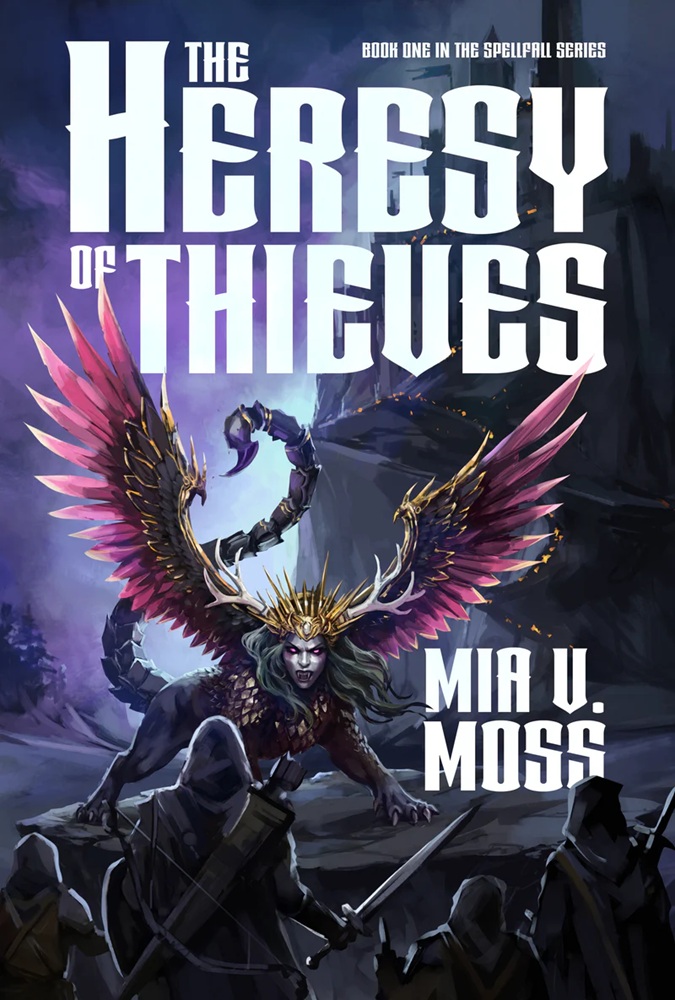
The Heresy of Thieves (The Spellfall Series, #1) by Mia V. Moss
Genres: Adult, Fantasy, Queer Protagonists
Representation: Queer MCs, queernorm setting
PoV: Third-person, past-tense; multiple PoVs
Published on: 6th October 2026
ISBN: 9798993367675
Goodreads
From debut novelist Mia V. Moss comes a sweeping new epic fantasy series:
Vael stole magic from the gods for Her people and put an end to centuries of unrest.
Now magic is gone, and the battle for the Witchlands’s soul begins.After a millennium of prosperity and magic, one catastrophic night undoes the realm of Yvaelen. Magic has fallen, and prayers to Vael the Giver go unanswered.
Jal Riago knows when it’s time to move on from a con. She can’t maintain her false refugee heiress story forever, and her benefactors grow weary of playing host. Just when she’s about to confess and cut ties, a deadly raid sets Jal’s life on a collision course with a powerful entity reckoning with its own madness.
The young, steadfast King Thealys Vorrine inherited the throne of Dynestra after her parents’ deaths at Spellfall. But sparks of unrest flare all too quickly into the unpredictable wildfire of rebellion, and King Vorrine must forge headlong into unknown territory.
Royal knight and notorious rake Ember Carrado is trying his best to get fired. Instead, when he’s paired with a judgmental paladin and sent on a mission to hunt down a rampaging mythical beast, he finds himself face-to-face with the past he’s been running from since Spellfall.
Beacon Wylda Lorcanthas wields a sharp tongue and the second-highest office in the Church of Vael. When the head of the Faith dies, Wylda must seek out a biddable successor. Unfortunately, the clergy’s clear favorite is a charismatic priest who promises the restoration of magic—for those willing to partake of a bloody cost.
The dark betrayal behind Spellfall, and the very fabric of Yvaelen’s faith, will be hidden no longer. What began with a thief’s touch will end with a reckoning. And salvation for some may be a waking nightmare for others.
I received this book for free from the publisher via NetGalley in exchange for an honest review. This does not affect my opinion of the book or the content of my review.
This was one of my most-anticipated books of the year, but every time I pick it up, it gives me brainfog. I read to 30%, and I was so, so bored. Which doesn’t make a lot of sense, because plenty was happening – the opening chapter is thrilling, and immediately afterwards there’s a bandit attack. Elsewhere, the church of this setting is working on choosing its next pope. One character gets tossed, very drunk, into a desert to track down a monster. Stuff is happening with every PoV character! And yet, it felt like everything was being dragged out and taking forever.
A few things contributed to this. Firstly, the dialogue is appallingly bad. No one sounds natural, everyone comes across as though they’re reading from a (poor) script. There’s a lot of telling-the-reader-stuff-via-dialogue, which is something I can’t stand.
Secondly, while the not-dialogue prose is not bad, and sometimes borderline lovely, it’s often over-written – the sentences are too long, or there’s too many adjectives or details in a single sentence, or the sentence structure is over-complicated. The phrasing can be wonky, subtly ‘off’ in a way that makes me twitch.
Examples from my advanced reader copy; bear in mind that all of these could be polished or removed completely from the final version of the book!
Quick as a rockslide, her plans changed.
This is a great image! But the wording is imperfect. ‘Quick as a rockslide’ just doesn’t sound correct to my inner ear. Should it be quickly? Or some other word entirely, ‘abruptly as a rockslide’, or something?
A mimicry of a city, maybe.
For context, this character has found what looks like a city underground, all carved out of stone. But ‘a mimicry of a city’ sounds terrible to me.
Kait impulsively put the helm on her head, letting the lightness of its cold metal settle snugly over her hair and around her ears.
The lightness of the metal???
The voice was soft, the relieved sigh of a lover reunited.
…reunited with who/what, though?
The paladin was already waiting for him, no doubt having conducted his own search in some far more efficient and methodical manner they taught at paladin school or wherever he’d learned to be such an insufferable pedant.
Way too long a stretch without a comma, and just – awkward phrasing.Too many details in one sentence, it makes for a really clunky writing rhythm.
Do you see? None of the quotes are terrible writing; if they don’t bother you, then good! You shouldn’t have a problem with the prose! But it continually sounds ‘off’ to me, in a way that had me grinding my teeth.
But the biggest issue, I think, is the characters. They are all stupid, and they are all very dull. I don’t even mean just the protagonists: I mean every character that comes on-page drove me to tears with how dumb they were. Carrado is an alcoholic knight who goes into a desert ignoring every single bit of advice he gets from the people who live there – he spends a day drinking more alcohol! While travelling through the desert! He smooths back his hair, gets pomade and grease all over his hand, and…wipes it on his face. Who the hell reflexively wipes their icky hands on their FACE? Jal goes travelling with her bestie, with the letter she wrote him about how their whole life together has been a lie still in her jacket pocket. Wyrda is supposedly a very politically sneaky bishop, but she insults the king’s consort to the king’s face, sets the Meeting To Choose The Pope in a tiny church that can’t handle the number of guests, the three maybe-Popes she picked are all appalling, and she’s outmanoeuvred in three seconds flat by one of them.
OKAY.
The minor characters are all like this too. There’s the pair of noble aunts who pick a guide for their nephew and Jal who turns out to be a slaver; the nephew, Jal’s bestie, got Jal a boat covered in hentai carvings for her birthday, despite Jal having no prior interest in boats (which, presumably he had to have it custom-made? Which must be a much bigger deal post-Spellfall when no one can do the carvings etc with magic?); the king (who is a woman, but still called a king, a detail which I adored) is blind to her cousin Carrado’s MANY faults AND thinks it’s a great idea to shove her industrialist consort in to the Choosing The Pope thing.
????????????????
The worldbuilding…didn’t make a whole lot of sense to me. I loved the premise – a civilisation that wove magic into everything lost their magic! All at once! But I was left with a very unclear idea of what magic was used for pre-Spellfall, and therefore what exactly was so dire 10 years after Spellfall. The roads are in very poor repair – that makes perfect sense, magic was used for their upkeep and now there’s no magic. But…? Were there magic hospitals? Was magic used in farming, in crop production? Because one-third into the book, all I know is that there used to be magical fashion houses, which is admittedly an incredibly cool concept, but not something that would be a disaster if society suddenly lost them, you know? We’re told that all sorts of inventors have been building machines to replace magic (and naturally they are all noisy and smelly and polluting machines), but…what functions have they taken over, exactly? The capital city is covered in ash and smoke from all the machines, but I have no idea what any of them are DOING. The aunts mourn that their nephew won’t be able to choose his own hair colour, as was the norm pre-Spellfall (their hair is green, I love it) but…is that it? Is that the big thing you regret your nephew will never experience? The greatest magical loss was FUN HAIR COLOURS?
Civilisation seems to be fine, is what I’m saying. It doesn’t feel post-apocalyptic – or even ten-years-post-apocalyptic. It feels like a generic fantasy setting that has been invaded by noisy machinery for no apparent reason.
Also, 10 years after losing magic, everyone still accepts that not-magical clothing never fits right. Excuse me? It’s been a DECADE and your fashion houses have not discovered tailoring yet??? Or gotten good at it, with ten years of practice? That’s ridiculous.
This just. Did not work for me.
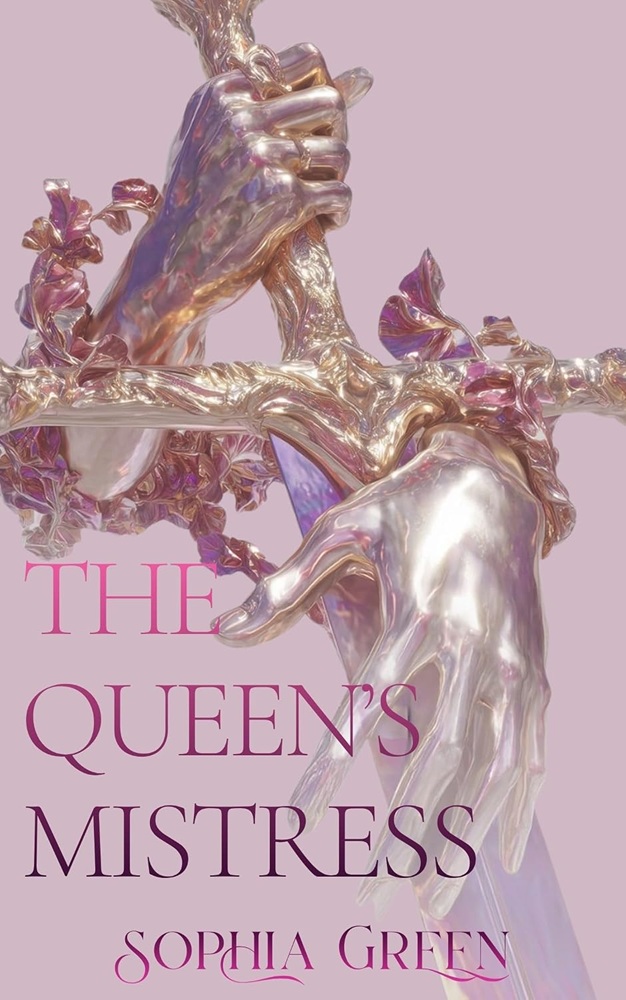
The Queen's Mistress (A History of Fireflies, the connected universe) by Sophia Green
Genres: Adult, Fantasy, Historical Fantasy, Queer Protagonists
Representation: Sapphic MCs
ISBN: B0GX2YLLVB
Goodreads
She saved the Queen’s life. Now she can’t escape it.
When a commoner saves Queen Henriette from an assassination attempt, she never stops to consider what it might cost.
Perhaps she should have.
The attack leaves both women cursed, their magic infected and growing more dangerous by the day. With no idea who ordered the attack, queen and guard are forced into an uneasy alliance.
Henriette has spent her life as an outsider. Born without arms, she knows better than anyone how little the world was built for people like her. But when her new guard proves to be an outsider too, duty soon gives way to something far more dangerous: desire.
Joséphine abandoned her dream of becoming a knight long ago. Survival was enough, until protecting the Queen begins to feel like something worth risking everything for.
As the curse spreads and the assassin closes in, Henriette and Joséphine must decide what they are willing to sacrifice. Because the closer they grow, the more they risk losing everything—including each other.
I received this book for free from the author in exchange for an honest review. This does not affect my opinion of the book or the content of my review.
I’m sorry, but you cannot give me Court of the Sun Kings populated by people saying ‘okay’. Not unless the story’s tone is light enough that I know it’s all tongue in cheek silliness, and this isn’t that. And unfortunately I found the prose very clunky – lots of sentences that start with ‘but,’ or ‘plus,’ one word then a comma, which is something that consistently annoys me since it breaks up the writing rhythm; and phrasing that was often awkward, with sentences like
They weren’t numb to extravagance, yet they still had a sense of awe, of appreciation.
What? That ‘yet’ should lead to a point that contradicts the first part of the sentence, but it doesn’t: ‘they weren’t numb to extravagance’ is the same as ‘they still had a sense of awe’. So why is it phrased this way?
The magic system is very cool indeed (although initially very poorly explained), wherein excitement/appreciation/awe fuels magic – which is why commoners get invited to royal balls etc, because their awe at all the glitter and riches fuels magic that is then harvested for use across the city/country. I loved that! And I can’t overstate how delighted I was to see a queen – a SUN COURT queen, at that! – who was born without arms, and yet still a powerful, respected leader who is the light of her court. MAGNIFICENT.
DNF from me for the prose, but for readers who are not as ridiculously picky as I am, this could still be worth checking out!
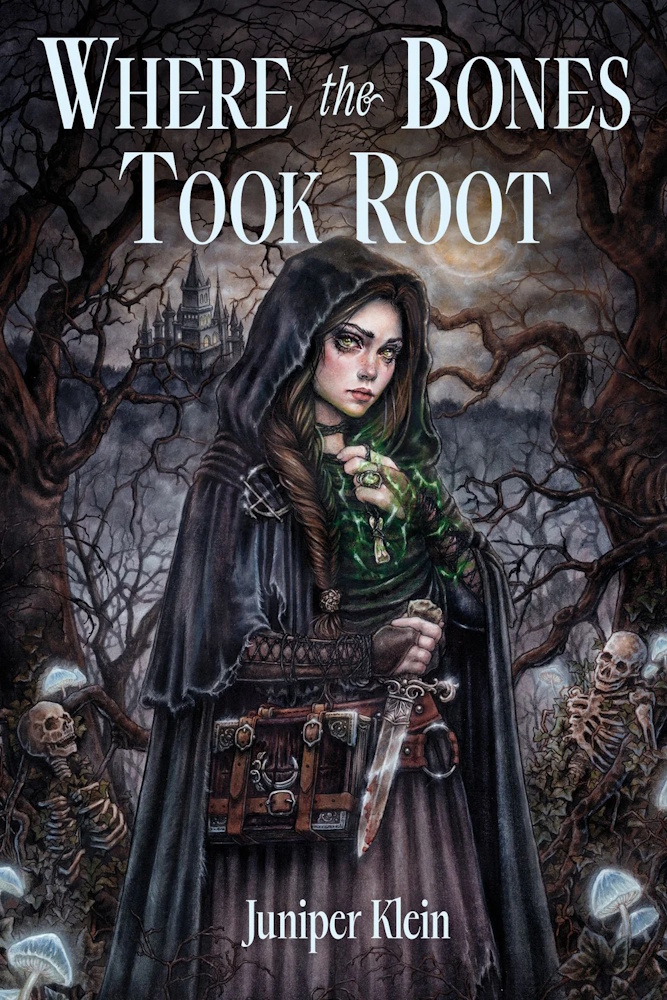
Where the Bones Took Root by Juniper Klein
Genres: Fantasy, Historical Fantasy, Queer Protagonists, YA
Representation: Sapphic MC
Published on: 6th October 2026
ISBN: 9798890034939
Goodreads
Jayde will do anything to bring back Soleste, the girl she loved, even highly taboo necromancy – or she would, if the spell would work. When a stranger named Barrick catches her after the murder that marks her fourth failed attempt, he blackmails her into using her illegal magic to help him infiltrate a local alchemy cult. Jayde agrees, hoping that the cult will provide answers about Soleste’s murder, and binds Barrick with a magical oath that enforces a truce between them until the final initiation.
She’s certain that the lifeblood of Soleste’s murderer is the missing ingredient to her resurrection spell, but which cult member is responsible? Her investigation reveals that Soleste may have been keeping secrets of her own. As Jayde and Barrick cheat their way through the cult’s hierarchy, she feels drawn to him in a way that can’t be fully attributed to their magically-enforced alliance – which, due to a translation error in the spell, makes her swoon every time their skin touches.
In the end, she’ll have to choose between allowing her grief to sink her deeper into dark magic, or claiming her frightening power in service of a new and uncertain future.
I received this book for free from the publisher via NetGalley in exchange for an honest review. This does not affect my opinion of the book or the content of my review.
I found this one over-written and choppy, unfortunately. The premise is fantastic and I really liked the characters, but the prose had me constantly twitching with a wonky writing rhythm and very odd, awkward phrasing.
But so close to the real prize, Jayde plowed forward, ignoring the habit.
From context, Jayde is ignoring what she would typically do in this situation. I think that’s what’s meant by ‘habit’. But ‘ignoring the habit’ is terrible phrasing.
Muscles pleasantly whining,
I’m sorry, your muscles are doing WHAT?
As if the last hands to touch anything inside had been the Dark Witch herself.
That should be something like ‘the hands of the Dark Witch herself’, or ‘the Dark Witch’s herself’. As-is, it’s saying ‘the last hands were the Dark Witch herself’. Which is just incorrect.
with tapered carvings dripping from the mantel like giant, pointed teeth.
‘dripping’ and ‘teeth’ are images that don’t work together. Dripping = fluid, teeth are pointy and solid.
Jayde had been ripped apart by her death, and hope had stitched her back together. Some days, the seams felt apparent.
‘the seams felt apparent’ strikes me as very clunky phrasing.
She was alone, utterly alone, despite her every attempt to restore things as they were.
I think that should be something like ‘restore things to what they had been’.
Etc. I know I’m overly sensitive to prose, but this is a DNF for me.

House of the Iron Reaper (Magic & Malice) by Storm Lomax
Genres: Adult, Fantasy, Queer Protagonists
Representation: Black sapphic MC, F/F
PoV: First-person, present-tense
Published on: 3rd October 2026
ISBN: 1066779406
Goodreads
Dragons and magic combine in this sapphic retelling of Cinderella.
Deyanara is one of the last surviving dragons of House Iron, her lineage hanging by a thread after a tragic accident claimed her family. With her House on the brink of ruin, she's determined to work day and night to ensure its survival.
When she's mistaken for a contender in the brutal Ascension Rites—a legendary tournament where dragons fight monsters for the chance at winning divine favour—Deyanara expects humiliation. Instead, she finds a talent for battle and friendships she never expected—including one sharp-tongued rival.
But after a shocking turn sends the Rites spiralling into something far more deadly, Deyanara must decide what she's truly fighting for.
I received this book for free from the author in exchange for an honest review. This does not affect my opinion of the book or the content of my review.
First-person present-tense is something I really do not like, and any book that uses it has an uphill battle with me. I was enjoying the prologue a lot, though, until the ‘tragic accident’ which destroyed Dey’s family. Because the accident is her ability to breathe lightning manifesting for the first time; this destroys the house and kills most of her family. That immediately rubbed me the wrong way, because – why can’t a dragon-shifter manor stand up to dragon-lightning? Lightning-breathers are rare, but still: they happen, and you’re telling me this society has no way to handle baby lightning-breathers? Why not? Does this then happen EVERY time a baby dragonling learns to breathe lightning, does it always result in rampant death and destruction? If THAT’S the case, then you’d think lightning-breathers would be ostracised, which doesn’t seem to be so.
Yes, I AM this nitpicky a reader. I know it’s annoying. It’s annoying being in my own head during moments like this. I can’t help it.
The book itself seems perfectly well-written; neither the prose nor general worldbuilding is bad at all. Post-prologue Dey was unfortunately not to my taste as a character – it’s entirely believable that after the tragedy she would become a shrinking violet, it makes perfect sense, it’s not bad writing. It’s just that that’s a character type I find really dull to read about, and from there I lost interest in the story really quickly. (I also found it really hard to believe that Dey gets mistaken for a competitor the way she does. That didn’t help.)
Perfectly good, going to be immensely fun for the right reader, but alas that reader is not me!
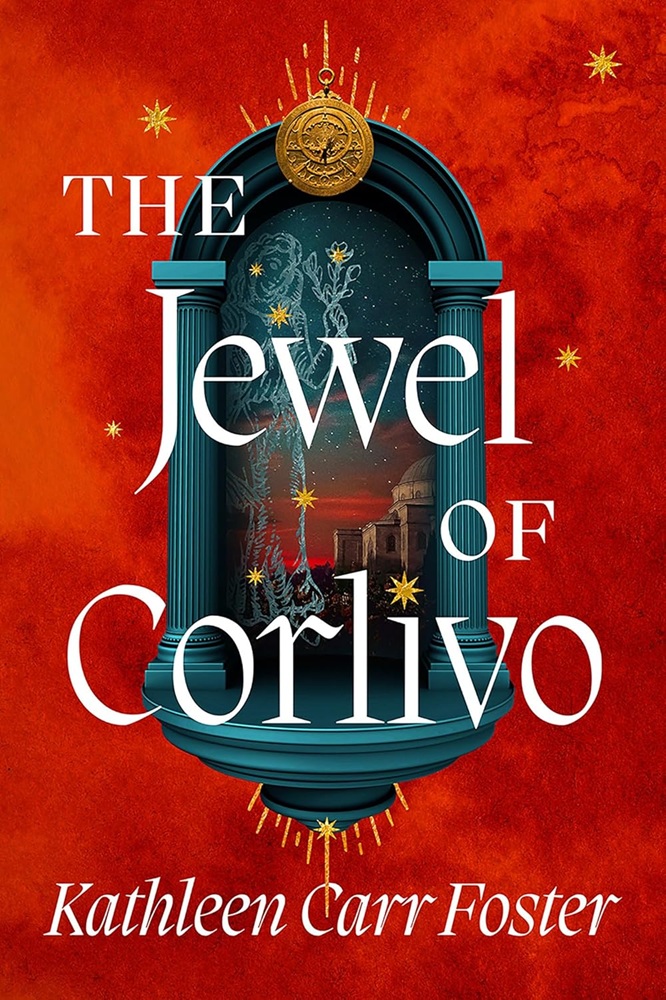
The Jewel of Corlivo by Kathleen Carr Foster
Genres: Adult, Fantasy
PoV: First-person, past-tense
Published on: 27th October 2026
ISBN: 1645662837
Goodreads
In a reimagined Byzantine empire, a runaway courtesan and her disgraced suitor are on the hunt for ancient treasure. But in Kathleen Carr Foster’s glittering debut, what they find will be far more troublesome . . .
Raised for the most luxurious pleasure house in mountain-ringed Corlivo, Anna has no illusions about her future. She’ll be a courtesan, as her mother was before she disappeared—and like her mother, gamble that her charms attract a patron rich enough to pay her debts.
But when a gruff explorer with connections at the capital notices Anna, it’s her sharp eye that draws him in. Sebastianus thinks Anna’s found a clue within the pages of an ancient book to the lost city of treasure he seeks, and she might well discover more.
Together they escape to the imperial court, where marvels are commonplace—and so is treachery. Anna’s courtesan training has hardly prepared her for the dangers of court life, let alone for delving into artifacts from the empire’s past. But when she uncovers a secret tied to her mother’s fate, Anna realizes more than her life is at stake. She holds the key to untold possibilities not only for herself, but for any of the women of Corlivo . . . if she can use it.
I received this book for free from the publisher via NetGalley in exchange for an honest review. This does not affect my opinion of the book or the content of my review.
I think this had a different description when I requested it, or else I massively misunderstood something, because I was not interested in a courtesan who…isn’t actually a courtesan yet. That’s not the book’s fault, that’s a mix-up or misunderstanding, and I’m trying not to hold it against the book. There’s no arguing, though, that I found Anna mind-numbingly boring. She’s every single Special Snowflake heroine I’ve ever seen – the only baby-courtesan who speaks plainly to prospective clients, and thus charms them; the only one who disdains love poetry and wants to read about science instead (which catches The Men’s attention, of course). She’s Not Like Other Girls, you see!
The dialogue is abysmal. Which is very confusing, because the rest of the prose is fine. (The occasional line/image that didn’t make sense to me, but perfectly readable.) But every time someone was speaking, I wanted to twitch, because it sounded so false, so forced, not believable between the characters involved. The way the baby-courtesans talk to each other; the way the actual courtesans talk to them; the things the prospective clients say to the baby-courtesans. None of it rings true. A lot of it felt like Netflix dialogue; you know, the kind that tells you enough about the plot that you don’t have to be watching the screen? Like that.
The set-up was incredibly dull, and the protagonist was not what I wanted. This one just wasn’t for me.

Lethal Kiss by Taylor Grothe
Genres: Adult, Horror, Queer Protagonists
Representation: Bisexual MC, F/F
PoV: First-person, present-tense; dual PoVs
Published on: 20th October 2026
ISBN: 1250433878
Goodreads
Jennifer's Body meets Ninth House: Taylor Grothe's adult debut novel is a sapphic horror/romance that's as grotesque and blood-soaked as it is beautiful.
When Marcella is hired at Preston University, she has her game plan already mapped out―lay low for a few semesters, enjoy the extensive library, and maybe feast on a couple of her coworkers. That is, until a professor is found murdered and it’s not her doing. She may be the newest monster on campus, but she definitely isn’t the most dangerous.
Assistant professor Lacie is aware how ruthless the track to tenure is. But seeing the corpse of one of her colleagues is enough to make her suspect the other professors that came before her didn’t just quit academia. Unfortunately, there’s only one person she can trust enough to ask for help―the beautiful, aloof, and tantalizingly secretive Marcella.
Lacie and Marcella team up to make a chilling discovery: there’s something festering under the marble floors of Preston University, and it’s hungry. Marcella might be a monster, but the deeper into the mystery they dig, the more she’s attracted to Lacie’s immovable bravery and quiet intelligence. And the closer they grow, the more Lacie is drawn to Marcella’s vicious nature.
The weight of spilled blood and stolen opportunity is too heavy to carry alone, but they’re both determined to get what they deserve―even if they have to kill for it.
I received this book for free from the publisher via NetGalley in exchange for an honest review. This does not affect my opinion of the book or the content of my review.
Objectively great, but stylistically not for me. My heart always sinks when I open up a book I’m excited about and it’s written in first-person present-tense, which I despise. (Some books manage to make me fall in love with them even in first-person present-tense. It does happen. But Lethal Kiss isn’t one of them.)
I love the themes and the mood, and I very much approve of unapologetic female characters, but I didn’t find either Marcella or Lacie interesting – Marcella’s inner dialogue is often great, but whenever she’s talking to someone else her dialogue sounds ‘off’, the way music does when it’s slightly out of tune. Something about the phrasing and lack of contractions, maybe? Her being an immortal who fills her time with learning things was SO EXCITING to me, but then we weren’t really seeing that in her behaviour or inner landscape, which was disappointing.
Lacie…why is she constantly whining? She finds a dead body, and her dialogue tags all become ‘whines’. ???
The way Marcella and Lacie are instantly Interested in each other didn’t work for me either. Why is Lacie immediately obsessing after one conversation? Why is Marcella so pleased to see there’s a ‘lioness’ in Lacie after all? Why do you care about her already, Marcella? It felt borderline instalust, which is not something I ever enjoy.
The dead body was where I pulled the plug, because it was just ridiculous. What do you MEAN you found a body together, but you’re going to leave it and pretend you didn’t? The arguments Marcella puts forward for doing so weren’t at all convincing. Nor did it make any sense to me that Marcella immediately wants Lacie to recognise that the person was killed by a supernatural being, something Lacie has no reason to believe exists yet. It all felt very contrived and forced, and I lost the last of my patience with the story because of it.
(Also – if you’re going to hastily assure us that your cat Bellatrix ‘isn’t named for that one’, it would help if you told us which one she IS then named for? That would really help my idiot brain not jump to The Series Which Must Not Be Named every time the wonderful cat is on-page.)
It’s not a bad story. It’s just not for me. I couldn’t stop thinking about the way Marcella kills the guy in chapter one by punching her tongue down to his heart (which…is not possible if her tongue is down his throat, without punching out of the airway? which she doesn’t seem to do?) Nor could I stop fretting over what Marcella did with his body, or all the other bodies, and how the hells she gets away with casually killing like this in the modern age of forensics.
If you can read with a bit more brain-off than I can, I think this is going to be such a fun book for so many readers. (As is obvious from the other early reviews!) I WANT to love it, and I can see why other people do! I definitely recommend it for anyone who finds the description interesting. I really don’t think it’s a bad book at all, it’s just – not for me.

The Finalist by Faith Gladwin
Genres: Adult, Horror, Queer Protagonists
Representation: Sapphic MC with early-onset arthritis
PoV: Third-person, present-tense
Published on: 6th October 2026
Goodreads
Seven ballerinas. One fallen primadonna. The audition of a lifetime. And a mysterious house that swallows the weakest one by one . . .
There is no performance art as punishing as ballet—and no top-tier ballerina is as punished as Eden. While others practice their steps over and over, Eden waits, knowing her body can perform only so many times before it breaks.
But Eden will need to be perfect—or even better—at Deveraux Manor, secluded amid snowy mountains, where she and six other hopefuls are sequestered in a month-long audition for the mysterious, alluring, tragic former ballerina Leanora Karagianni. Only one finalist will join Leanora's company and dance the lead.
Eden wants it more than anything, but not more than anyone. Her competitors will take every advantage they can. And the cursed house twisting around them will push each ballerina to the bloody edge—and over it. As Eden fights her attraction to the seductive Leonora and the stakes turn lethal, she'll discover that only the dancer who pays the house’s terrible price can become the finalist.
I received this book for free from the publisher via NetGalley in exchange for an honest review. This does not affect my opinion of the book or the content of my review.
I WANT to love this – I think what the author is doing is so freaking clever, using a protagonist with chronic pain to take on a haunted house that tortures by causing pain! – but it is just not grabbing me.
I feel like I’m constantly seeing fiction that is about art – painting, music, dance – but does not even try to describe what it is like to make the art. Or perform the art, if it’s something like music or dance. You kind of need to sell me on the art, you know? When your whole novel depends on it? You need to – make me understand why someone would be passionate about it. Make me feel it! You should be using gorgeous, evocative prose to describe the sensation of dancing, the thrill/joy of it. And that is even more important with something like ballet, because ballet is brutal, and even the best dancers with the ‘best’ bodies for it don’t get to perform for long, and afterwards their bodies are pretty wrecked. Why would anyone do that? You need to make me get it.
And making me get it is even more important than that with a book like Finalist, where we don’t just have ballet, we have a protagonist who is in constant pain and does ballet anyway. She’s not just destroying her body the way other ballet dancers do, she’s destroying it WORSE. So you have GOT to make the ballet beautiful; you have got to – capture the wonder of it, of performing it. You have to make me understand why someone would do this to themselves. You’ve GOT TO.
And so many books do not, and Finalist seems to be one of them. 20% into the book, I have no idea why Eden is a ballerina. She was diagnosed with her condition when she was FIVE YEARS OLD. What on EARTH made a 5yo love ballet so much that she fought as hard as she must have fought to be allowed to keep dancing? What does she love about it NOW? Because all I’m getting is pain, and joints, and blood, and broken bones!
I am disabled; I have a chronic pain condition. Having a disabled protagonist meant so much to me, especially getting to see her here, a finalist for one of the most coveted positions in the country (maybe the world?) Eden’s depiction on that point is spot-on, and immensely sympathetic; all her feelings about it, and about being viewed as ‘the disabled one’ – all of that is realistic and done so well. But I don’t push my body like that for anything I don’t love, and I could tell you what those things are and why I love them so much. I wasn’t getting that from Finalist. Which makes it really hard not to look at Eden and see an idiot: why are you doing this when it hurts so much? I’ve come across other ballet books that made me feel their able-bodied protagonists’ love for ballet – I Feed Her to the Beast and the Beast Is Me springs to mind – and Finalist‘s failure to do that undermined the whole story, because I couldn’t…believe in Eden, I guess? She wasn’t real enough, I could see her passion on-page but not feel it.
Maybe that comes through better later in the book, but 20% without that passion made Finalist a slog for me. The prose is perfectly decent but not stunning, and it needs to be stunning if I’m not invested in the characters or plot.
I want to love this. I’m kind of hoping that I’ll come back to it eventually and click with it then. But right now, trying to read it gives me brain-fog, so I’m setting it down.

The Infinite Sadness of Small Appliances by Glenn Dixon
Genres: Adult, Sci Fi
PoV: Third-person, past-tense; multiple PoVs
ISBN: 1668097281
Goodreads
In a near future, where even the smallest of appliances are sentient, a young Roomba vacuum sets out to save the humans of her house from a rising technological power in this compelling, original novel.
In a self-running, smart house, a young and sentient Roomba listens as her owner, Harold, reads aloud to his dying wife, Edie. Mesmerized by To Kill a Mockingbird and craving the human connection she witnesses in Harold’s stories, the little vacuum renames herself Scout and embarks on a journey of self-discovery.
But when Edie passes away, Scout and her fellow sentient appliances discover that there are sinister forces in their midst. The omnipresent Grid, which monitors every household in the City, seeks to remove Harold from his home, a place he’s lived in for fifty years.
With the help of Adrian, a neighborhood boy who grows close to Scout and Harold, as well as Kate, Harold and Edie’s formerly estranged daughter, the humans and the appliances must come together to outwit the all-controlling Grid lest they risk losing everything they hold dear.
Look, this was a HUGE case of mis-marketing. The description and cover both make it look like this is quite a cosy novel, and it’s not. It’s really freaking bleak actually! Humans are living in a dystopia they think is a utopia, because it’s ended all conflict, whereas the appliances are living in a dictatorship where any of them could be destroyed at any moment. Edie’s dying is not brief or off-page, it’s heart-wringing and dragged out and I was sobbing.
But I might have been able to put up with all of that if the prose had not been so…flat. It’s just constant telling-telling-telling, with simplistic language and sentence structure and really plodding writing rhythm, all the dialogue (especially between-humans dialogue) exists just to convey worldbuilding to the reader, and I made it to 50% and can’t believe I made it that far, honestly. Absolute waste of time, do not recommend.


I had a similar reaction to The Cloak and its Wizard. I don’t regret sticking it out, but its not a book that I remember much when making recs.
Indeed. Now it’s been a few weeks… I’ll be very surprised if I ever pick it up again. It does not call to me, you know?
“boat covered in hentai carvings” hentai? Like explicit art? it must mean something else in this context right?
Thanks for sharing your DNFs! I didn’t have any this month.
Nope :) It did not mean something else in this context :) The ship was covered in sexually explicit carvings :) Lots involving tentacles or partly-animal beings :) I’m not over it :) :) :)
I’m glad you didn’t have any DNFs! I can’t even imagine how that feels XD
Well, shit. I wouldn’t be over it either! :X
I started the month re-reading the first two Arcana Imperii books and catching up with the third. I have the original ebook editions and some names must have been changed in the revised editions if the third book is any indication. Then I got my library copy of A Trade of Blood, and now I’m back to reading a finished litrpg series. In-between I read an indie published book called “Bisection” that I liked quite a lot. Would give it 4 stars.
I always force myself to finish NetGalley ARCs because I’m worried that I’ll start being denied if I DNF anything. Do you find that it affects your rating? There are some that are just a slog.
At this point I think I DNF more books than I finish from Netgalley, and it hasn’t been a problem – maybe because I always write a DNF review with a rating, rather than marking them ‘will not review’? I definitely don’t get denied very often at all. But then, I’ve been running a blog that’s gotten more and more popular for about seven years now, so my review history is pretty well-established? That probably helps?
But like – Netgalley itself says there’s nothing wrong with dnfing as long as you write a review about WHY. That’s still really helpful for publishers (and other readers, if you post your dnfs to places like Goodreads). I know there’s a lot of anxiety about dnfing among reviewers, but from my experience there’s no real reason to be. Publishers don’t seem to mind at ALL.
OMG that’s so good to know! I’m reading one right now that is becoming a CHORE and I’m dying to move on. It’s not bad, it’s just an adult dark academia that is written like it’s for middle schoolers and I’m not in the mood.
Urgh, books that talk down to their audiences drive me bonkers. If you’re an adult book, you’re talking to adults, why is that so hard to remember???
Happy to help you feel like you can DNF it now :D