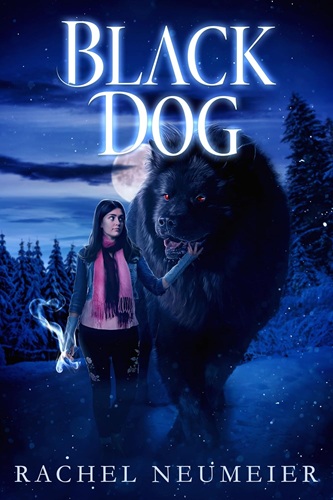

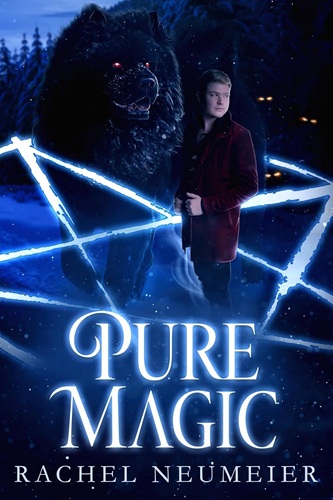


Genres: Fantasy, Contemporary Fantasy, Urban Fantasy, Horror
Representation: Biracial Hispanic MCs
PoV: Third-person, past-tense; multiple PoVs
ISBN: B01JAIXHA2
Goodreads

For thousands of years, unseen monsters stalked the world.
Then the miasma that hid the supernatural world disappeared, and ordinary people suddenly saw the truth: monsters had always lived among them, feeding on despair and death.
Natividad can defend against demons with rare protective magic. Her older brother Alejandro is a black dog, sharing his body with a dangerous supernatural shadow. Her twin brother Miguel has no magic at all—only a brilliant mind and an unshakable determination to keep his family alive.
When their parents are murdered and their home destroyed, the three flee to Dimilioc, the last great black dog House. But Dimilioc itself barely survived the war that destroyed the vampires. Powerful enemies surround Dimilioc, old alliances are crumbling, and a terrifying adversary is determined to finish what the war began.
To survive in a world haunted by demons and monsters, courage alone may not be enough. Natividad and her brothers must forge bonds of trust with dangerous allies, face enemies stronger than they imagined, and find a place within a family forged by loyalty, sacrifice, and war.
Highlights
~let vampires and werewolves be monsters again, THANK YOU!
~genuinely demonic demons
~the worst (best) villains I’ve read in a LONG time
~magic math will save us (no really)
~community is our superpower
Friends, I read eight books of this series in six days.
SIX. DAYS.
I think it says everything that needs saying, doesn’t it?
I read the first book in this series so long ago I barely remembered it, then reread it at the start of 2025. I read the first collection of short stories, and the second novel, pretty soon after, then decided I didn’t want to read any more. (I’ll explain why in a bit.) And then one random Thursday over a year and a half later, I took a peek at the second short story collection. Not because I saw anyone talking about these books; not because a book-friend gave me a nudge to come back to this series; but because I love Neumeier’s writing and had read everything else she’d published, and it was go back to the Black Dog books or just wait for her next release. That probably wouldn’t take long – she’s an incredibly fast writer – but I just could not wait, okay?
SIX DAYS LATER I’D INHALED THE ENTIRE SERIES.
When I tell you I could not stop reading, I am not even slightly exaggerating. I spent almost every waking second immersed, GLUED to the pages. I stayed up stupidly late every night, and if I finished one at three in the morning, I did not go to sleep like a sensible person, I immediately started the next book. TO SAY I WAS OBSESSED IS PUTTING IT MILDLY.
And for context, these are not especially short books; I think most of the short story collections were under 300 pages on my ereader, but not by much, and the novels range from 400 to almost 600 pages long.
AND YET. SIX. DAYS.
So let me introduce you to the books that took over my life!
The Black Dog series is set in a world very, very like ours, but with a handful of crucial differences. Black Dogs exist – you can think of them as werewolves, but they’re a bit more complicated than that; people who were born with a ‘shadow’, a demon, inside them, that wants to kill and destroy and dominate, and makes the person incredibly strong and fast. They can transform into enormous black dogs (I bet you didn’t see that coming), and they’re vulnerable to silver. Unlike typical werewolves, they can transform at any time, and they have to constantly resist and control their shadow’s violent, murderous urgings. A few years before the first book opens, the black dogs of the world went to war with the vampires who more-or-less ruled huge chunks of the world for the last thousand years or so; when the vampires were gone, everyone realised that the reason humans never noticed things like vampires and black dogs was because the vampires emitted what’s called the miasma, something that made humans just not see or even think about the supernatural. With the miasma gone, humanity turned on and wiped out most of the black dogs – because most black dogs don’t fight very hard against their shadow’s urgings to monstrousness, and weirdly enough humans decided they didn’t want these monsters around.
Black Dog, book one, opens with the three Toland siblings making their way to Dimilioc, one of the last black dog Houses standing. Alejandro is a black dog; Miguel is human; and Miguel’s twin sister, Natividad, is one of the Pure. Black dogs are almost always born male; the Pure are always women, women who are immune to all things demonic and can work magic of protection, purification, and defence. Black dog Houses treasure and hoard the Pure; the Pure can make it easier for black dogs to resist their shadows, and of course Pure magic is useful in all kinds of other ways too. These kids are on the run because their parents – a black dog and one of the Pure – were murdered by a black dog and his pack, who are now hunting them. Dimilioc is their only possible sanctuary – but it’s very likely Dimilioc will kill Alejandro, because they kill ‘stray’ black dogs by default, and probably Natividad will be made to marry and have the kids of one of the Dimilioc black dogs. And yet Dimilioc is still their best chance of surviving.
Naturally, things only get more complicated from there!
The first few books have their own big bads, and introduce the main players; as well as the Tolands, there’s Grayson, the Master of Dimilioc; Ezekiel, the enforcer/executioner; Ethan, Grayson’s nephew; and another one of the Pure, who I’m going to avoid talking about because spoilers. There are a number of secondary characters whose roles get bigger and bigger as the series goes on, like Thaddeus, an incredibly strong ‘stray’ who gets dragged into Dimilioc along with his Pure wife and black dog son; and Keziah, a rare black dog young woman, who joins Dimilioc (along with her younger sister) after somehow escaping the brutal foreign House she was born into. And I’m telling you now that by the end of the series, I loved all of them. (And I would not have expected to ever like Ethan, when he’s such a snob in the beginning!)
The moment Neumeier is confident we know what’s what and who’s who, she flips the tables on us: from Shadow Twin (the third novel, or fifth book including the short story collections) onwards, the series stops feeling at all episodic and grows and grows into a single major plot, as completely unexpected facets of the worldbuilding are revealed, and the cast have to deal with them or die. Worse, they have to deal with these things or the whole world will be facing something much worse than the vampires ever were.
Neumeier has always rocked at characters and worldbuilding, and does so here. The Black Dog books might be the least wild example of her worldbuilding; it’s relatively minimal here, much more so than any of her other books that I can think of. But it’s worldbuilding that reminds me of Lois McMaster Bujold’s; that is, it might be minimal, but it’s incredibly well done. Neumeier takes our world, makes a handful of changes, and then follows all the ripple effects those changes might have on the world, tracks all the ramifications and implications of these changes in a way that’s so VERY satisfying. It makes for very accessible storytelling – no need to drown the reader in especially weird concepts or made-up fantasy terminology – and it’s elegant, neat and clever with everything fitting together beautifully. The big reveal in Shadow Twin is a great example: it felt like it came out of nowhere – for about point three seconds, and then I realised how perfectly the groundwork was laid for it, how much now makes sense, how this one detail explained everything else I’d ever questioned. I had to go shriek into a pillow when the full genius of it hit me. MAGNIFIQUE.
These books are a masterclass in how worldbuilding doesn’t have to be at Tolkien or Malazan levels to be freaking excellent. I always enjoy Neumeier’s worldbuilding, but I do remember being sceptical that even she could pull off an Urban Fantasy setting that I would enjoy. SPOILERS, SHE ABSOLUTELY DID.
And the characters are phenomenal. It’s funny, because if you described Natividad and the rest to me, I wouldn’t expect them to be especially interesting – I would expect Natividad to be good and sweet and boring, for Miguel to be a random add-on rather than fundamental to the story, for Alejandro to be angsty and macho and deeply annoying. None of that is correct. Instead, all three – and every other POV character – are…supremely self-aware. This isn’t uncommon for Neumeier’s characters – it’s one of the reasons I love her stories so much – but here it feels like a manifestation of the worldbuilding. Black dogs are always fighting the urge to rage and violence, which means they are often on a hair-trigger; the people around them learn how to interact with and speak with them, how to ‘manage’ them, how to help them keep control. You never give a black dog an order, for example; you always frame it as a question or suggestion. Alejandro is a black dog, and a huge part of being a ‘civilised’ black dog is being able to distinguish your thoughts and wants and feelings from those of your shadow, which makes for the kind of maturity you often don’t see among adults, never mind teenagers. Natividad and Miguel have grown up with a black dog father and brother, which means they’re used to ‘translating’ what they say and do into a form their black dog family members can deal with. To do that successfully, they have to know what it is they want to say, want to do; they have to understand their own emotions in order to help Alejandro manage his. No matter how angry they get, they have to contain that anger, because an outburst could tip a black dog over the edge. Etc. All of this means all three Tolands have an incredible self-possession, a solid understanding of who they are, an excellent ability to recognise and understand their own thoughts and feelings. Which is not to say they’re perfect at it – Natividad and Miguel are 15 in the first book, Alejandro 18; naturally they sometimes miss things, sometimes make mistakes, sometimes need someone else’s help to understand why they feel this way or that way. But it erases the annoyance factor that a lot of YA has, of pubescent characters being led around by their hormones, characters who look outside of themselves to define themselves.
Everything that frustrates me about YA is cured, here, by the necessity of growing up with black dogs (or as one).
And to be fair, it doesn’t feel accurate to call this series YA. Yes, Natividad and Miguel are both 15 in Black Dog, book one. But when I read in one of the author’s notes that it was originally written for adults, that Neumeier lowered the character ages only when the book was picked up by a YA publisher – that did not surprise me in the least. It explains a lot. In a way I struggle to articulate, this series just doesn’t feel like YA – it’s not a coming-of-age story, it’s not a self-discovery story. It hasn’t been dumbed down in the way so much YA is (not all, but a lot). Miguel’s storyline, in particular, goes places YA Fantasy generally doesn’t, and the series as a whole is a lot more brutal than YA Fantasy tends to be. We do not spend any time swooning and crushing on people; Natividad has a romance, but it’s not centre-stage, it’s never treated as important as the actual plot is. There’s a subsection of YA Contemporary fiction that gets very dark indeed, but YA Fantasy generally does not go anywhere near as fucked-up places as the Black Dog books do. IMO, a lot of YA wants to shield its audience from how bad the world can get; Neumeier does not do that.
Which is not to say I think this series is inappropriate for teenagers. (Although to be fair, there’s very little I would agree is completely inappropriate for all teenagers everywhere, so possibly I’m not the best judge?) I think this series is the kind that more YA authors should be writing, that more YA publishers should be publishing, because too many teens already know how bad the world can be, and want and deserve stories that show them surviving it, defeating it, improving it. Which the Black Dog books do. If this is YA, it is the kind of YA that honestly and genuinely respects its YA readers, and knows they’re far stronger and smarter than most adults give them credit for.
What I’m trying to say is, I think adult readers who would hesitate to pick these books up simply because of the character ages, should ignore the ages and just dive in. If you would read these if they were about adult characters, pick them up and try them.
Black Dog – book one – is the only book in the series that was ever traditionally published (albeit by an indie publisher, Angry Robot). After that, Neumeier self-published, and I am so glad she did, because I can’t imagine a corporate publisher letting her go where this series goes. There’s something about the structure of these stories that feels untraditional, innovative, to me; it’s not quite a rejection of the three-act model, because most of the books do come to a giant climax in the final act. But…it’s almost a rejection of the three-act model? You learn very quickly in this series that something terrible could happen long before the final act of each book; there’s a kind of realism to the danger and threats the characters face that acknowledges that enemies do not always follow a convenient timetable. The last few books build to a mission that will see Dimilioc sweeping a big area for enemies, and as they’re going house to house – there’s no guarantee that only the last house they sweep that day will be the Most Dangerous. Because that’s not realistic, that’s not how danger works, why would the villains arrange themselves that way for your convenience? Over and over again throughout the series, moments that would be safe in a Conventional Story are very much not by Neumeier’s pen. It’s a subtle but huge subversion of genre expectations, and a big part of why I was so glued to every page – because I knew something devastating could happen at any freaking moment. Not every last-minute save actually saves things; many of the heroes’ attempts to solve or fix something simply do not work – sometimes they even backfire enormously. It all combines to make the reading experience absolutely breathless.
This isn’t the only structural thing that’s noteworthy, though. I want to take a moment to talk about the short story collections. Generally, traditionally-published series present collections like these as extras; an enjoyable aside, but not plot-relevant, not mandatory reading for understanding the novels. That isn’t the case here. While plenty of the short stories are about giving us insight into characters who don’t have POVs in the novels, sometimes giving us a glimpse of important backstory – other stories show us events that directly lead to the plot of the novels; a good handful show us plot-relevant, deeply important events that occur during the novels, but which the POV characters of the novels didn’t witness for various reasons. I said before that Shadow Twin is where the big worldbuilding reveal happens that upends everything we thought we knew, but technically it happens in one of the short stories in the third collection – the novel is ‘just’ the exploration of it, and the fallout.
I don’t know how to explain why this didn’t annoy me. Usually it would! I am a firm believer that all plot-relevant things should be in the novels! And yet – this set-up, with the short stories/novellas forming part of the mosaic with the novels, being mandatory reading, felt so entirely correct to me. If Neumeier had put those scenes into the novels…it wouldn’t have worked. They had to be separate – all of them. None of them belonged in the novels. And maybe Neumeier herself could articulate why – after all, she was self-publishing, there was no one who could have stopped her from putting those stories into the novels. But she didn’t. Presumably because she also feels that it would have been Incorrect. I need to go through her blog to see if she ever wrote about the decision, about the why.
I don’t know the why, but I feel the why, and I hold this up as evidence that Neumeier is a beyond-excellent writer and storyteller. So much of storytelling is…a sense of…artistic sensibility? Being able to tell what is Correct for a story, and what is not? I don’t know how to explain it, but I suspect a lot of readers, and surely most writers, know what I mean. And Neumeier has that sense, whatever it is, in spades.
Gah. It’s so annoying to not be able to put this into words!
Anyway.
I don’t have any broad critiques for this series. The only things I was ever unhappy with were the start of one romance, and two moments – which, if you have any idea of how nit-picky I am, is INCREDIBLE from an eleven-book series! But still. The first ‘moment’ is the reaction a few characters have to another character’s pregnancy – specifically, thinking that it would have been awful if the mother had died earlier, but it would be terrible/worse if she dies now, now that she’s pregnant. Thanks, I hate it. I get it, but I hate it, and I wish it had been phrased differently. The other, which bothered me more because at least I sort of got the pregnancy thing, is the reveal that one of the ultimate villains, a woman, is in a sexual relationship with another, lesser villain, also a woman. That’s the only clear mention of queerness anywhere in the series, and thanks, I hate it even more. It was unnecessary and gross. Would have been fine if we had any queer good guys at all – then it would just have been ‘anybody can be queer, good or bad’, which is in fact my preference. But when your only queer characters are villains…thanks!
(This is something that has bothered me about Neumeier’s books for ages, that nearly the only times we see same-sex anything is villainous or semi-villainous. I even emailed her about it! At which point I learned that I’d missed some positive and neutral queer rep in some of her books. ((Yes, even I, who am constantly looking for it, can miss queerness. This is hilarious to me.))((Also, she was really wonderful about that email, which a lot of authors would have taken as an attack. I deeply appreciate that.)) I think that is necessary context – I think you should know that this is not, in fact, the only way Neumeier depicts queerness in her books. But I’m still upset about the evil lesbians in the Black Dog series.)
The pregnancy thing is a few sentences, here and there, in one book. The evil lesbians is also a single sentence in one book – a mention that x is the lover of y, but we never see or hear anything more about it. Call it three sentences in an eleven book series. That is not a lot of flaws. That is pretty freaking excellent, actually.
So like. I don’t want to pretend those moments aren’t there. But I also don’t regret reading these books, and I still strongly recommend them.
But I guess we do also need to talk about Natividad’s romance, if we’re talking Dodgy Stuff. The reason I originally quit this series is that this romance gave me the ick; I was pretty appalled at the Tolands’ belief that Natividad would have to start having some stranger’s babies right away to be adopted into Dimilioc, but I don’t think it’s a spoiler to assure you that that is not the case. That being said, although they don’t enter into a relationship right away, the moment Natividad shows up, one of the Dimilioc black dogs says he’ll kill any of the other black dogs if Natividad chooses them and not him. He does later say that was nonsense, but he says that two books later, in Pure Magic – seconds before a fade-to-black scene between him and Natividad where it’s heavily implied they slept together.
…While she’s 15.
Despite looking, I couldn’t find out exactly how old this black dog is; the closest thing I found was that he’s only slightly older than Alejandro. Let’s be generous and say he’s 19, to Alejandro’s 18. That…still massively gives me the ick. Do I think some 15 year olds are mature enough to have romantic/sexual relationships with (slightly) older people? Yes! Sure! And in a lot of ways, Natividad reads like someone older – all that self-awareness and self-possession I mentioned earlier. But in some ways, she also reads younger, because although being Pure does not guarantee being a nice person, Natividad really is incredibly sweet. And possibly it says not-great things about me that I associate that with being younger? Regardless, that fade-to-black scene turned my stomach, and I noped out – even though, at the end of that book, the black wolf involved is sent into exile for a year, specifically for ‘touching’ Natividad.
Does my being squicked undermine what I said before, about respecting teen audiences? I think it might? Kinda? I remember being 15, I know someone that age is not a baby. But I also remember being nineteen, and the thought of being attracted to a 15 year old at that age is just horrifying to me. We’re reminded several times that Natividad at fifteen has cousins her age who are married (though if I recall correctly, those cousins were 16 at their weddings), but we’re also told over and over that black dog children grow up fast; we see an eight year old black dog at one point, whom the other black dogs don’t consider to be a child. To me, that means this 19-year-old black dog is functionally even older than a 19-year-old human, and that definitely beats ‘in some places they get married a tiny bit older than this actually’.
I am still very glad I came back to this series – EIGHT BOOKS IN SIX DAYS, OBVIOUSLY I LOVE IT. I will not deny, though, that the fact that I went straight into book four might have had something to do with it, because after Pure Magic (second novel but book three) the romance is downplayed quite a lot. The tail end of book four, and especially Shadow Twin, book five, is where the over-arching, big-picture plot starts, and there is simply too much else going on, so many very high-stakes things, for anyone to be thinking much about romance. It doesn’t hurt that Shadow Twin opens almost a year after the end of Pure Magic, and that year made a big difference to my sense of ick. (Which is irrational – it’s not like turning 16 magically confers maturity; one minute after midnight on your birthday, you’re not any more mature than you were one minute before midnight. So I acknowledge that this is irrational. It’s still how I felt!)
From Shadow Twin onwards, I’m not sure we ever see Natividad and her boyfriend do more than hold hands on-page; instead we’re seeing them in action together, dealing with various big bads, and that’s where the relationship won me over, because seeing them have each other’s backs, seeing them each trust the other to handle themselves and know their own capabilities…that was amazing. I loved all of that. I do not recall a single time the black dog boyfriend tried to insist Natividad couldn’t go into danger with everybody else; he is not, thank the gods, the kind of macho, toxic-masculinity werewolf love interest of so many Paranormal Romance stories. It is absolutely his job to protect her physically while she’s working magic in the field – but it’s her job to protect him, and everyone else, with her magic in the field, so the dynamic between them felt wonderfully equal/level to me.
So again – despite the dodginess, this is still a series I’d recommend. Just. With caveats, because I know the age thing in particular will be a dealbreaker for some readers. But I stand by my assertion that for an eleven-book series, it has an impressively low number of things to critique. One or two sentences about valuing a pregnant person’s life, one mention of queer villains, and an age-gap romance that didn’t bother me after the first three books.
I said already that the Black Dog series feels subversive in structure, but it’s not only that. It feels like a deliberate push-back against quite a lot of genre tropes. The first book was published in 2014, but there’s nothing especially sexy about the black dogs, and there’s definitely nothing sexy about the vampires (since in this verse they are corpses that have become inhabited by a demon somehow). There’s never any fetishization of the Pure – no ick virginity jokes or anything. And most importantly (to me at least), there is no macho bs anywhere in sight, which was definitely a genre staple in 2010! (Still is, imo.)
At first glance, the black dogs can look very macho – they’re very, very obsessed with dominance and hierarchy, with each other’s strength and power. And of course, the vast majority of black wolves are male (though we do have some truly fantastic women black wolves over the course of the series). But – maybe because we often get the POV of Alejandro or, later, Ethan? – all that dominance stuff doesn’t feel macho. It reads much more like – like we’re reading about the griffins in Nuemeier’s Griffin-Mage trilogy: alien non-humans that think very differently from humans. But unlike the griffins, there’s some human-ness mixed in, because the black dogs among our cast work very hard to stay human. Does that make sense? Tracking the Dimilioc hierarchy, making sense of who’s dominant over who, all of that gave me the same thrill as reading about properly-alien aliens. (As opposed to aliens that are, psychologically/culturally/etc, just humans in costumes – something I despise!) Especially because things like which black dogs are dominant in a given situation is (somewhat) fluid – and is much more complicated than simply determining which black dog has a more powerful ‘shadow’. Sure, power’s a part of it – but many black dogs have extra abilities (sometimes innate, sometimes learned) that can skew the issue massively; some can prevent other black dogs from transforming, for example, or can force them to transform. (If you’re in a fight and your opponent can make you turn back into a human, you have a major problem.) Others can hear lies; a rare few can even compel other black dogs to speak, and speak the truth! The speed at which a black dog can transform is important – faster is better – and separate from all of this are the alliances any given black dog has with others. One of the reasons Alejandro becomes a formidable figure in Dimilioc is that he has a Pure sister (no Dimilioc black dogs want to upset one of the Pure) who is eventually engaged to one of the most dangerous black dogs – meaning no one wants to seriously hurt or kill Alejandro because that would upset his sister, and if his sister is upset, her fiance will start a massacre. And Dimilioc black dogs often ignore the ‘canon’ hierarchy anyway when it would be better for a particular mission if the lowest-ranking black dog present is the one in charge.
Crucially, Dimilioc as an institution values a person’s control over their black dog self/shadow far more than it does how powerful that shadow is. Almost the first thing we learn about Grayson, the Master of Dimilioc, is that he’s not the most powerful black dog in that House – and yet, he leads, unquestioned. Black dogs who have nothing but power are defeated by Dimilioc and their allies over and over again, and at every opportunity Grayson, and the rest of Dimilioc, choose peace over violence, compassion over cruelty, self-control over posturing. Which is not to say they’re all perfectly nice – they definitely aren’t, and several are habitually snarky or sarcastic. Ethan is more than a bit of a snob when he first becomes a POV character. The way Thaddeus is dragged into Dimilioc is awful. Etc. But still, this series is an unequivocal rejection of toxic masculinity, and an exaltation of positive masculinity, in a way that still feels noteworthy even as I write this in 2026. This only becomes more true as the series goes on, because Dimilioc itself changes, partly in response to the Tolands’ arrival and what came about because of that, but mostly because Grayson et al recognise that their world has changed and they have to change with it. And they change for the better, adopting ‘strays’ (black dogs of no House) that they once would have just executed, forging alliances they once would have spurned, reaching out for human support. They become more inclusive and open in every sense – because Dimilioc has learned the hard way that if they stand alone, they fall.
This isn’t a ‘power of friendship’ story, but it is very much one of the need for and power of community. Not just small-scale community, either, but the community that is the whole human race.
That being said, I want to reiterate that this is not a series full of Perfectly Unproblematic And Enlightened characters. Even in the final pages, we see one black dog House gift four of the Pure to another, like they’re fancy vases or something. As awesome as Dimilioc’s human allies are, I don’t think anyone should forget that it’s not legally murder for a human to kill any black dog, because at least in the USA not-human means no human rights. And part of me wants to be very mad at all the adults for letting Natividad and Miguel, in particular, play the roles that they do – even the outside-Dimilioc humans never protest that minors shouldn’t be put in these situations. In some ways this is great – it was really nice to see Very Serious Adults respect teenage characters, for once. In other ways, I want all those adult humans in jail for bringing kids into warzones. (I get why the adult humans don’t protest/allow this – these kids are the only experts in their fields available, and the situation/s are do-or-die. But that only somewhat matters to me!)
So it’s like – there is a lot of Good in this series. But it’s a – believable kind of Good? None of the Powers That Be are perfect. Black dog society is still deeply messed-up, from a human perspective, even within Dimilioc. Etc. But these books are still populated by people (human and not) who are trying – fighting – dying to make the world better. Better for people other than themselves, at that. It is so very far from nothing. It brought me to tears many times – good tears, happy tears. I’m tearing up thinking about it right now, in fact. That is – something very precious. Priceless. There is so much Good in these books.
Which is extra impressive when you consider that all these black dogs – who, when we include secondary characters, are the vast majority of the cast! – are dealing with a constant pull towards violence and general awfulness. Because their ‘shadows’ are some kind of demon. Good versus evil is mostly fairly straightforward in this series; demons are evil, the ‘fell dark’ is more or less a stand-in for Hell, Pure magic is good and other magic is really not. Not too complicated. But it’s the way the characters, and the narrative, deal with all this that is interesting. To be any kind of civilised, black dogs have to control their shadows, not the other way around – and it’s the law of all civilised black dogs to protect the Pure, who are not helpless, but given that all other demonic things will hunt them to the ends of the earth, having black dog protection sure helps. In a boring book, the Pure and black dogs might be enemies, on opposite sides; in this series, they’re symbiotic.
And WOW do I want to talk about demonic corruption, and how impossible it is to use demonic magic for anything good! I really, truly loved that part, how convincingly evil the evil is in these books. It’s been a long time since I was impressed by fictional bad guys – so often it seems that storytellers wimp out, won’t let their villains really go there, and I do get why, but it does mean capital-e Evil is often underwhelming. NOT THE CASE HERE AT ALL! I’m pretty sure I’m going to have nightmares about what went down in the last book, and I’m not even sorry, because it was – it made sense, in the worst way. Of course someone truly evil (and unfortunately smart) would do these things; how better to break the heroes?
There’s so much I can’t say because spoilers…but my gods, the worldbuilding around the villains? What kind of people are drawn to demons? Was GENIUS. Like – the forces the bad guys were using, in the real world, those forces have, when you stop and think about it, always been tied to petty evils. Think about it; historically, what were evil witches always accused of? Cursing someone’s cows to stop giving milk, or blighting a field – petty stuff, not taking over the country. Witches were believed to hex their neighbours or exes, not politicians or monarchs. The kinds of people our world believed used magic for harm – for some bizarre reason, we’ve always associated that kind of evil magic with people who are…who are small. Small inside themselves, I mean. And Neumeier draws on that in creating her villains, bakes it into the worldbuilding, and I loved it SO MUCH. It just…FIT. PERFECTLY.
That pettiness, smallness…makes the villains so much worse??? When I was trying to explain this to my partner, I told him about this one scene, when the good guys find a bunch of young girls kept prisoner. Each of the girls has a chain going from her ankle to her bed. And those ankle-cuffs? They’re lined with pink silk. It was such a small, momentary detail, and it made me want to throw up. Because it says so much about the person who locked up those kids, doesn’t it? The kind of person who – who wants the chains to be pretty, and/or feminine, or cute, or something, because little girls are pretty/feminine/cute/something. The kind of person who would think of that. Who cares about that. Do you see? Do you get what I mean? URGH.
And the way demonic corruption works…oh my gods. Chef’s kiss. It’s MAGNIFICENT. I have never been so freaked out by depictions of demons, okay? The…subtlety, the warping of a person’s thoughts: it’s CHILLING. My stomach’s twisting just thinking about it. Those scenes, when we were in the POV of someone working with a demon, were…some of the most horrifying passages I’ve ever read. And I say that as someone who got through Poppy Brite’s Exquisite Corpse.
Like… I cannot emphasise enough that this series gets dark. Right now, it’s categorised as ‘War & Military Action Fiction’ on Amazon, and you know what, that’s pretty fair. A lot of people and monsters get ripped into pieces. Disembowelment is a common occurrence. These things are not described in lots of gory detail, they’re almost never graphic, but there is a lot of it, and sometimes it happens very suddenly – albeit usually to characters with supernatural healing, who can walk it off. The bad guys engage in a good bit of human sacrifice and mind control. There’s some body horror around the edges, and a lot of children die, particularly in the final book. These books are nowhere near grimdark – I actually found them fiercely optimistic, would say this is very much a series about how most people are basically good and a lot of people are straight-up amazing. BUT THIS IS NOT A LIGHT FLUFFY FUN-TIME KINDA READ, OKAY?
This is a series about a bunch of incredible people facing off against the darkness, over and over. It’s about holding onto your humanity when you have every reason to let go. It’s about trust and healing. It’s about growth and change, and harnessing both for the better. It’s about family, in all its varied definitions, and how family works, how every person in a family fits together with the rest. There is no chosen one here; there is no one hero who saves the day. It takes teamwork, every time, and maybe that’s because this is fundamentally a series about community, about making one, being part of one, what you owe to yours, what you would do for yours. It’s about how community is what saves us – smallness, pettiness, genuine evil can’t work together, or not for long, not the way the rest of us can. It’s about how when push comes to shove everyone, even completely uninvolved, unqualified civilians, pull together to tell evil to fuck off.
And I mean – if you asked me, I don’t know what genre I’d shelve this under. Dark Fantasy, maybe? Urban Fantasy? This series is just as hard to shelve genre-wise as it is age-wise. It’s YA, but not; it’s Urban Fantasy, but not. It’s Dark Fantasy, but as much as evil is a force in these books, so is good, so that doesn’t seem right either.
It doesn’t really matter. I don’t need to know which genre to shelve this series under.
What matters is that it belongs on my favourites shelf – and there it will stay!
Trigger warnings: View Spoiler »


Leave a Reply